
How Can a Fast Food Equipment Manufacturer Help Design Your Kitchen Layout?
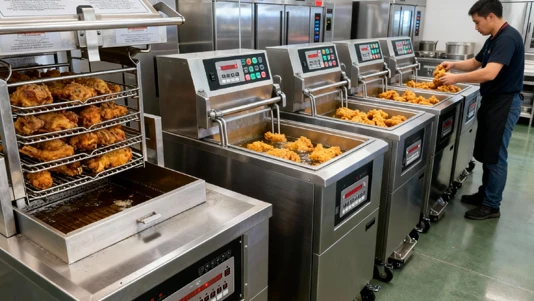
This technical guide explains why QSR investors must integrate equipment procurement with spatial design rather than buying standalone machines. It provides a strategic framework for matching equipment capacity to peak-hour demand and establishing linear workflows. Procurement managers and franchise owners should use this reference to avoid structural modification costs, eliminate operational bottlenecks, and evaluate manufacturers capable of delivering complete, scalable kitchen solutions.
What Fast Food Equipment Do You Need to Open a Fried Chicken Restaurant?
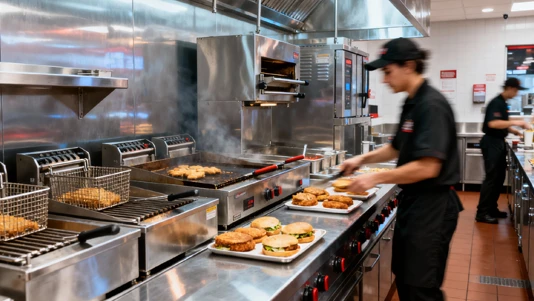
This technical guide provides a strategic breakdown of the essential workflow required to build a high-efficiency fried chicken kitchen. It helps QSR operators, franchise owners, and procurement teams evaluate pressure fryers, breading stations, and holding cabinets based on daily production capacity rather than just initial price. Read this before finalizing your equipment list to prevent costly operational bottlenecks, standardize food quality, and select a scalable manufacturing partner.
Commercial Pressure Fryer Boost Crispy Fried Chicken Quality
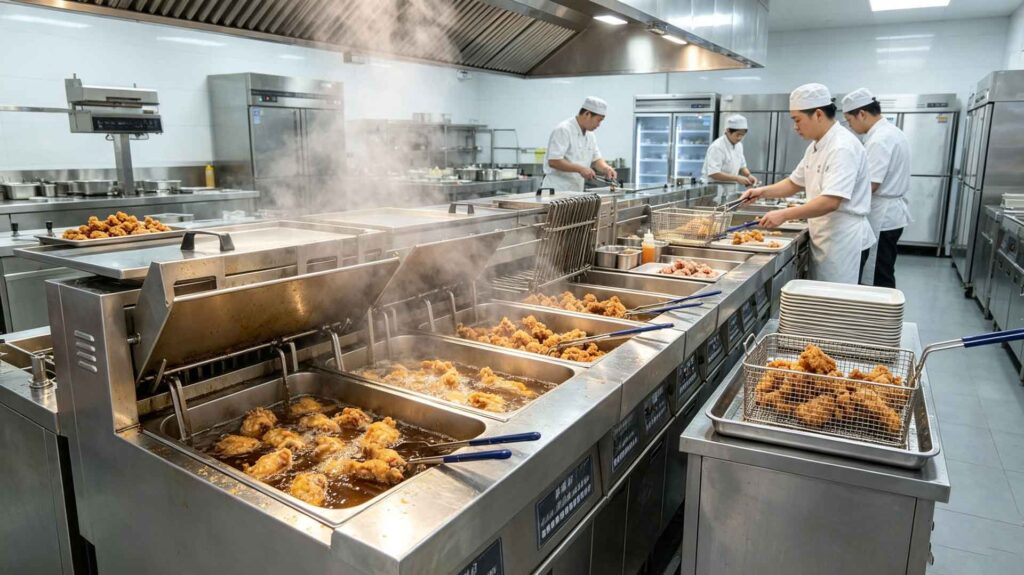
Traditional open fryers bring obvious drawbacks to frie […]
Top 20 Mistakes to Avoid When Buying Commercial Kitchen Equipment
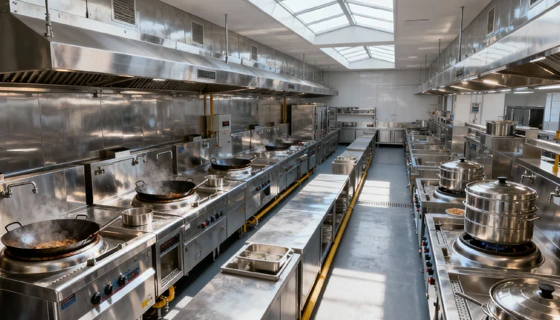
Purchasing commercial cooking equipment based solely on the lowest price often leads to catastrophic layout mismatches, capacity bottlenecks, and compliance failures. This technical guide empowers B2B buyers to evaluate total cost of ownership (TCO), thermal recovery rates, and the necessity of 3D spatial planning before making capital investments. By understanding these 20 critical procurement mistakes, operators can confidently bypass unreliable middlemen and partner directly with an OEM manufacturer to guarantee heavy-duty performance and maximize workflow efficiency.Purchasing commercial cooking equipment based solely on the lowest price often leads to catastrophic layout mismatches, capacity bottlenecks, and compliance failures. This technical guide empowers B2B buyers to evaluate total cost of ownership (TCO), thermal recovery rates, and the necessity of 3D spatial planning before making capital investments. By understanding these 20 critical procurement mistakes, operators can confidently bypass unreliable middlemen and partner directly with an OEM manufacturer to guarantee heavy-duty performance and maximize workflow efficiency.
Custom vs Standard Commercial Kitchen Equipment: Which Fits Your Business Better?
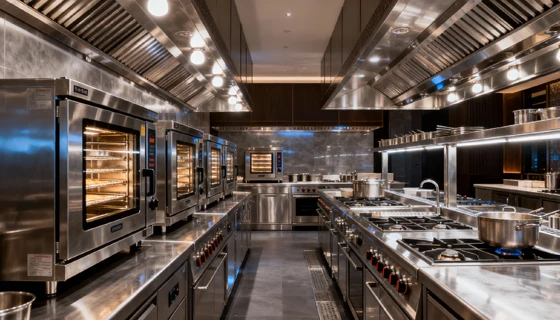
Choosing between custom and standard equipment is a critical financial balancing act for B2B foodservice operators. This technical guide provides a clear decision framework for evaluating architectural constraints, manufacturing lead times, and capital costs. It empowers procurement teams to adopt a “hybrid procurement strategy”—blending cost-effective standard units with precision-engineered custom cooking stations—to eliminate spatial dead zones and maximize long-term operational ROI.
What Commercial Kitchen Equipment Does a Central Kitchen Need? A Technical Selection Guide
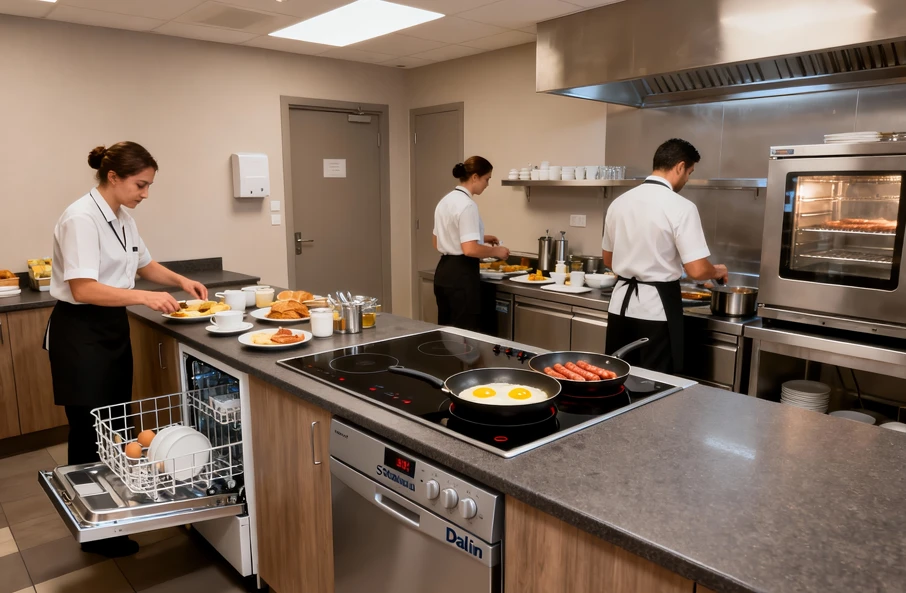
Transitioning to a central kitchen requires shifting from standard a-la-carte flexibility to industrial-scale batch production. This technical guide helps B2B buyers and project managers evaluate high-capacity cooking performance, automated workflows, and thermal recovery. It provides a clear decision framework for sourcing heavy-duty kettles, tilting skillets, and custom configurations to eliminate production bottlenecks, guarantee recipe consistency, and minimize long-term operating costs.
How Do Hotels Choose Commercial Cooking Equipment for Large-Scale Food Service?
Procuring equipment for hotel kitchens requires balancing fine-dining precision with massive banquet production. This guide provides B2B buyers and project contractors with a technical decision framework to evaluate peak-hour capacity, thermal recovery, and heavy-duty durability. It helps procurement teams confidently choose between standard units and customized OEM configurations to eliminate service bottlenecks and minimize total cost of ownership.
How to Choose the Right Size Commercial Kitchen Equipment for Your Business
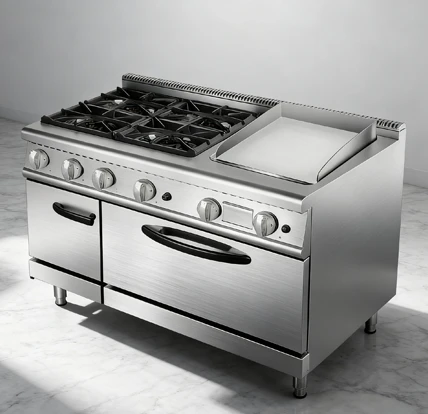
Selecting commercial cooking equipment based solely on physical dimensions or upfront cost is a critical procurement mistake that leads to operational bottlenecks. This guide provides B2B buyers with a technical decision framework to calculate peak-hour production volume, match heating power to surface area, and confidently decide when customized OEM configurations outperform standard equipment sizes for maximum workflow efficiency.