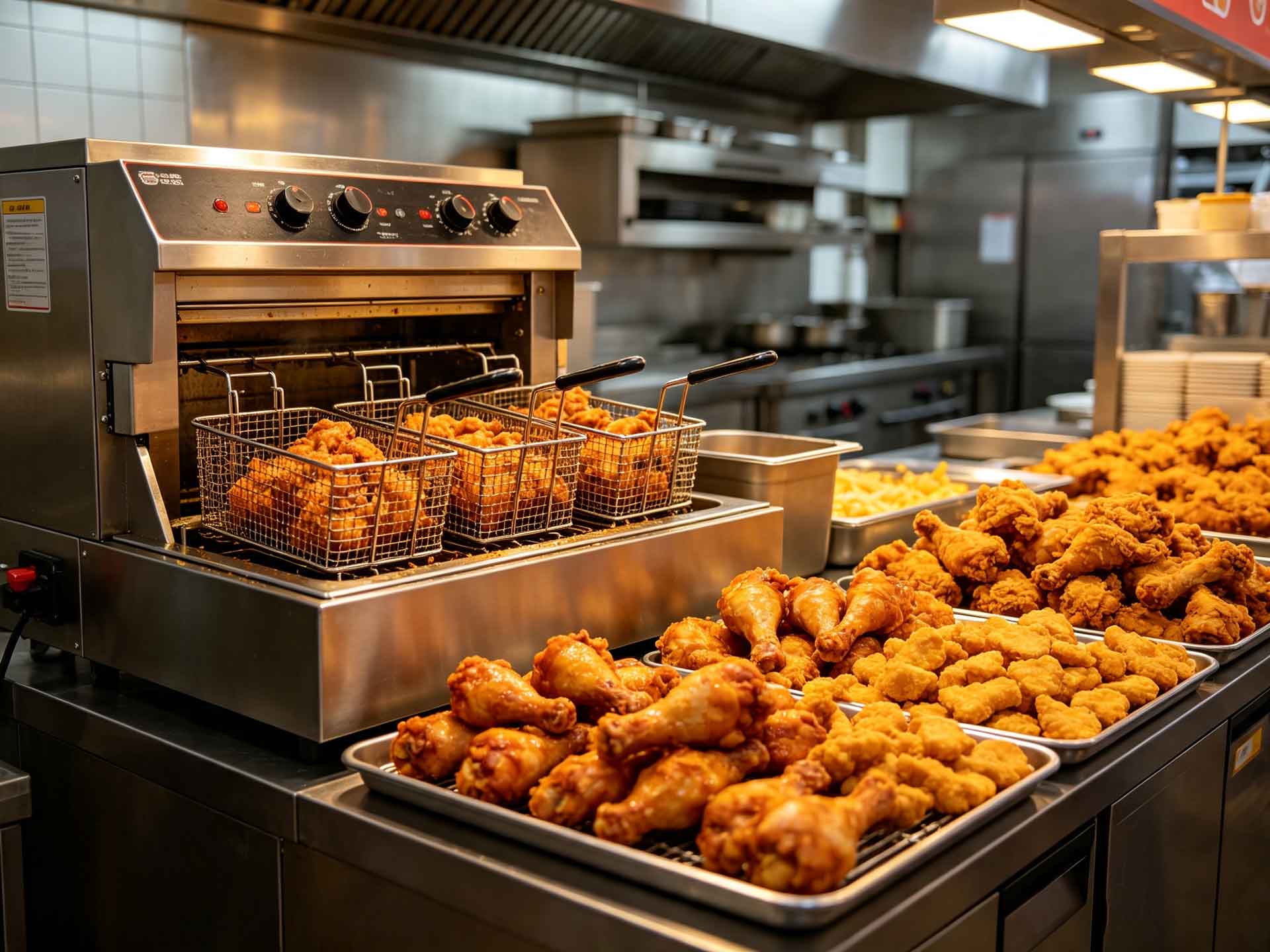
A pressure fryer with filtration is a commercial fryer whose cooking oil drains out of the pot into a filter pan inside the same lower cabinet, so your staff can clean the oil without lifting heavy stockpots or pouring hot grease through paper cones. A motorized pump pulls the oil through a fine mesh or filter sheet and pumps it straight back into the fry pot in a few minutes. Before you price out models from our commercial pressure fryers buyer’s guide, you need to know how this plumbing works, how much oil it actually saves, and whether your store volume justifies the hardware.
Table of Contents
- What Filtration Actually Is (and Is Not)
- How the Hardware Works
- What Happens to Oil Without Filtration
- What You Save
- Built-in vs Portable vs Manual Filtering
- When You Can Skip It
- Maintenance and Consumables
- What to Ask a Supplier
1. What Filtration Actually Is (and Is Not)
When equipment dealers talk about a commercial fryer with built in filtration, they mean a self-contained fryer oil filtration system mounted inside the floor cabinet directly below the fry pot. You do not wheel a separate cart across the kitchen floor, and you do not wait three hours for the shortening to cool down before draining it.
You also need to be clear about what a mechanical filter cannot do. A built-in filter pulls out physical solids: burnt flour, loose breading, skin flakes, and bone dust. It does not magically turn rancid, chemically broken-down oil back into fresh shortening. However, because burnt crumbs are the main catalyst that speeds up chemical oil breakdown, pulling those crumbs out between rushes is the single best way to keep shortening alive days longer.
2. How the Hardware Works
Look inside the bottom door of a 25L floor-standing pressure fryer and you will see four main parts: a brass or stainless drain valve under the pot, a pull-out steel filter pan on floor casters, a filter screen wrapped in a paper envelope, and an electric return pump.
The pot itself has a deep “cold zone” below the heating elements or gas heat tubes. Loose flour shakes off the chicken and sinks into this cooler pocket of oil instead of scorching.
When the lunch rush ends, the line cook runs a five-step cycle:
- Turn off the burner or elements while the oil is still hot and thin enough to flow.
- Open the bottom cabinet door and pull the drain handle. Hot oil drops out of the cold zone into the pan below, carrying most settled flour with it.
- Sweep stubborn crumbs off the pot walls into the open drain with a long-handled fryer brush.
- Flip the pump switch. The pump pulls oil through the filter paper or mesh screen, trapping sediment on the sheet and pushing clean oil back into the pot.
- Let the clear oil flush the pot walls for thirty seconds, close the drain valve, and refill to the oil level line.
Nobody carries a pot of hot shortening across a wet tile floor, and nobody gets splashed on the forearms.
3. What Happens to Oil Without Filtration
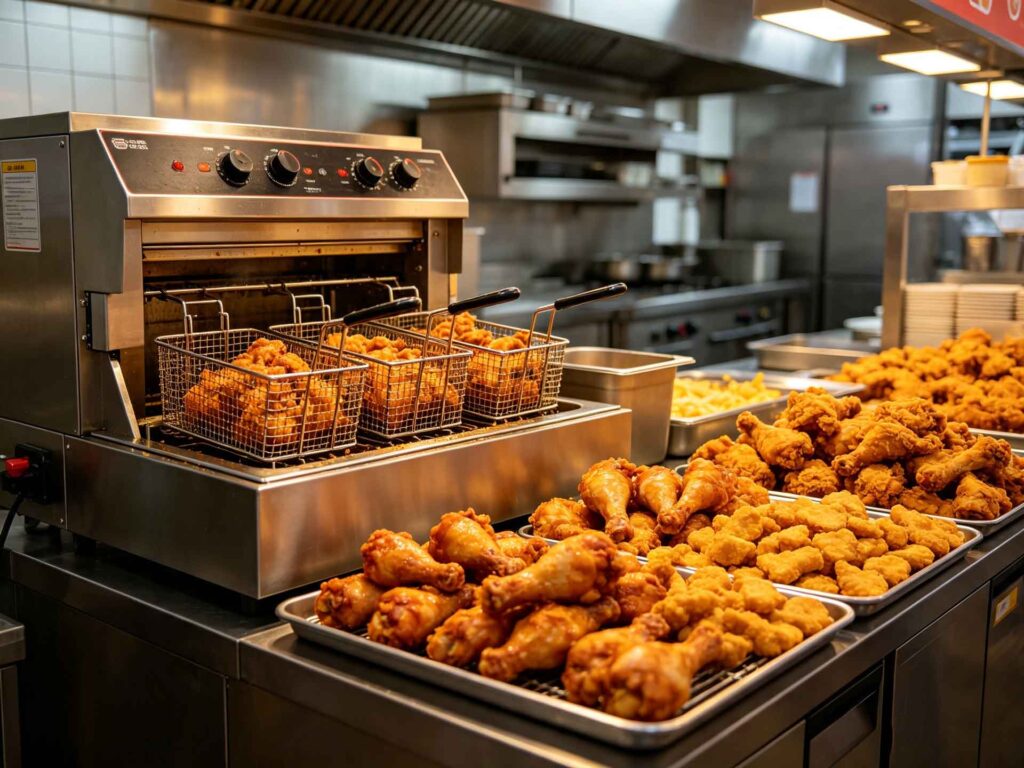
Run bone-in breaded chicken all day without filtering and your fry pot becomes a chemistry problem by dinner time. As we explained in our comparison of a pressure fryer vs open fryer, hand-breaded poultry sheds far more seasoned flour and bone dust than frozen fries ever will.
Those crumbs sit in hot oil batch after batch, and three things happen fast:
- Carbonization and black specks: Loose flour bakes into hard black carbon. Every fresh basket of chicken kicks that black grit back up into the oil, where it sticks to wet batter and leaves a burnt, bitter aftertaste on the crust.
- Drop in smoke point: Charred sediment breaks down the fatty acid chains in the shortening. Within a few shifts you see thin blue smoke off the pot at normal frying temperatures, the kitchen smells acrid, and oil foams around the basket.
- Insulated heating surfaces: Flour sludge bakes onto the elements or gas heat-transfer surfaces. That crust insulates, so recovery times drag out and chicken comes out pale and greasy.
Once oil reaches that stage, skimming the top does nothing. You dump the whole pot into the waste drum and refill with fresh shortening.
4. What You Save
Pressure frying already cooks about 30% faster than open frying and saves roughly 20% to 25% on oil and energy because steam pressure keeps oil from soaking into the meat. A built-in filtration pump under that commercial pressure fryer protects those savings across a full week of heavy service.
Three places show the payback:
- Fewer drums of shortening per month: Filter after lunch and again at closing and you remove the carbonized flour that ruins oil overnight. Stretch a pot even two or three extra days before dumping it and the math adds up. Multiply the local cost of a 20-liter tin by the refills you skip across fifty-two weeks.
- Daily labour hours cut: Draining warm oil into stockpots through a wire cone takes thirty to forty minutes of messy work at the end of the night, and tired cooks skip it. A pump switch takes minutes and runs between rushes.
- Consistent breading colour: Without filtration, Monday’s chicken looks golden and Wednesday’s looks dark brown and tastes burnt. Filtering flattens that curve so every bucket leaving the kitchen matches.
5. Built-in vs Portable vs Manual Filtering
Buyers equipping a commercial kitchen have three ways to clean frying oil: buying a commercial fryer with filtration built into the cabinet, wheeling a separate portable fryer oil filter machine from pot to pot, or draining oil manually into buckets through a cone filter.
| Factor | Built-in Filtration Cabinet | Portable Under-Vat Filter Cart | Manual Bucket and Cone Filtering |
|---|---|---|---|
| Upfront Hardware Cost | Included in floor-model fryer build | Medium cost for a separate wheeled pump cart | Almost zero, just a metal pot and paper cones |
| Weekly Labor Time | Lowest, takes minutes via cabinet switch | Moderate, requires wheeling cart and hooking hoses | High, slow gravity draining and heavy lifting |
| Oil Life Extension | Highest because staff actually filter twice a day | Good if staff bother to roll the cart out | Poor because cooks skip midday filtering during rushes |
| Burn and Spill Risk | Lowest, oil stays inside closed plumbing | Moderate, hot oil wand or hose must be handled | High risk of splashes and back strains from heavy pots |
| Kitchen Storage Space | Zero extra space, fits inside the 25L or 55L base | Needs a dedicated closet or corner when parked | Needs shelf space for greasy stockpots and funnels |
| Best Operational Fit | QSR chicken stores, chains, busy takeaways | Kitchens running old open fryers without drains | Very low-volume cafes or tiny food trucks |
6. When You Can Skip It
Not every kitchen needs to pay for an integrated filtration pump. Sometimes manual filtering is the smarter financial call.
You can skip built-in filtration in three situations:
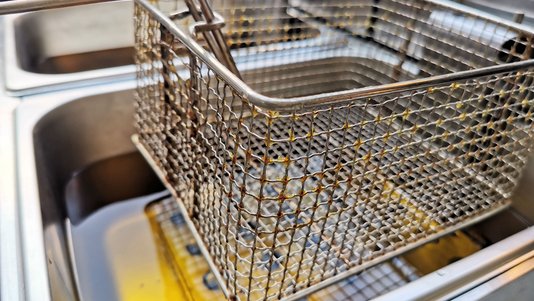
- You run a 16L countertop unit at low volume: A small cafe, pub, or food truck frying twenty or thirty chicken orders a day has no lower cabinet to house a pump, and a 16L pot holds little enough oil that draining it through a simple filter cone after service is workable.
- You only fry lightly breaded or par-fried items: Pre-cooked frozen items shed almost zero loose flour, so your oil stays clean longer on its own.
- You run a weekend-only kiosk: Two days a week never burns through enough shortening to recoup an automated pump.
Once you step up to a 25L floor-standing unit, or a 55L batch cooker in a central kitchen, and start breading fresh poultry every morning, manual bucket filtering stops making sense. The oil is too heavy to lift while hot, and the flour load will wreck your shortening by mid-afternoon.
7. Maintenance and Consumables
A built-in filtration system is simple plumbing, but it is not maintenance-free. If your crew treats the filter pan like a trash can and never cleans it, the pump will clog and fail.
Before the unit goes on the line, train your shift managers on four rules:
- Budget for filter paper or clean the mesh daily: If your pan uses disposable envelopes, swap the sheet every day, or sooner if heavy sludge slows the pump. A reusable stainless mesh screen needs the wet flour cake scraped off after service, washed, and dried fully before it goes back in.
- Never get water in the filter pan: Water and hot frying oil is a dangerous mix. A cup of wash water pooled in the pan flashes into violent steam when hot oil lands on it, and moisture breaks down oil fast. Wipe the pan dry after washing.
- Rod out the drain valve during filtering: Chicken pieces occasionally drop a wing tip or a clump of dough into the cold zone. Keep a steel clean-out rod inside the cabinet door so a cook can clear the drain neck when flow slows.
- Flush the pump line on schedule: When you boil out the pot with water and cleaner, never drain soapy water through the oil pump. Water and caustic chemicals ruin the pump seals, so catch wash water in a separate bucket.
8. What to Ask a Supplier
When you compare quotes for a 25L or 55L fryer, do not just check the box that says filtration included. Ask these four questions before wiring a deposit:
- How wide is the drain valve? Narrow drains clog constantly on heavily breaded bone-in chicken. You want a wide-bore valve that lets settled flour flush into the pan without jamming.
- Does the filter pan slide out on casters? It must pull out from the front of the cabinet so one cook can dump the flour cake and swap paper in sixty seconds.
- Is the filtration chassis available in both gas and electric? Your filtering plumbing should not limit your utility hookups. Across Dalin’s 25L line the under-pot filtration cabinet is available in both heating styles, paired with mechanical, digital, programmable, or smart panels. Our electric vs gas pressure fryer guide covers matching the cabinet to your building.
- Are pump seals, O-rings, and filter envelopes easy to reorder? Heat eventually flattens suction-side O-rings, and a leaking ring makes the pump suck air instead of oil. Buy from an established KFC style pressure fryer manufacturer that stocks parts and holds CE, REACH, RoHS, and ISO 9001 compliance. Dalin builds across a 50,000 m2 campus with monthly output of 15,000 units, a 1-year warranty plus lifetime technical support, an MOQ of 1 unit, and a 7 to 10 working days lead time.
FAQ
Do pressure fryers need filtration?
If you bread and fry fresh bone-in chicken daily in a 25L or 55L unit, built-in filtration is essential to keep loose flour from charring and ruining your shortening. Only low-volume kitchens running a 16L countertop pot get by with manual cone filtering.
How often should I change the filter media?
Scrape the sediment off the pan after every rush and replace the paper sheet at least once a day. On heavy double shifts of hand-breaded poultry, swapping twice a day keeps the pump at full speed.
Can I filter oil without built-in filtration?
Yes, by draining warm oil into a bucket through a paper cone, or rolling a portable under-vat filter to the fryer. Manual filtering is slow and carries a burn risk, so crews often skip midday filtering when the restaurant gets busy.
Does filtration change the taste of the food?
Yes, it stops chicken tasting burnt and bitter. Unfiltered oil holds black carbonized flour that sticks to fresh batter and gives the crust an acrid, smoky flavour, while filtered oil keeps breading golden across days of service.
Does a 16L countertop fryer have filtration?
No. A 16L countertop pressure fryer sits on a worktable with no lower cabinet to house a pump and roll-out pan, so operators drain through a filter cone once the oil cools.
Is built-in filtration worth the extra cost?
For any store frying bone-in chicken all day in a 25L fryer, it pays for itself quickly through saved shortening drums and reduced closing labour. Paired with the 20% to 25% oil and energy saving of pressure frying, it is the easiest way to protect monthly food cost.
Conclusion
Built-in filtration turns the worst chore in a chicken kitchen into a quick, safe routine cooks will actually perform between rushes. Pump out loose breading flour before it carbonizes and every drum of shortening lasts longer, with crust staying golden from Monday morning through Sunday night.
Ready to spec a 25L gas or electric floor model with under-pot filtration? Browse our commercial pressure fryer catalog to request a factory-direct quote, ask about OEM logo and control panel customization, or book a sample order with a 1-unit MOQ and 7 to 10 working days lead time.