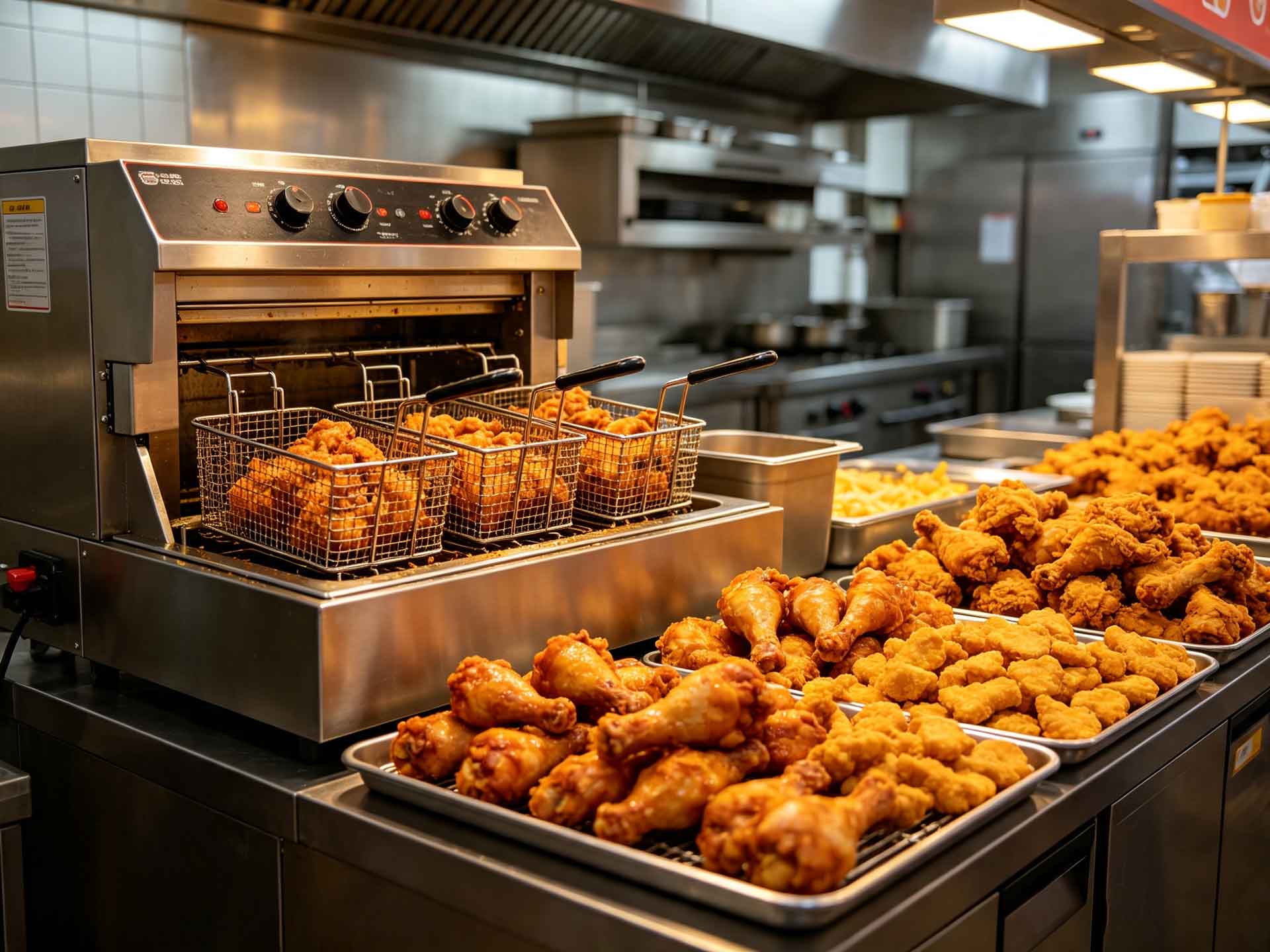
Walk into almost any busy fried chicken kitchen and you will see a pressure fryer sitting right next to an open fryer. Most profitable chicken shops run both machines because neither unit can handle a full QSR menu alone. A pressure fryer locks in moisture and cooks bone-in chicken roughly 30% faster while cutting oil and energy use by 20% to 25%. An open vat fryer handles French fries, wings, and side orders that need constant basket access. Before sizing individual units in our commercial pressure fryers buyer’s guide, you need to know how to split your cookline between these two pots.
Table of Contents
- Which One Do You Actually Need?
- What Each Machine Does
- Head-to-Head Comparison
- Where the Pressure Fryer Wins
- Where the Open Fryer Wins
- Why Most Fried Chicken Kitchens Run Both
- The Cost Reality
- How to Decide for Your Kitchen
1. Which One Do You Actually Need?
New restaurant owners often ask whether they should buy a pressure fryer or a commercial open fryer, hoping one machine can cook everything. That shortcut usually backfires on your first Friday night rush.
Frozen fries dropped into a sealed pressure pot turn to limp mash. Raw thick bone-in breasts dropped into an open vat darken long before the meat near the bone is safe to serve, and you wait roughly 30% longer per batch. The choice comes down to what sits at the center of your menu board:
- Bone-in poultry focus: You need a fried chicken pressure fryer for your core protein.
- Fries, wings, and snack sides: You need an open fryer with twin baskets.
- Full chicken meal concepts: You need at least one of each under the same hood.
2. What Each Machine Does
A commercial pressure fryer is a heavy-duty fry pot with a gasket-sealed locking lid. Lower breaded chicken into hot shortening, latch the cover, and the water inside the meat turns to steam that cannot escape. Pressure builds inside the kettle, raising the boiling point of water inside the poultry so thick cuts cook through to the bone without drying out.
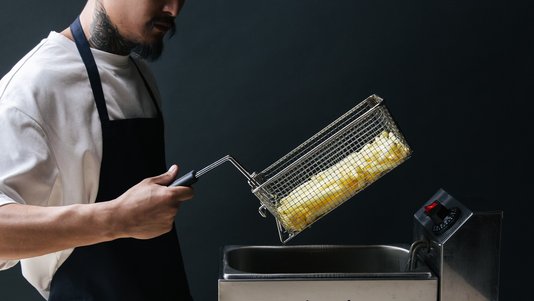
A commercial open fryer (also sold as an open vat fryer or standard deep fryer) has no lid. You hang wire mesh baskets in an open tank of hot oil, and moisture boils out of the food straight up the exhaust hood. That rapid surface evaporation is what makes an open vat great for crisping battered fish, onion rings, and fries.
3. Head-to-Head Comparison
When comparing a pressure fryer vs deep fryer, look past the sheet metal and check how each tank changes your daily workflow.
| Factor | Commercial Pressure Fryer | Commercial Open Fryer | Practical Recommendation |
|---|---|---|---|
| Cook Speed | About 30% faster on thick bone-in cuts | Standard baseline cook time | Use pressure for thick proteins |
| Moisture Retention | High, sealed steam stays in the meat | Low, surface water boils off fast | Pressure for breasts and thighs that dry out |
| Oil Absorption | Low, outward vapor pressure in food | Higher, oil replaces escaped moisture | Lighter, less greasy crust |
| Shift Oil & Energy Use | Saves roughly 20% to 25% oil and energy | Higher shortening top-ups and heat loss | Lower monthly utility and shortening bills |
| Suitable Foods | 8-piece bone-in chicken, thick tenders, wedges | Fries, wings, onion rings, mozzarella sticks, fish | Split menu by thickness and breading style |
| Vessel Sizes | 16L countertop, 25L floor model, 55L batch cooker | Standard twin-basket floor or countertop vats | Match 25L floor units with standard open fryers |
| Capital Cost | Higher, pressure vessel and locking lid | Lower, simpler sheet-metal tank | Open costs less upfront, pressure pays back in oil |
| Floor Space | Similar footprint at 25L, plus 16L or 55L options | Compact per vat, easy to bank together | Both fit standard cookline depths |
| Ventilation Needs | Sealed lid traps grease vapor until venting | Constant hot plume into the hood | Both need commercial hoods; gas needs flue venting |
| Labor Skill | Lid-lock training, easy with programmable panels | Simple basket drops, but watch doneness | Use smart controls to simplify pressure cooking |
| Mid-Cycle Access | None, lid stays locked under pressure | Full access to shake or pull baskets | No quick-turn snacks in a locked pot |
4. Where the Pressure Fryer Wins
A pressure fryer earns its floor space whenever you cook thick, bone-in poultry. Sell buckets of 8-piece chicken, whole wings, or thick potato wedges, and an open pot cannot compete on ticket time or food cost.
Here is where the sealed kettle wins:
- 30% faster batch times: Bone-in chicken takes long to cook safely in an open pot because oil must stay low enough not to scorch the flour. Under pressure, heat drives straight to the bone. A single 25L pot pushes out more buckets per hour between 6:00 PM and 8:00 PM.
- 20% to 25% oil and energy savings: Cooking oil is usually the second or third biggest expense in a chicken shop after poultry and labor. Outward steam pressure stops shortening soaking into the breading, and the sealed lid keeps heat inside the pot. You burn less gas or electricity and dump fewer drums of oil every month.
- Juicy meat that holds in warmers: An open fryer boils the water out of a breast and the meat turns stringy after twenty minutes in a holding cabinet. Pressure-fried chicken keeps moisture inside the muscle fibers, so the last piece sold tastes as tender as the first.
- Repeatable quality: Once the lid is locked, nobody can pull a piece out early because a drive-thru driver is honking. On Dalin 25L units you can pick from four control panels (mechanical, digital, programmable, or smart) to lock down exact cycle times.
Plan for the downsides: you cannot open the lid mid-cycle to add a late order, because that pot is committed until the timer finishes and the steam vents. Staff also need training to clean the lid gasket and check the pressure relief valve daily.
5. Where the Open Fryer Wins
A good supplier will tell you straight up when not to buy a pressure fryer. If your menu is 80% frozen fries, cheese curds, smash burgers, and buffalo wings, a pressure fryer is the wrong tool.
An open vat wins in four everyday scenarios:
- High-surface-area and battered foods: Fries, onion rings, tempura vegetables, and beer-battered cod need rapid moisture evaporation to crisp. Trap steam around a basket of fries and they come out soggy.
- Staggered ticket drops: Orders trickle in every thirty seconds in a busy takeaway shop. An open fryer holds two baskets in one vat, so a cook can drop wings in the left and mozzarella sticks in the right ninety seconds later. You cannot stagger orders inside a sealed pressure vessel.
- Lower upfront cost: An open fryer is an unpressurized stainless tank with burners or elements. With no cast pressure lid, spindle lock, pressure gauge, or deadweight valve, the purchase price is lower.
- Simpler maintenance: With no lid gasket to wear out and no steam port to brush clean, midnight clean-down takes a few minutes less per pot.
The open vat’s own weakness: push it into bone-in chicken and oil life drops fast. Breaded chicken sheds flour and bone dust, and in a long high-temperature cycle those crumbs char the shortening dark and bitter.
6. Why Most Fried Chicken Kitchens Run Both
Look at the floor plan of a standard fried chicken takeaway and the fry station splits into two zones: protein and snacks.
During dinner service one cook breads fresh bone-in chicken and loads a 25L floor-standing pressure fryer. Once that lid locks, the machine handles the heavy protein load untouched. Beside it a twin-basket open fryer runs fries and quick sides, so both come up hot at the same time.
Running both side by side gives you three practical advantages:
- No flavor cross-contamination: Frying battered fish or heavily spiced appetizers in the same oil used for signature bone-in chicken changes the taste of your breading. Splitting the work keeps the chicken shortening clean.
- Shared utility and hood layout: A 25L floor-standing pressure fryer and a standard floor-model open fryer fit under the same hood depth, and you can spec both to match your building utilities. For help choosing between three-phase power and a gas line, see our electric vs gas pressure fryer guide.
- Simpler oil management: Putting a pressure fryer with filtration on the line trains staff to filter hot shortening between rushes instead of running dirty oil until close.
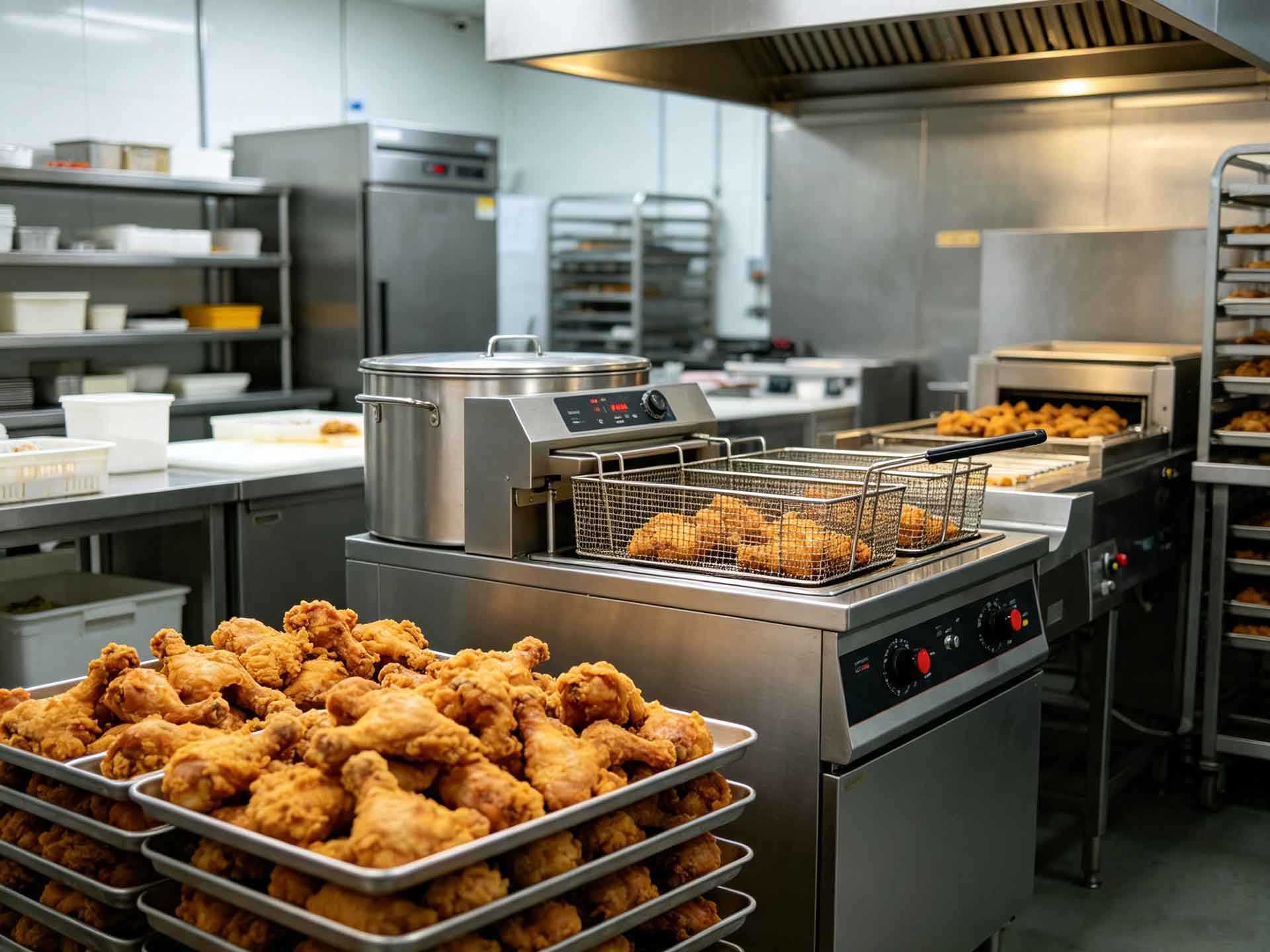
Small kitchens can pair a 16L countertop pressure fryer with a countertop open fryer on an existing stand.
7. The Cost Reality
On paper the open fryer always looks cheaper. Over a year of running a chicken shop, three setups tell a different story.
Setup A: Two Open Fryers, No Pressure Fryer
The day-one invoice stays low, but sell bone-in chicken out of open vats and you pay a hidden tax every shift. Each batch runs roughly 30% longer, capping peak-hour volume, and you burn 20% to 25% more oil and energy. Within months the extra shortening and higher utility bills wipe out what you saved on hardware.
Setup B: Two Pressure Fryers, No Open Fryer
Two 25L pressure fryers crank out huge volumes of bone-in chicken at 20% to 25% lower oil and energy cost. But using a heavy pressure pot to fry small baskets of fries ties up an expensive pressurized vessel and slows your side-item line.
Setup C: One Pressure Fryer Plus One Open Fryer
This works for most single-store chicken shops. The 25L pressure fryer runs all bone-in chicken, cutting cook time by 30% where oil consumption is highest. A cheaper open fryer handles fries and quick sides. You spend capital only where it generates payback.
Check compliance before you buy. A pressure fryer is a pressurized vessel, so never save a few hundred dollars on an uncertified knockoff. Make sure it carries CE, REACH, and RoHS certifications and comes from an ISO 9001 factory with a 1-year warranty and lifetime technical support.
8. How to Decide for Your Kitchen
Four rules to pick the right setup:
- Your menu is 70%+ bone-in chicken and tenders. Buy one 25L floor-standing pressure fryer with programmable or smart controls and built-in filtration, plus one open vat for fries. High-volume drive-thrus run two 25L pressure fryers beside one open fryer.
- You run a cafe, food truck, or pub adding fried chicken. Keep your existing open fryer for chips and add a 16L countertop pressure fryer on the benchtop.
- You run a central kitchen, deli hot bar, or catering commissary. Step up to a 55L batch pressure cooker for large loads of poultry or ribs.
- You only sell boneless wings, fries, and battered fish. Stick with commercial open fryers. You do not need pressurized cooking until bone-in chicken goes on the menu.
Chains and distributors sourcing across multiple stores should work directly with a KFC style pressure fryer manufacturer that builds both round-pot broasters and standard commercial fryers. Dalin runs a 50,000 m2 production campus with monthly output of 15,000 units, an MOQ of 1 unit, and a 7 to 10 working days lead time, so you can test one store setup before rolling out custom OEM builds.
FAQ
Is a pressure fryer better than an open fryer?
Neither is better for every food. A pressure fryer wins on bone-in chicken and thick meats: roughly 30% faster, juicier, and 20% to 25% less oil and energy. An open fryer wins on fries, onion rings, and battered snacks that need open steam evaporation to stay crisp.
Can one fryer do both jobs?
Some kitchens unlatch the lid and fry small side batches on a pressure unit during slow hours. During a rush it will not work, because one pot cannot lock under pressure for chicken and stay open for staggered fries at the same time.
Which uses less oil?
A pressure fryer uses roughly 20% to 25% less oil on breaded chicken. Steam pressure inside the meat pushes outward against the oil, so less shortening soaks into the crust, and lower temperatures slow oil breakdown.
Do pressure fryers need special certification?
Both fryer types need a commercial exhaust hood, and gas units need proper flue venting. Because a pressure fryer is a sealed pressurized vessel, verify it carries CE, REACH, and RoHS certifications and is built under an ISO 9001 quality system.
Which is cheaper?
Open fryers cost less upfront because they carry no locking lid, pressure valve, or gasket assembly. Over twelve months cooking bone-in chicken, the pressure fryer runs cheaper because the oil and energy saving pays back the higher purchase price.
Conclusion
Match the pot to the food. Open fryer for fries and crispy sides, sealed pressure fryer for bone-in chicken cooked 30% faster with 20% to 25% less oil and energy.
Laying out a new chicken line or upgrading an existing cookstation? View our commercial pressure fryer range to compare 16L, 25L gas and electric, and 55L models, or contact our engineering team for factory-direct quotes and OEM customization with a 1-unit MOQ.