
If you run a restaurant, hotel, or canteen, you already know the commercial dishwasher is the heart of your scullery. But the machine only works as well as the dirty plates that go into it. Commercial sinks for dishwashing are the first cleaning stage — not a helper, not an afterthought. Their job is to strip off food residue before a rack ever reaches the machine, so the dishwasher can do what it is actually built for: controlled chemical wash and high-temperature sanitizing rinse.
Get the sink stage wrong, and no amount of detergent will save your wash results.
What Happens When Food Residue Reaches the Dishwasher?
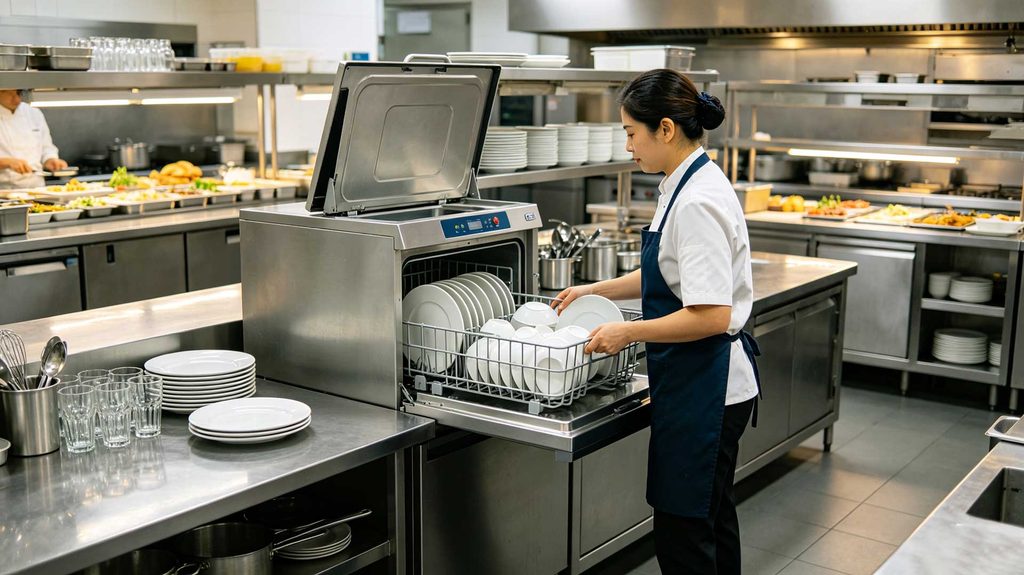
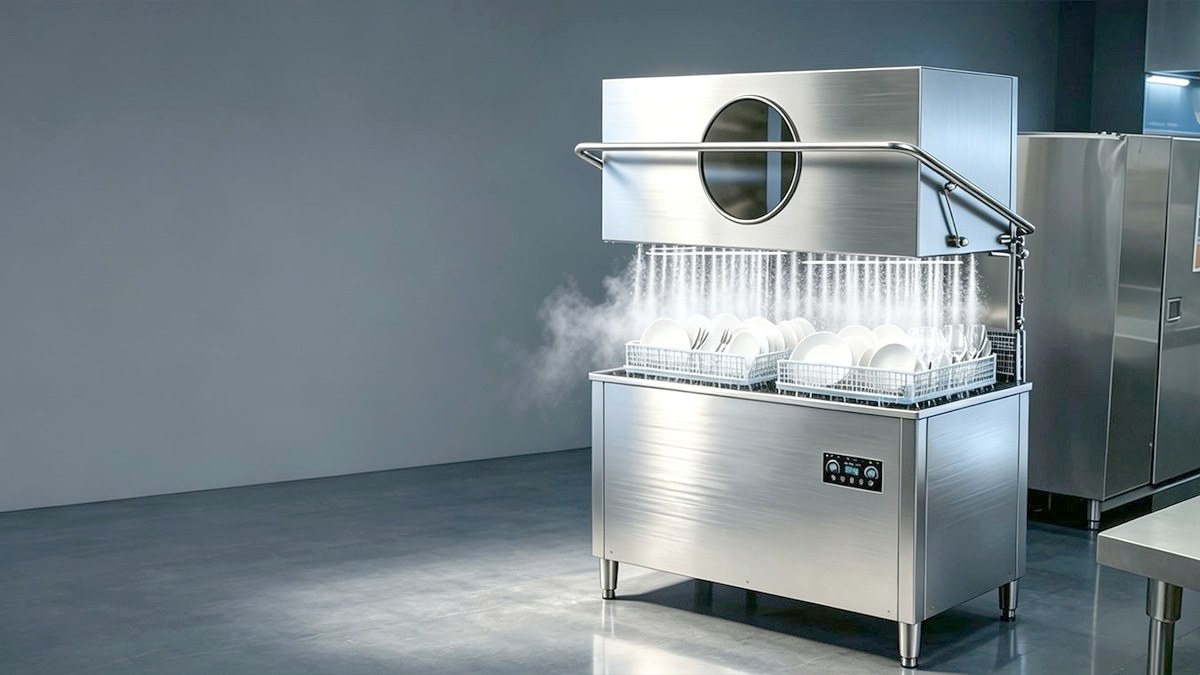
A commercial dishwasher is a precision machine with fixed wash pressure, chemical dosing, and a short cycle time. It is not designed to melt through leftover rice, congealed sauce, or burnt carbon on a sheet pan.
When plates arrive with food still on them, four things go wrong:
- Spray arms and nozzles clog. Rice, bone fragments, and tea leaves block the tiny jets, and half your rack washes at reduced pressure without anyone noticing.
- The wash tank turns into a soup. Instead of fresh chemical water, the machine re-circulates grease and starch. Dishes come out dirtier than they went in.
- Detergent and rinse-aid are wasted. Chemicals bind to floating food instead of the dish surface. You burn through 20–40% more chemical to get the same result.
- Machine life drops. Gears, pumps, and heaters work harder against abrasive food grit. A machine that should last 7–10 years often fails in 3–4.
How Commercial Sinks for Dishwashing Remove 80% of Residue First
A properly laid-out pre-rinse area is a three-stage relay. Each stage hands off a cleaner plate to the next.

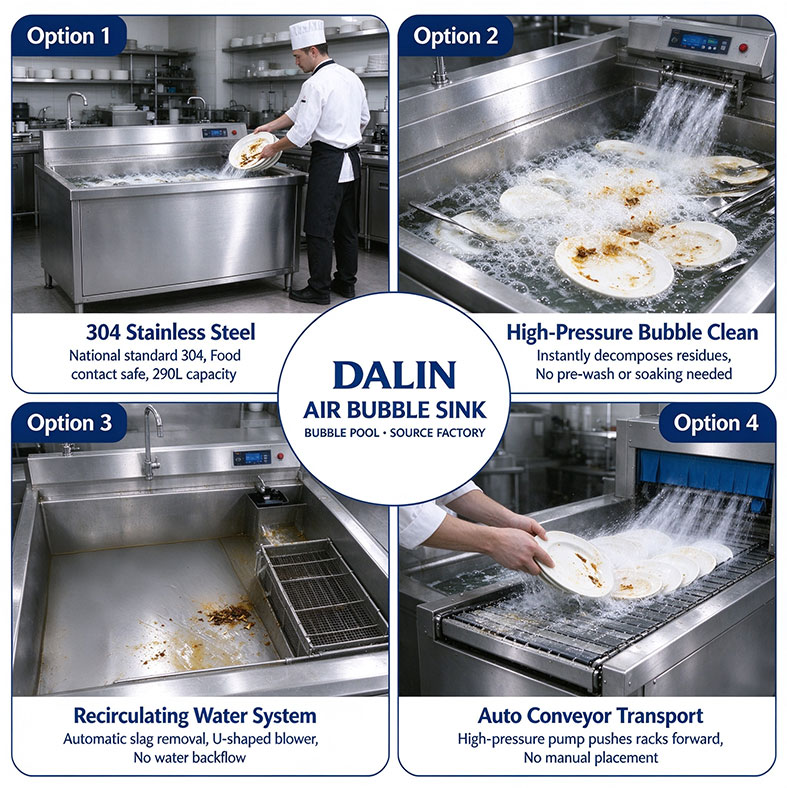
Stage 1 — Scrape. A scrape sink or scrape-off table with a waste bin / trough. Staff push solids off plates with a rubber scraper. Nothing wet enters this bin. This alone removes 60–70% of residue.
Stage 2 — Soak. A second basin filled with warm water (and a small amount of soak agent) for baked-on, dried-on, or starchy items: casseroles, roasting pans, congee bowls, tea cups. Five to ten minutes in soak removes what scraping cannot.
Stage 3 — Pre-rinse spray. A high-pressure pre-rinse spray valve (typically 6–9 L/min, not the old 12+ L/min gun) flushes the remaining film off the plate before racking. This is the stage that protects the wash tank water.
The baton pass: scrape → soak → spray → rack → machine. Skip any one stage and the next stage does work it was never sized for.
Which Commercial Sink Configuration Matches Your Dishwasher?
Match the sink to the machine’s throughput, not the other way around.
| Dishwasher type | Throughput | Recommended sink setup | Why |
| Undercounter dishwasher | 30–50 racks/h, café / bar | 1-comp sink + pre-rinse spray | Volume is low; one basin for scrape + soak is enough |
| Hood-type / pass-through dishwasher | 60–100 racks/h, restaurant / hotel | 2-comp sink + scrape table + pre-rinse spray | Separate soak basin for pans; scrape table holds soiled racks |
| Conveyor / flight-type dishwasher | 150–300+ racks/h, canteen / central kitchen | 3-comp long scullery line + soiled dish table + clean dish table | Linear flow; soiled and clean sides never cross |
| Pot-wash only (no machine) | — | 3-comp sink: wash → rinse → sanitize | Health-code required when machine is absent |
Rule of thumb: plan at least 1 meter of soiled-dish counter space between the scraping sink and the dishwasher inlet. Without it, staff stack plates on the floor or skip scraping.
Sink-to-Dishwasher Layout: Linear vs. L-Shape
- Linear (straight line): Soiled → scrape → soak → spray → machine → clean. Best flow, zero cross-contamination, but needs 4–6 meters of wall. This is the layout health inspectors prefer.
- L-shape: Soiled sink on one wall, machine around the corner. Saves wall space but adds a turn; train staff so dirty and clean sides never meet at the corner.
- U-shape: Rare, used in very tight hotel sculleries. Works only if one person owns the whole station.
Whichever layout you pick, the soiled side and clean side must not share an entrance. This is the single most cited health-code failure in existing kitchens.
The Numbers: What a Proper Pre-Rinse Sink Actually Saves
Real-world numbers from kitchens that retrofitted a proper scrape-and-soak station:
- 20–40% less detergent per rack, because chemicals are no longer neutralized by floating food.
- 80% of food residue removed at the sink stage, before the machine.
- Longer machine life: cleaner wash tank, fewer nozzle blockages, less descaling.
- Fewer re-washes: plates that come out clean the first time. At peak service, that is the difference between running two machines and running one.
Commercial sinks for dishwashing cost a fraction of a hood-type dishwasher. Skipping them to save space is the most expensive shortcut in the scullery.
Common Mistakes That Defeat the Sink
- No scrape bin — staff rinse plates straight into the sink. Food piles up in the drain. Add a scrap trough or a lined bin at chest height.
- Pre-rinse spray too powerful (12+ L/min). It wastes water and flings food back at staff. Spec a 6–9 L/min pressure-valve unit.
- Soak basin never gets fresh water. It turns grey by lunchtime. Schedule a water change after peak.
- Soiled and clean racks share the same table. Cross-contamination and re-soiling both happen.
- No knee-/foot-operated tap on the hand-wash sink. Staff skip handwashing — a separate health-code failure next to your warewashing line.
FAQs
Do I still need to scrape plates if I have a commercial dishwasher? Yes. Commercial dishwashers remove contamination by chemical and heat, but they do not remove large food solids. Scraping prevents clogged filters and keeps wash water clean.
Is pre-rinsing a waste of water? No — if you use a modern 6–9 L/min pre-rinse spray valve. The old-style 12+ L/min guns are the wasteful ones. Pre-rinsing actually saves water overall by cutting re-wash cycles.
Can a commercial dishwasher handle food scraps? Commercial dishwashers can handle small particles, but not rice, bones, congealed fat, or burnt carbon on sheet pans. Those belong in the scrape sink or soak basin, not the machine.
What size commercial sink do I need for a hood-type dishwasher? Plan a 2-comp sink (minimum 500 × 500 × 300 mm per basin) plus a scrape table of at least 800 mm next to it. This matches 60–100 racks/h throughput.
Do health codes require a three-compartment sink? When you rely on a dishwasher for sanitizing, a 2-comp pre-rinse sink is usually enough. If you wash pots and pans by hand or run without a machine, a 3-comp wash-rinse-sanitize sink is typically required — check your local food authority.
Pair the right sink with the right machine. Browse our full range of commercial dishwashers — undercounter, hood-type, and conveyor models sized to match the sink layout above. Need a custom scullery line? Talk to our kitchen design team with your floor plan and we will spec the sink, spray valve, and machine together.