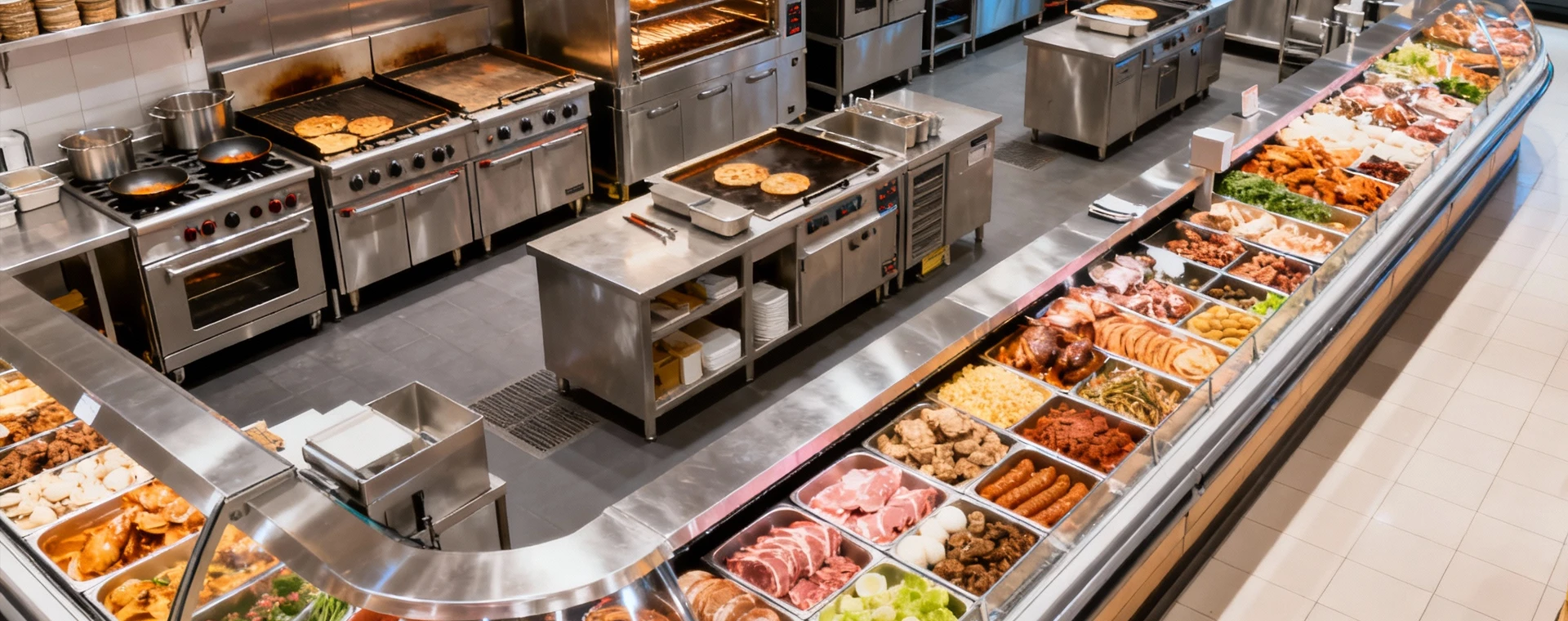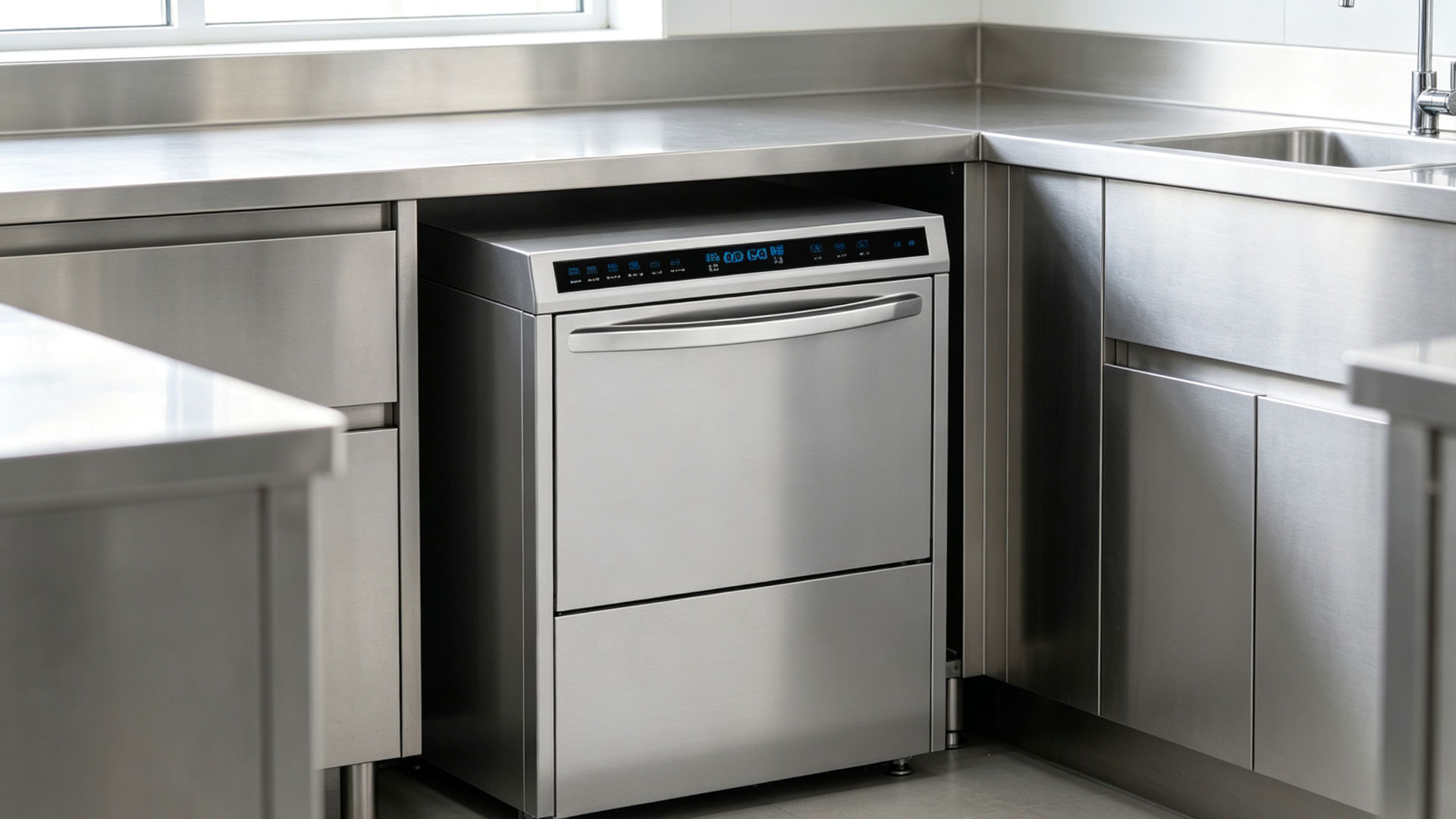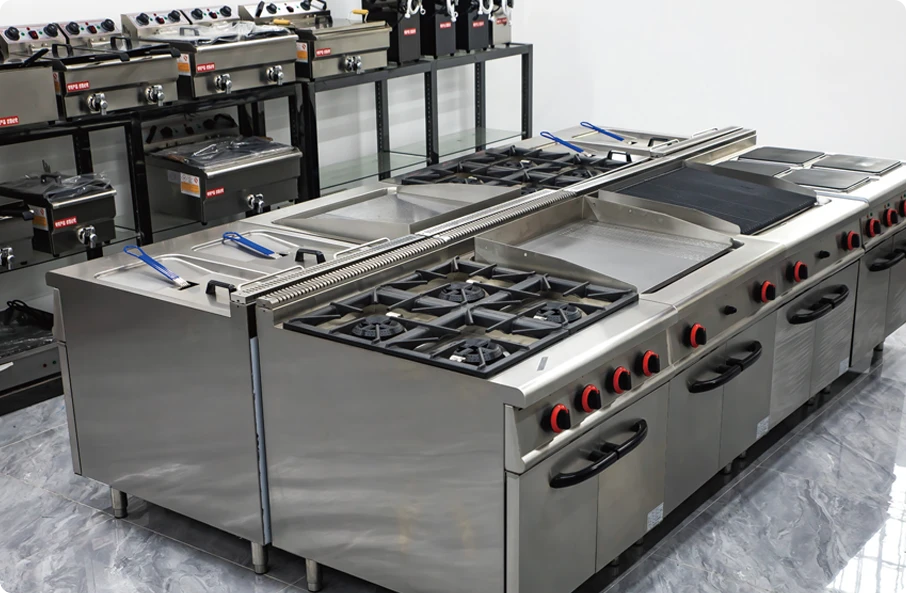
Buying commercial kitchen equipment requires significant capital investment, yet many B2B buyers, restaurant owners, and project managers fall into the trap of prioritizing the lowest upfront price over long-term workflow efficiency. This narrow focus leads to mismatched kitchen layouts, frequent equipment breakdowns, and severe regulatory compliance failures. Partnering with an experienced source manufacturer that provides end-to-end 3D design and certified heavy-duty catering equipment is the most effective way to eliminate these risks. This technical guide outlines the 20 most critical procurement mistakes and provides professional strategies to ensure a seamless, high-ROI kitchen build-out.
Table of Contents
- Spatial Planning and Commercial Kitchen Layout Design Mistakes
- Equipment Capacity and Performance Assessment Failures
- Overlooking Safety Certifications and Utility Compliance
- Financial Traps: Ignoring Total Cost of Ownership (TCO)
- Supplier Selection and Procurement Risks
- Application Scenarios: Avoiding Sector-Specific Procurement Errors
- Decision Framework: Evaluating Restaurant Equipment Suppliers
- Conclusion
1. Spatial Planning and Commercial Kitchen Layout Design Mistakes
The most costly spatial mistakes include skipping 3D CAD modeling, ignoring doorway clearances, mismatched ventilation footprints, and creating disjointed ergonomic workflows that slow down peak-hour production.
Many engineering and procurement managers purchase heavy-duty catering equipment simply by looking at individual spec sheets, ignoring how these machines interact within the physical footprint of the kitchen.
Mistake 1: Skipping CAD and 3D Layout Simulation. Buying equipment without a 1:1 spatial pre-visualization leads to catastrophic installation clashes. Solution: Dalin provides free CAD and 3D commercial kitchen layout design services before purchase, allowing clients to “see” and correct blind spots before spending a dime.
Mistake 2: Forgetting Delivery Clearances. Ordering massive equipment that cannot fit through the building’s service doors or elevators.
Mistake 3: Mismatched Exhaust Hood Coverage. Purchasing a cooking range that extends beyond the safe capture area of the ventilation hood, violating fire safety codes.
Mistake 4: Poor Ergonomic Workflow. Placing prep, cooking, and washing stations in a disjointed pattern that forces staff to cross paths, increasing the risk of accidents and slowing down service.
2. Equipment Capacity and Performance Assessment Failures
Buying residential-grade units for commercial use or underestimating peak-hour thermal recovery times will result in catastrophic production bottlenecks during high-volume service periods.
Capacity calculation is a strictly engineering-based decision. A common pitfall is sizing equipment based on daily averages rather than the absolute maximum peak-hour demand.
Mistake 5: The “Residential-Grade” Trap. Purchasing light-duty equipment to save money for a high-volume restaurant. These units will fail within months under commercial stress.
Mistake 6: Underestimating Peak Volume. Sizing a griddle or fryer that cannot keep up with the Friday night dinner rush, causing ticket times to double.
Mistake 7: Ignoring Thermal Recovery. Buying equipment with low BTU or kW ratings that cannot quickly return to cooking temperatures after cold food is loaded, resulting in boiled, low-quality food.
Mistake 8: Unbalanced Equipment Pairing. Investing in a massive 8-burner range but pairing it with an undersized refrigeration base, forcing chefs to constantly leave the hot line to fetch ingredients.
3. Overlooking Safety Certifications and Utility Compliance
Purchasing uncertified equipment risks immediate health inspection failures, customs clearance delays, and severe safety hazards due to mismatched gas or electrical utility configurations.
Overseas buyers often underestimate the strictness of local health and safety regulations. A cheap, uncertified machine becomes completely worthless if a local inspector condemns it.
Mistake 9: Lack of International Certification. Buying unverified equipment. Solution: Dalin ensures all heavy-duty catering equipment passes CE, REACH, RoHS, and ISO 9001 certifications, guaranteeing smooth customs clearance and regulatory compliance globally.
Mistake 10: Utility Mismatches. Purchasing 3-phase electrical equipment for a building only wired for single-phase, or buying natural gas equipment for a liquid propane (LP) setup.
Mistake 11: Ignoring Hygiene and Sanitary Design. Buying equipment with deep crevices, exposed bolts, or non-food-grade steel that traps grease and bacteria, guaranteeing a failed health inspection.
Mistake 12: Inadequate Floor Load Planning. Installing exceptionally heavy machinery (like 500L cooking kettles) without verifying if the floor structure can support the dynamic weight.
4. Financial Traps: Ignoring Total Cost of Ownership (TCO)
Relying solely on the lowest initial purchase price is a major financial trap; true procurement logic must calculate total cost of ownership (TCO) including energy consumption, downtime, and spare parts availability.
Smart B2B buyers understand that the purchase invoice is only a fraction of the equipment’s actual cost over a 10-year lifespan.
Mistake 13: The “Lowest Price Only” Fallacy. Buying the cheapest machine, only to spend triple the savings on emergency repairs within the first two years.
Mistake 14: Ignoring Energy Inefficiency. Purchasing poorly insulated equipment that leaks heat into the kitchen, skyrocketing both gas bills and the electrical load on the HVAC system.
Mistake 15: Overlooking Installation Costs. Buying from a supplier that offers zero technical installation guidance, forcing you to pay premium local contractor rates to figure out complex wiring and plumbing.
Mistake 16: Zero Spare Parts Availability. Purchasing an obscure brand without a verified supply chain. When a $10 thermostat fails, the entire $5,000 machine becomes inoperable because replacement parts take months to arrive.
5. Supplier Selection and Procurement Risks
Sourcing from multiple unverified traders instead of a direct OEM/ODM manufacturer leads to fragmented warranties, uncoordinated delivery schedules, and zero after-sales technical support.
B2B project managers often piece together a kitchen by buying from five different suppliers, creating a nightmare of communication and accountability.
Mistake 17: Relying on Middleman Traders. Buying from traders who simply re-sell without technical knowledge, leaving you stranded when complex repairs are needed.
Mistake 18: Unpredictable Lead Times. Using suppliers with unstable supply chains. Solution: As an 18-year source factory with a 50,000㎡ facility and a 15,000 unit/month capacity, Dalin guarantees 1-2 week delivery times for standard models, strictly protecting your opening schedule.
Mistake 19: Fragmented Procurement. Buying disjointed equipment that physically does not align, creating gaps in the cooking line. A one-stop turnkey solution eliminates compatibility issues.
Mistake 20: No OEM/ODM Capability. Settling for standard equipment when your unique architectural layout desperately requires a custom-engineered solution to maximize space.
6. Application Scenarios: Avoiding Sector-Specific Procurement Errors
Different foodservice models require specific equipment strategies to avoid failure; hotels need spatial engineering, central kitchens require heavy-duty batch equipment, and fast-food chains demand standardized operational simplicity.
How to avoid mistakes depends heavily on your specific operational model:
- Luxury Hotels and Catering Projects: The biggest risk here is a spatial planning disaster. A common mistake is buying massive equipment that disrupts ventilation. By utilizing Dalin’s CAD/3D optimization, hotel project managers can run a 1:1 virtual simulation to ensure perfect spatial harmony before manufacturing begins.
- Schools and Central Kitchens: The critical error is a capacity mismatch (“a small horse pulling a heavy cart”). Attempting to feed 2,000 students using standard restaurant ranges will collapse the workflow. We bypass this by directly supplying industrial-grade Jacket Boiling Pans and Automatic Wok Machines tailored for massive, simultaneous batch output.
- Fast Food and Retail Chains: The trap is buying overly complex, multi-functional equipment that low-skill staff cannot operate. Through OEM/ODM evaluation, we supply heavy-duty, single-purpose units (like standardized pressure fryers and vertical broilers) that guarantee operational simplicity and exact recipe replication.
7. Decision Framework: Evaluating Restaurant Equipment Suppliers
A reliable restaurant equipment supplier must act as a one-stop source manufacturer, offering verified production capacity, global safety certifications, and pre-purchase 3D planning to completely de-risk the procurement process.
To ensure you are partnering with a supplier capable of mitigating the 20 mistakes listed above, use this evaluation matrix:
| Evaluation Factor | Unverified Middleman / Trader | Direct Source Manufacturer (Dalin) | B2B Procurement Advantage |
| Kitchen Planning Support | None; relies on buyer’s guesswork | Free CAD & 3D layout optimization | Visualizes and eliminates spatial clashes before payment. |
| Production Lead Time | Highly volatile (4-12 weeks) | Stable 1-2 weeks (for standard units) | Protects construction and grand opening schedules. |
| Quality & Certification | Unverified or counterfeit documents | Strict CE, REACH, RoHS, ISO 9001 | Guarantees local health code compliance and safe operation. |
| Procurement Model | Fragmented, multi-vendor sourcing | One-Stop Turnkey Solution | Eliminates vendor blame-shifting; guarantees equipment compatibility. |
| After-Sales Support | Non-existent or severe delays | Direct factory parts & technical guidance | Lowers TCO and minimizes kitchen downtime. |
8. Conclusion
Buying commercial kitchen equipment is a high-stakes decision where a single miscalculation in spatial planning, capacity sizing, or regulatory compliance can derail an entire business operation. The “lowest price” mentality often disguises massive hidden costs in the form of workflow bottlenecks, failed inspections, and constant mechanical breakdowns. By systematically avoiding these top 20 procurement mistakes, operators can ensure a highly efficient, profitable kitchen environment. The ultimate safeguard is shifting away from fragmented, unverified suppliers and partnering directly with an experienced source manufacturer that provides end-to-end accountability.
Ready to Build a Flawless Kitchen?
Do not let poor planning or incompatible equipment delay your opening. Guangdong Dalin Kitchen Equipment Co., Ltd. brings 18+ years of OEM/ODM manufacturing expertise to deliver true one-stop kitchen solutions. From our 50,000㎡ factory straight to your facility, we eliminate the middlemen and the guesswork.
Contact us today to request your free CAD/3D kitchen layout design, or reach out to our engineering team to download the complete “2026 Commercial Kitchen Equipment Procurement Checklist” to ensure your next project is entirely risk-free.
Frequently Asked Questions (FAQs)
1. Why is 3D commercial kitchen layout design so important before buying equipment?
A 3D design acts as a virtual simulation of your future kitchen. It highlights exact clearances, ergonomic workflows, and potential spatial clashes (like doors hitting equipment) that are impossible to see on a standard 2D spec sheet, saving you from expensive installation mistakes.
2. What is the difference between residential and heavy-duty catering equipment?
Residential equipment is built to operate for 1-2 hours a day. Heavy-duty commercial equipment is constructed with thick-gauge stainless steel, high-output industrial burners, and reinforced components designed to operate continuously for 16-24 hours a day under extreme heat and heavy physical abuse.
3. Why should I buy directly from an OEM/ODM kitchen equipment manufacturer instead of a local dealer?
Buying from a direct source manufacturer like Dalin eliminates middleman markups. More importantly, it gives you direct access to the factory’s engineering team for custom size adjustments, guaranteed authentic spare parts, and immediate technical troubleshooting.
4. What certifications must my commercial kitchen equipment have?
At a minimum, equipment should carry CE (for European safety standards) and ISO 9001 (for manufacturing quality control). Depending on your region, RoHS and REACH are also critical for environmental and material safety compliance during customs clearance and health inspections.
5. How does equipment capacity affect my kitchen’s peak-hour performance?
If your equipment capacity is undersized, it will not recover its temperature fast enough when loaded with cold food. This drastically slows down cooking times, causes food quality to drop, and creates a backlog of tickets during your most profitable hours.
6. Can Dalin handle a complete, one-stop kitchen project?
Yes. From providing initial CAD layout designs and manufacturing the exact heavy-duty catering equipment required, to offering post-installation technical guidance, we provide a complete turnkey solution to ensure large hotel, central kitchen, and restaurant projects are completed flawlessly.