Choosing the wrong commercial pressure fryer leads to slow ticket times, excessive oil waste, and dry bone-in chicken that hurts repeat business. A commercial pressure fryer solves these bottlenecks by sealing the frying pot to build internal steam pressure. This process cooks bone-in poultry roughly 30% faster than standard open pots while cutting oil and energy consumption by 20% to 25%. This guide breaks down how pressurized cooking works, how to size units from 16L to 55L, the ten best configurations for QSRs and central kitchens, and the exact technical criteria needed to evaluate manufacturers.
Table of Contents
- What Is a Pressure Fryer and How Does It Work?
- Why Buyers Are Switching to Pressure Frying
- The Main Types of Commercial Pressure Fryers
- How to Size a Pressure Fryer for Your Kitchen
- Gas vs Electric: Which Fuel Fits Your Store?
- Built-in Oil Filtration: Why It Changes Your Food Cost
- Pressure Fryer vs Open Fryer: Which One Should You Buy?
- Top 10 Commercial Pressure Fryers to Consider in 2026
- Key Buying Criteria and Total Cost of Ownership
- How to Choose a Pressure Fryer Manufacturer
1. What Is a Pressure Fryer and How Does It Work?
A pressure fryer is a commercial kitchen appliance with an airtight, gasket-sealed lid that traps moisture released from food during frying to create a pressurized cooking environment. It is the standard equipment for high-volume bone-in fried chicken because it raises the boiling point of water inside the meat, cooking proteins faster without burning the breading.
When raw, breaded chicken enters hot cooking oil, the natural water inside the muscle tissue turns into steam. In a standard open pot, that steam escapes into the exhaust hood, leaving gaps where cooking oil seeps into the food. In a sealed pressure fryer, the trapped steam builds controlled internal pressure inside the kettle.
This pressurized environment changes kitchen physics in three ways that matter to operators:
- Faster thermal transfer: Higher internal pressure raises the boiling point of water inside the chicken. Heat penetrates to the bone without requiring higher oil temperatures that scorch flour coatings.
- Natural moisture lock: Because internal steam cannot rapidly boil off, the meat retains its natural juices. The outer breading gelatinizes and crisps while the interior stays tender.
- Lower oil absorption: Positive internal vapor pressure pushes outward against the cooking oil. Less oil penetrates the breading during the cook cycle, resulting in a lighter, non-greasy crust and lower daily oil top-ups.
For procurement managers and kitchen engineers, this means you can run slightly lower oil temperatures than open pots while achieving shorter batch times and longer oil life.
2. Why Buyers Are Switching to Pressure Frying
Commercial foodservice buyers switch to pressure frying because it reduces batch cook times by roughly 30% and lowers oil and energy expenses by 20% to 25%. For a busy Quick Service Restaurant (QSR) or supermarket deli, these operational gains directly protect gross margins against rising cooking oil and labor costs.
In high-volume chicken concepts, kitchen profitability depends on rush-hour throughput and consumable control. When dinner orders spike, waiting extra minutes per batch creates line bottlenecks and forces staff to hold cooked product in warming cabinets longer than recommended.
Switching to pressurized frying addresses four core operational metrics:
- 30% faster batch turnover: Shaving minutes off every cycle of bone-in chicken allows a single cook station to handle peak-hour surges without adding extra fry pots or expanding the exhaust hood footprint.
- 20% to 25% reduction in oil and energy use: Cooking at lower oil temperatures for shorter durations slows down thermal oxidation (the breakdown of cooking oil caused by high heat). Combined with lower oil absorption into the food, kitchens buy less bulk shortening every month and spend less on gas or electricity per pound of food produced.
- Menu consistency across shifts: Sealed frying relies on timed pressure cycles rather than line cooks visually guessing when bone-in thighs or breasts are cooked through.
- Higher yield per bird: Retaining natural moisture inside the meat reduces cooking shrinkage, delivering heavier, juicier portions to the customer.
3. The Main Types of Commercial Pressure Fryers
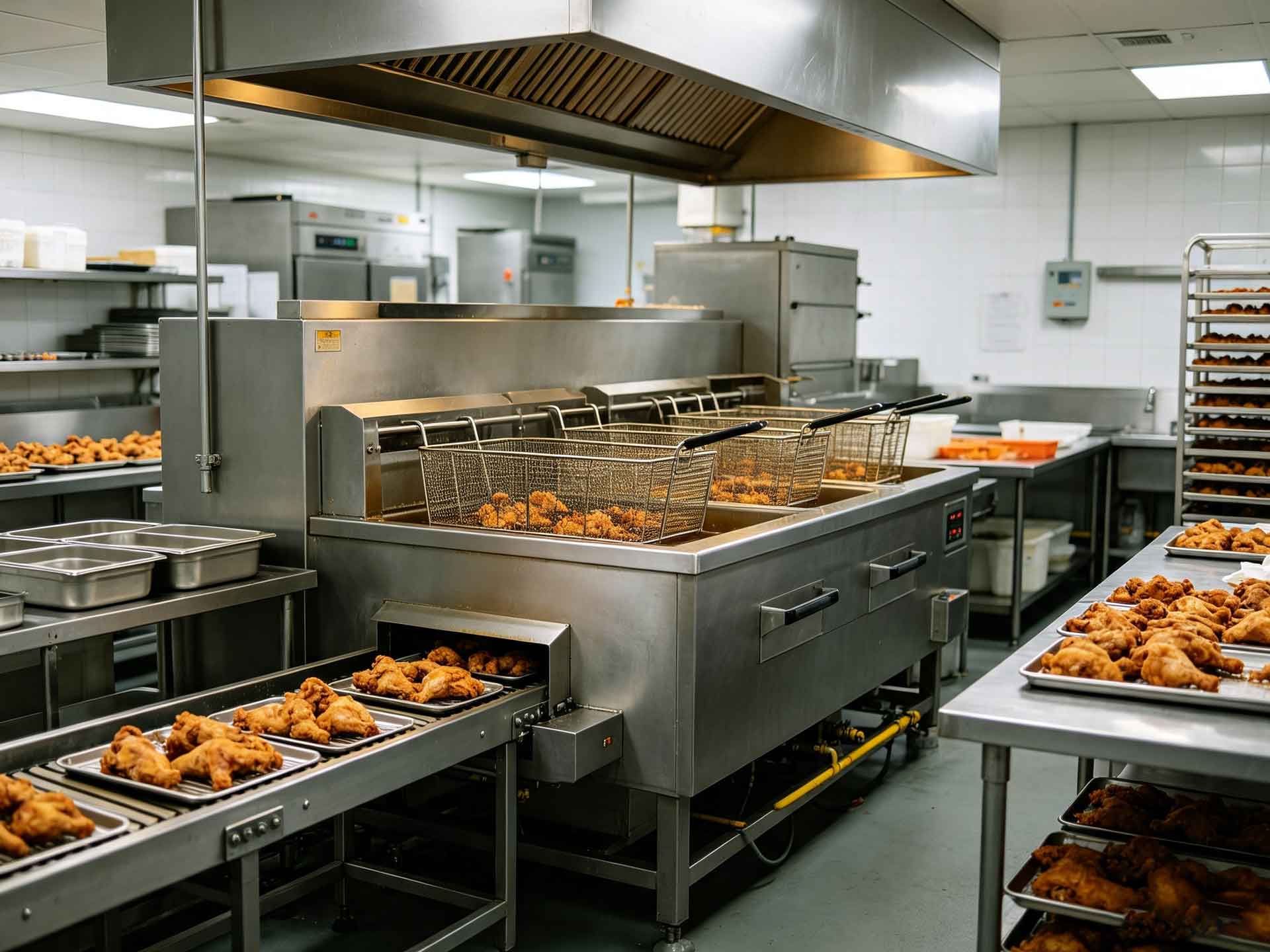
Commercial pressure fryers are categorized into four primary groups based on oil capacity and structural design: 16L countertop units, 25L floor-standing models, 55L batch pressure cookers, and KFC-style round-pot broasters. Selecting the right category depends on your available floor space, peak hourly volume, and menu focus. Dalin’s full pressure fryer range covers all four groups, so you can compare configurations within a single product family.
3.1 Countertop Pressure Fryers (16L)
A 16L countertop unit is designed for kitchens with limited floor space or operations adding bone-in fried chicken as a secondary menu item. It sits directly on heavy-duty stainless steel equipment stands or worktables, eliminating the need for dedicated floor drainage directly beneath the unit. Countertop models are suitable for small cafes, convenience stores, food trucks, and ghost kitchens testing a fried chicken concept before committing to a full line buildout.
3.2 Floor-Standing Pressure Fryers (25L)
The 25L floor-standing fryer is the workhorse of the QSR and fast-casual chicken industry. Built as a self-contained cabinet on heavy-duty casters, it provides the oil volume and thermal recovery needed for continuous back-to-back frying during lunch and dinner rushes. The lower cabinet space typically houses the drainage plumbing and integrated oil filtration pump, making it the standard choice for dedicated fried chicken stores.
3.3 High-Capacity Batch Pressure Cookers (55L)
A 55L pressure cooker is built for central kitchens, commissaries, large catering hubs, and high-traffic supermarket delis. When an operation needs to par-cook or fully fry massive batches of poultry, ribs, or potato wedges for multi-store distribution or hot-food bars, running multiple small fryers increases labor costs. A single 55L vessel consolidates batch production, allowing one operator to unload high-volume racks efficiently.
3.4 KFC-Style Broaster Pressure Fryers
A KFC-style broaster unit features a specialized cylindrical cooking well and heavy-duty locking lid engineered specifically for heavily breaded, bone-in chicken pieces. The round pot geometry promotes uniform heat circulation without cold corners, preventing flour sediment from burning onto the heating zone. It also includes a cold zone at the bottom of the pot where loose breading crumbs sink and stay cool without carbonizing and souring the oil.
4. How to Size a Pressure Fryer for Your Kitchen
Sizing a commercial pressure fryer requires matching the oil capacity in liters to your peak 30-minute ticket demand and physical kitchen footprint. Undersizing forces line cooks to overload the basket, which causes the oil temperature to crash and results in soggy, undercooked breading; oversizing wastes energy keeping excess oil hot during slow afternoon hours.
| Capacity Tier | Typical Footprint | Best Operational Fit | Key Sizing Advantage |
|---|---|---|---|
| 16L Countertop | Compact benchtop | Cafes, convenience stores, ghost kitchens, low-volume pubs | Fits existing counters without remodeling the cookline |
| 25L Floor-Standing | Standard QSR floor bay | Dedicated fried chicken shops, drive-thru QSRs, chain restaurants | Balances fast thermal recovery with built-in under-pot filtration |
| 55L Batch Cooker | Wide floor footprint | Central kitchens, supermarkets, institutional catering, commissaries | Maximizes output per labor hour for bulk batch production |
When calculating capacity for a new store layout, engineering teams use two practical rules:
- Size for the Friday dinner peak, not the daily average: If a single 25L fryer meets your average daily volume but falls behind during the 6:00 PM to 8:00 PM rush, customers wait too long. Furthermore, many experienced chain operators prefer installing two 25L units side-by-side rather than a single oversized pot for retail restaurants. A dual-25L setup allows you to shut one unit down during slow mid-afternoon hours to save energy and gives you backup capacity during maintenance.
- Account for product load vs. oil recovery: Cold chicken drops oil temperature rapidly. A 25L pot has sufficient thermal mass to absorb a full multi-head batch of chilled bone-in chicken and recover its target frying temperature quickly. A 16L unit handles smaller batches efficiently, whereas a 55L unit is engineered for heavy bulk loads where turnaround between massive batches is prioritized.
5. Gas vs Electric: Which Fuel Fits Your Store?
Electric pressure fryers are suitable for kitchens with reliable three-phase power and strict ventilation budgets, whereas gas pressure fryers are better suited for sites with low natural gas rates and limited electrical panel amperage. In the versatile 25L floor-standing category, both gas and electric configurations are available to match local utility constraints. If you are still weighing the two fuel options against installation cost and utility tariffs, our dedicated electric vs gas pressure fryer comparison walks through the site survey checklist.
Electric models immerse heating elements directly into the oil or bond them tightly to the pot, transferring heat straight into the shortening with minimal ambient heat loss into the kitchen. Gas units use high-output burners and heat tubes or jacketed pots; they require proper flue gas venting and gas interlock systems under the exhaust hood, but often reduce monthly utility bills in regions where commercial electricity is expensive.
Because choosing the wrong fuel source can trigger costly electrical panel upgrades or hood modifications during store construction, review our detailed technical comparison of electric vs gas pressure fryers before finalizing your store MEP (Mechanical, Electrical, and Plumbing) drawings.
6. Built-in Oil Filtration: Why It Changes Your Food Cost
A pressure fryer with built-in oil filtration circulates hot cooking oil through a filter pan and paper or mesh media inside the lower cabinet, removing carbonized flour crumbs and bone dust in minutes. Because cooking oil is one of the largest recurring consumables in a fried chicken operation, automated under-pot filtration is the single fastest way to extend shortening life and stabilize food quality.
When breading particles remain suspended in hot oil, they char and break down the oil’s chemical structure, producing dark smoke, off-flavors, and bitter spots on the chicken crust. Manual filtering—draining hot oil into open stockpots through cheesecloth—is slow, messy, and exposes kitchen staff to severe burn hazards.
Integrating a filtration pump directly into a 25L or 55L fryer cabinet allows staff to filter oil safely between rushes by turning a drain valve and flipping a pump switch. To see how filtration frequency impacts annual shortening budgets and pump maintenance, read our guide on choosing a pressure fryer with filtration.
7. Pressure Fryer vs Open Fryer: Which One Should You Buy?
A pressure fryer is the right choice for bone-in poultry and thick-cut proteins that require moisture retention and fast internal cooking, while an open fryer is better suited for high-surface-area snacks like French fries, onion rings, mozzarella sticks, and crispy chicken wings. Most modern QSR chicken concepts use both machines side-by-side on the cookline.
You cannot dynamically dump frozen fries into a pressure fryer mid-cycle because the lid is locked under pressure. Conversely, cooking large bone-in chicken breasts in an open fryer takes roughly 30% longer and dries out the meat before the bone reaches a safe internal temperature. For a complete menu-by-menu breakdown of how to balance your fry station, consult our engineering comparison of a pressure fryer vs open fryer.
8. Top 10 Commercial Pressure Fryers to Consider in 2026
Instead of ranking generic catalog numbers that may not fit your kitchen’s utility hookups, the top ten commercial pressure fryer configurations for 2026 are structured below by capacity, fuel type, and control system. All ten options represent proven production configurations manufactured by Dalin, allowing buyers to match the exact machine build to their operational tier.
| Rank & Configuration | Oil Capacity | Fuel Type | Control System | Best Operational Use Case |
|---|---|---|---|---|
| 1. 25L Programmable Electric | 25L | Electric | Programmable | Multi-unit QSR chains needing repeatable multi-menu timers |
| 2. 25L Programmable Gas | 25L | Gas | Programmable | High-volume chicken stores in low-cost natural gas regions |
| 3. 25L Smart Electric | 25L | Electric | Smart Panel | Flagship stores and franchises with unskilled kitchen labor |
| 4. 25L Smart Gas | 25L | Gas | Smart Panel | High-throughput gas kitchens requiring automated cook standardization |
| 5. 25L Digital Electric | 25L | Electric | Digital | Independent fried chicken restaurants balancing precision and budget |
| 6. 25L Digital Gas | 25L | Gas | Digital | Mid-sized gas restaurants wanting accurate LED temperature readouts |
| 7. 25L Mechanical Electric | 25L | Electric | Mechanical | Harsh kitchen environments prioritizing simple dial operation |
| 8. 25L Mechanical Gas | 25L | Gas | Mechanical | Budget-conscious gas kitchens with experienced fry cooks |
| 9. 16L Countertop Electric | 16L | Electric | Compact Control | Food trucks, cafes, convenience stores, and ghost kitchens |
| 10. 55L Batch Pressure Cooker | 55L | High-Output | Batch Control | Central kitchens, supermarket delis, and large catering facilities |
8.1 25L Programmable Electric Pressure Fryer
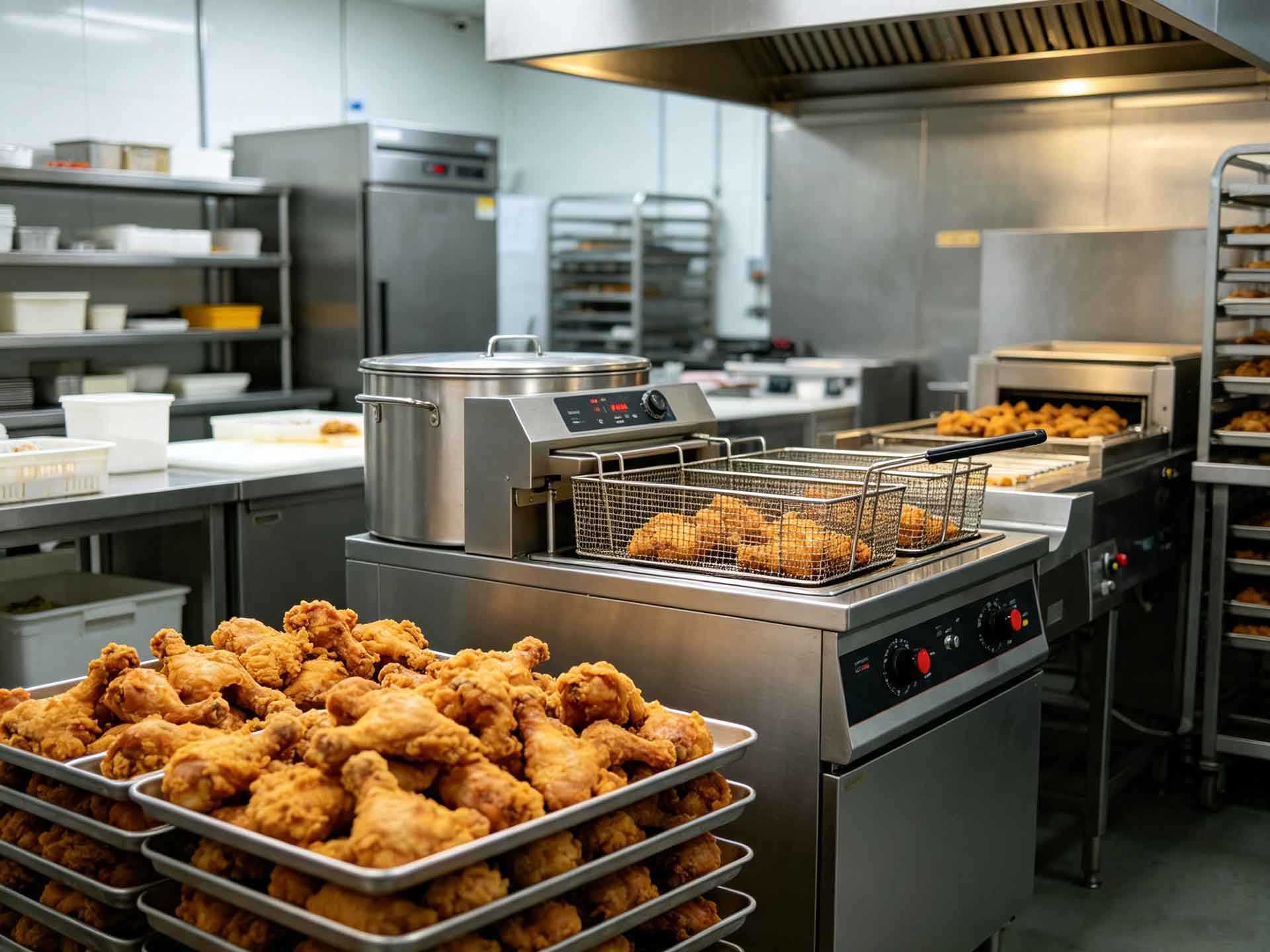
The 25L Programmable Electric configuration is the benchmark for growing QSR chains. It pairs a 25-liter floor-standing vessel with a multi-channel programmable controller and built-in oil filtration. Kitchen managers can pre-program exact time and temperature profiles for different menu items—such as 8-piece bone-in cuts, spicy thighs, or potato wedges. Line cooks simply press a numbered product button, eliminating guesswork and ensuring identical crispness across every franchise location.
8.2 25L Programmable Gas Pressure Fryer
Designed for regional chains and high-volume independent stores where natural gas or LPG is more economical than high-amperage three-phase power, the 25L Programmable Gas model delivers the same multi-preset menu automation as its electric counterpart. It combines gas combustion efficiency with programmable digital timers, making it ideal for suburban standalone drive-thrus with high peak-hour chicken demand.
8.3 25L Smart Electric Pressure Fryer
The 25L Smart Electric model upgrades the operator interface for modern commercial kitchens facing high staff turnover. Equipped with a smart control panel, it guides operators through cooking cycles and filtration reminders with intuitive visual prompts. When onboarding new kitchen staff rapidly, the smart interface reduces human error, prevents premature lid opening, and protects oil quality through automated temperature management.
8.4 25L Smart Gas Pressure Fryer
Built for high-output gas kitchens that refuse to compromise on kitchen automation, the 25L Smart Gas unit pairs heavy-duty gas heating with Dalin’s smart control interface. It is best suited for busy flagship QSR kitchens that rely on gas utilities for thermal recovery speed while requiring modern digital oversight over every batch of KFC-style bone-in chicken.
8.5 25L Digital Electric Pressure Fryer
The 25L Digital Electric pressure fryer hits the middle ground between capital equipment cost and temperature precision. Instead of complex multi-stage programming, it features a clear digital temperature and timer display. It is an ideal fit for independent fast-casual restaurants and single-site takeaway shops that run a focused fried chicken menu and want accurate electronic thermostat control without paying for enterprise-level smart software.
8.6 25L Digital Gas Pressure Fryer
For independent operators running gas lines who want clear visibility over pot temperature and cycle countdowns, the 25L Digital Gas model provides straightforward electronic control. Cooks can view exact oil temperatures from across the cookline and adjust timer settings quickly when switching between bone-in poultry and specialty fried sides.
8.7 25L Mechanical Electric Pressure Fryer
The 25L Mechanical Electric unit uses physical rotary dials for thermostat and timer control. In rugged kitchen environments—or markets where local maintenance technicians prefer servicing standard electromechanical switches and contactors rather than printed circuit boards—mechanical controls offer straightforward reliability and low upfront acquisition cost.
8.8 25L Mechanical Gas Pressure Fryer
Pairing a 25L gas-heated fry pot with simple mechanical knob controls, this configuration is a practical workhorse for traditional catering kitchens and budget-conscious start-ups. Experienced fry cooks who manage batch timing manually appreciate the tactile simplicity and ease of field maintenance with basic hand tools.
8.9 16L Countertop Commercial Pressure Fryer
When floor space is completely maxed out, the 16L Countertop model brings genuine pressurized frying to a benchtop footprint. It allows convenience stores, pub kitchens, snack bars, and compact delivery-only dark kitchens to launch a profitable bone-in fried chicken program without installing a full floor-standing fry bank.
8.10 55L High-Capacity Commercial Pressure Cooker
At the top of the capacity spectrum, the 55L pressure cooker is built for industrial batch volume. Rather than serving individual à la carte restaurant tickets, this machine is engineered for central production kitchens, commissaries, and high-traffic supermarket hot bars that process massive loads of poultry or meats per cycle to reduce labor cost per kilogram.
9. Key Buying Criteria and Total Cost of Ownership
Evaluating a commercial pressure fryer solely on its factory sticker price is one of the most expensive mistakes a procurement buyer can make. The initial hardware purchase typically accounts for a small fraction of the machine’s five-year Total Cost of Ownership (TCO); daily cooking oil consumption, utility draw, labor efficiency, and spare parts downtime dictate your true return on investment.
When comparing equipment quotes, evaluate these five technical and financial criteria:
9.1 Control Panel Selection (Mechanical vs. Digital vs. Programmable vs. Smart)
Your control panel choice should reflect your labor skill level and menu complexity. In the 25L line, buyers can choose among four distinct tiers:
- Mechanical controls use physical thermostats and timers; they cost the least upfront and are easy for basic electricians to repair, but rely on the cook to adjust settings manually.
- Digital controls add solid-state temperature accuracy and bright LED countdowns for single-product focus.
- Programmable controls lock in preset buttons for multiple menu items, preventing staff from accidentally altering oil temperatures.
- Smart panels provide the highest level of operational guidance for multi-store franchises standardizing SOPs (Standard Operating Procedures).
9.2 International Certifications and Compliance
Never import or install pressure equipment that lacks verified compliance documentation. Pressurized oil vessels operate under strict workplace safety and environmental regulations. Ensure the manufacturer holds CE certification for European health, safety, and environmental compliance, alongside RoHS (Restriction of Hazardous Substances) and REACH compliance verifying that internal electronic components, gaskets, and metals are free from restricted toxic chemicals. Additionally, verify that the factory operates under an ISO 9001 quality management system so that welding, pressure testing, and assembly follow audited procedures.
9.3 Total Cost of Ownership (TCO) Breakdown
Because pressure frying cooks roughly 30% faster and saves 20% to 25% on oil and energy compared to open frying, a properly specified unit pays back its acquisition cost through operational savings:
- Oil savings: Extending cooking oil life through lower frying temperatures, reduced food absorption, and built-in filtration directly lowers your largest monthly food-cost line item.
- Energy savings: Shorter cook cycles and sealed lids stop heat from escaping straight up the exhaust hood, cutting both fryer utility bills and kitchen HVAC cooling loads.
- Maintenance and wear parts: Ask suppliers upfront about the availability of consumable wear items—specifically lid sealing silicone/rubber gaskets, pressure relief valves, deadweight assemblies, and filter paper. Replacing a worn lid gasket on schedule prevents steam leaks that ruin cooking pressure.
10. How to Choose a Pressure Fryer Manufacturer
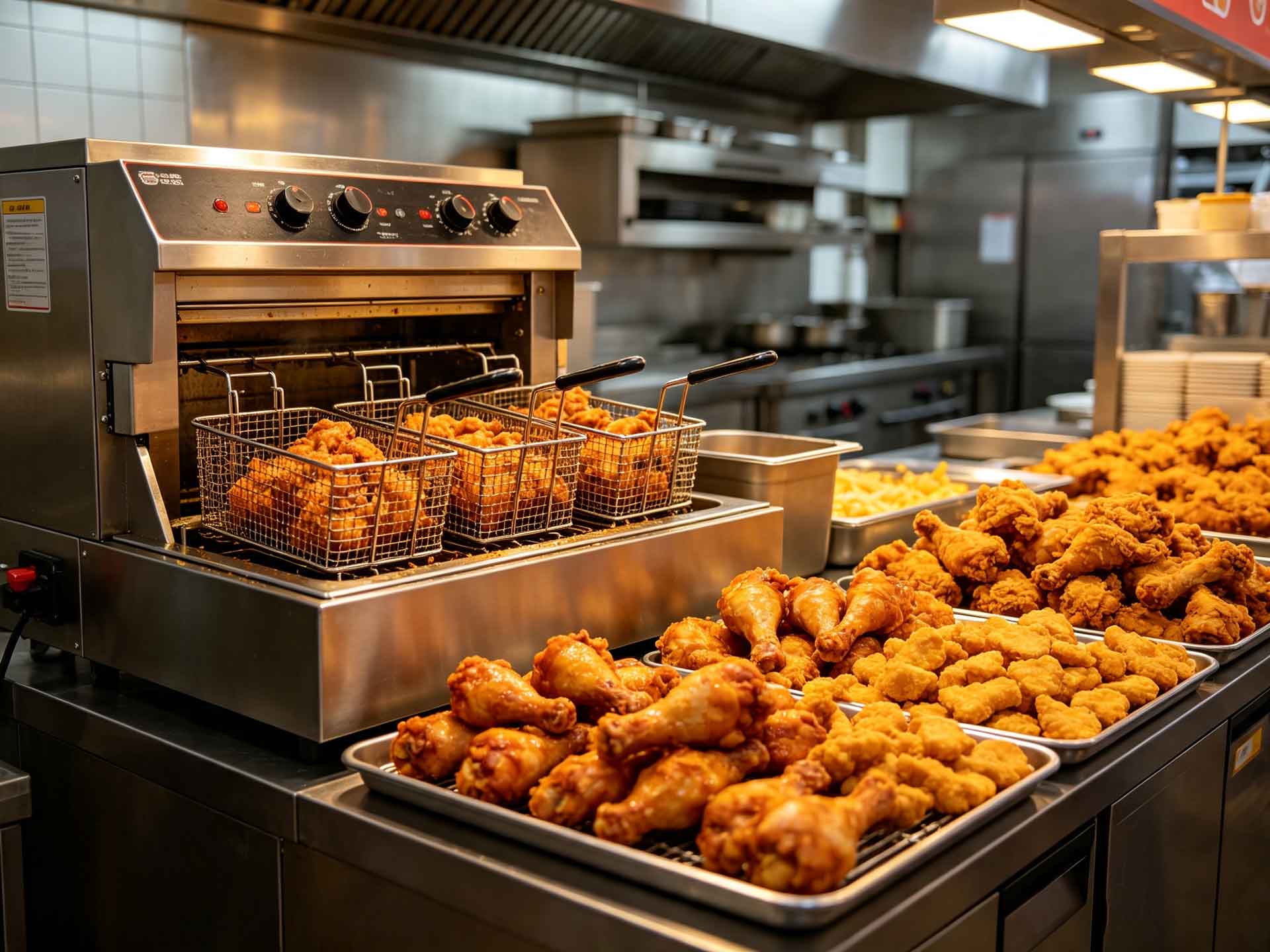
Selecting a commercial kitchen equipment supplier requires auditing their manufacturing scale, OEM/ODM customization capabilities, minimum order flexibility, and after-sales parts pipeline. Buying from an unverified middleman or tiny assembly workshop often results in delayed shipments, inconsistent weld quality, and zero technical support when a thermostat fails during a busy weekend.
Whether you are a foodservice equipment distributor building a private-label line or a QSR chain rolling out new store openings, use this procurement checklist when vetting a KFC style pressure fryer manufacturer:
- Production scale and delivery reliability: Can the factory handle both single-store orders and multi-container chain rollouts? Dalin operates a 50,000 m2 production campus with a monthly output of 15,000 units, ensuring consistent fabrication quality and rapid turnaround.
- Low MOQ and fast lead times: Waiting three months for kitchen equipment delays restaurant openings and burns rent. Look for a manufacturer that supports an MOQ of 1 unit for store trials or small operators, backed by a 7 to 10 working days lead time.
- OEM & ODM customization: Distributors and restaurant chains often need equipment tailored to their operational identity. Verify that the manufacturer offers full OEM and ODM services, including custom brand logos, control panel layouts, and capacity customization to fit specific cookline footprints.
- Warranty and technical support: Commercial fryers work in hot, grease-heavy environments. Ensure your supplier provides a clear 1-year warranty plus lifetime technical support so your local technicians have direct access to wiring diagrams, troubleshooting guides, and replacement parts.
FAQ
What is a pressure fryer?
A pressure fryer is a commercial frying machine equipped with a heavy-duty, gasket-sealed lid that traps steam released from food during cooking. By building controlled internal pressure inside the kettle, it cooks bone-in meats roughly 30% faster than open fryers while locking in natural moisture and reducing oil absorption into the breading.
How much does a commercial pressure fryer cost?
The price of a commercial pressure fryer depends on its oil capacity (16L countertop, 25L floor-standing, or 55L batch cooker), heating source (gas or electric), and control panel tier (mechanical, digital, programmable, or smart). Sourcing directly from an ISO 9001 manufacturer with a 1-unit MOQ removes multi-tier distributor markups while allowing you to configure the exact panel and filtration features your budget requires.
How long does a pressure fryer take to cook chicken?
A commercial pressure fryer cooks bone-in chicken roughly 30% faster than a traditional open fryer. Exact cycle times vary based on bird weight, starting meat temperature, and whether you are using a 16L, 25L, or 55L pot, but the pressurized environment consistently cuts minutes off every batch while ensuring the meat is safely cooked to the bone.
Do I need a pressure fryer with filtration?
Yes, if you run a daily commercial fried chicken program, built-in oil filtration is essential. Breading flour and bone dust quickly char in hot oil, causing dark smoke and bitter flavors. Built-in filtration lets staff safely pump and filter hot oil inside the cabinet between rushes, maximizing the 20% to 25% oil savings inherent to pressurized frying.
Can a pressure fryer be used for other foods?
Yes. While famous for KFC-style bone-in fried chicken, commercial pressure fryers are widely used for chicken tenders, pork ribs, potato wedges, breaded fish, and local specialty meats. Any thick protein or dense starch that benefits from a crispy exterior and moist, rapidly cooked interior performs well under pressure.
How much oil does a pressure fryer save?
Pressure frying saves roughly 20% to 25% on oil and energy compared to conventional open frying. Because positive steam pressure inside the food pushes outward against the cooking oil, less shortening soaks into the breading. Additionally, cooking at slightly lower temperatures for shorter periods slows down thermal oil breakdown.
What certifications should a pressure fryer have?
For commercial safety, hygiene, and import compliance, a commercial pressure fryer should hold CE certification, along with REACH and RoHS compliance verifying safe materials and electronics. You should also confirm that the factory manufactures under an audited ISO 9001 quality management system.
Conclusion
Choosing the right commercial pressure fryer comes down to matching your peak hourly chicken volume and kitchen utilities to the right vessel size and control system. A 16L countertop unit gives compact kitchens an affordable entry into bone-in chicken; a 25L gas or electric floor model with built-in filtration serves as the daily engine for QSRs and fast-casual chains; and a 55L pressure cooker handles heavy batch production for central kitchens and supermarkets. By prioritizing verified CE, REACH, RoHS, and ISO 9001 compliance alongside programmable or smart controls, you protect both kitchen safety and long-term food costs.
Request a Quote
Ready to spec the right unit for your restaurant chain, central kitchen, or distribution catalog? Explore our full pressure fryer lineup to request factory-direct pricing, discuss OEM/ODM customization (logo, control panel, or capacity), or place a sample order with a 1-unit MOQ and 7 to 10 working days lead time.