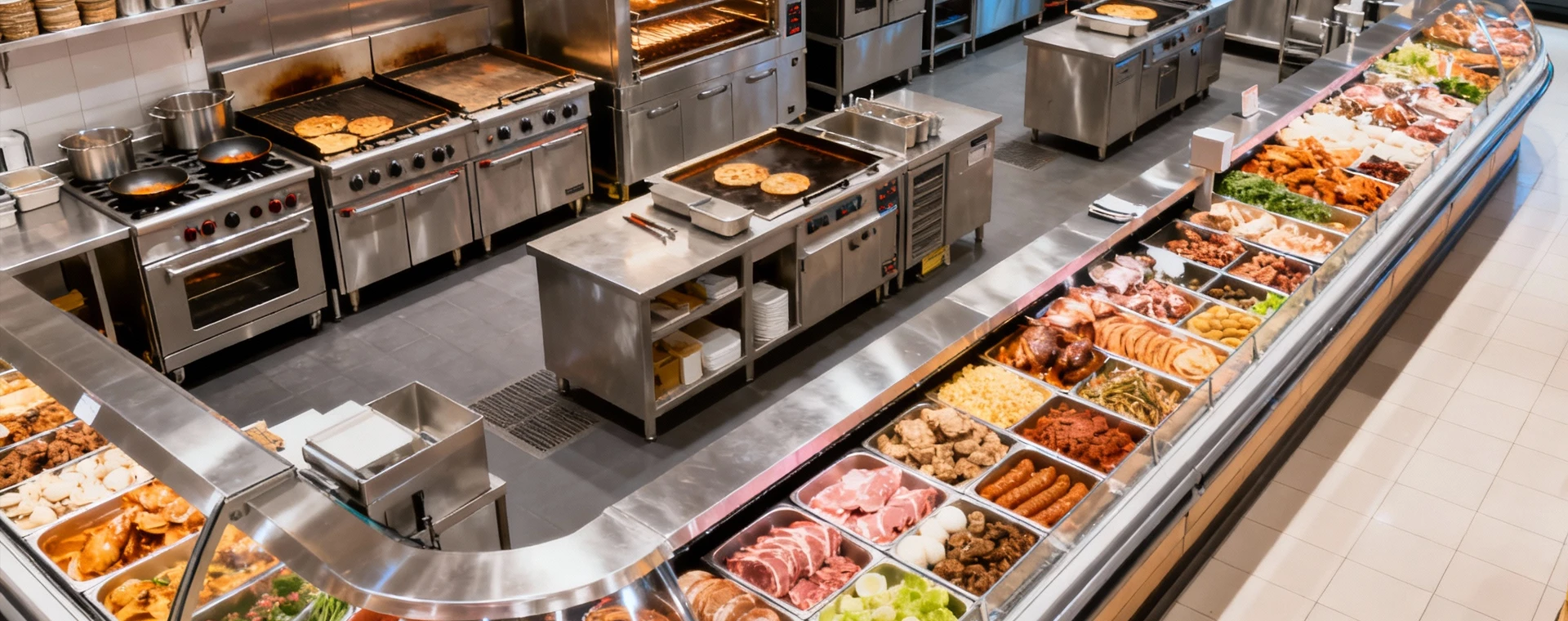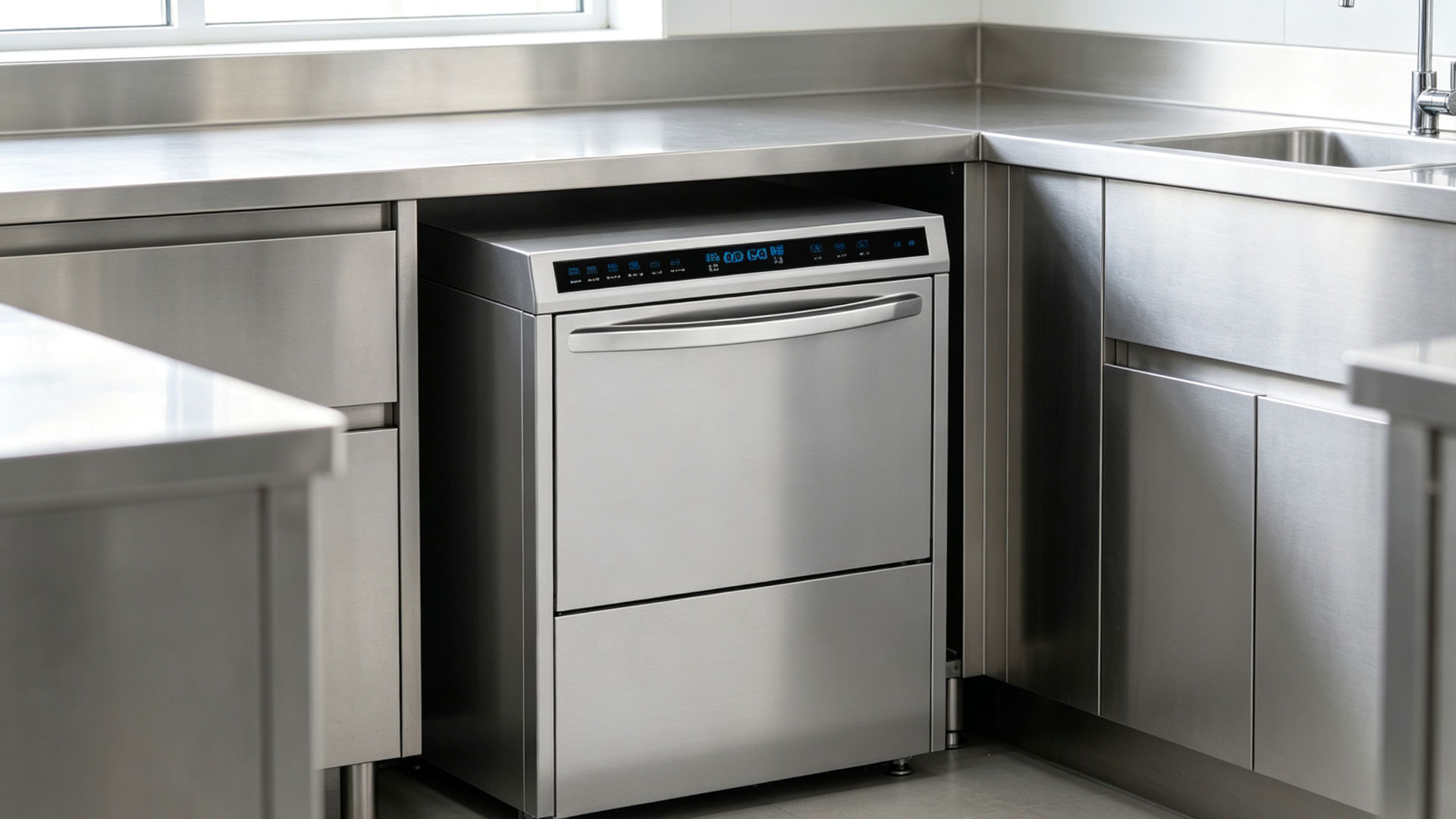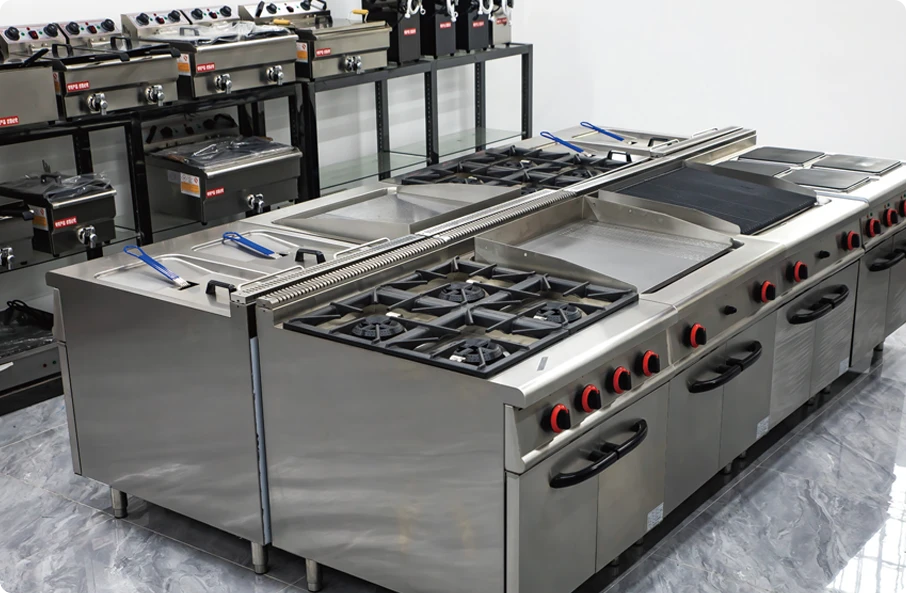
Hotel kitchens operate in one of the most demanding foodservice environments, juggling high-volume breakfast buffets, fine dining restaurants, 24/7 room service, and massive banquet events simultaneously. Selecting the wrong equipment leads to production bottlenecks during peak hours, escalated energy consumption, and high labor costs. Drawing on over 18 years of manufacturing experience, Guangdong Dalin Kitchen Equipment provides this technical guide to help hotel purchasing managers, project contractors, and foodservice operators evaluate capacity, workflow, and heavy-duty reliability when sourcing commercial cooking equipment for hotels.
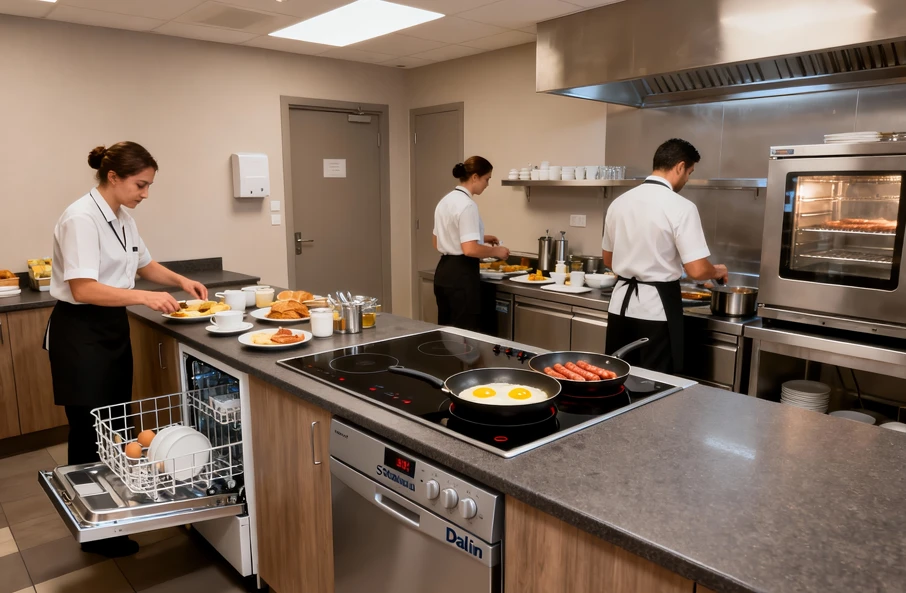
Table of Contents
- Evaluating Cooking Capacity and Peak Production Volume
- Designing Equipment Configuration for Optimal Kitchen Workflow
- Assessing Heating Performance and Thermal Recovery
- Material Durability and Maintenance Requirements
- Application Scenarios: Equipment Selection by Hotel Type
- Decision Framework: Standard vs. Customized Equipment Configurations
- Minimizing Total Cost of Ownership (TCO)
- Conclusion
1. Evaluating Cooking Capacity and Peak Production Volume
High-capacity commercial cooking equipment for hotels is selected based on maximum peak-hour banquet and buffet demand, rather than daily averages, to prevent production bottlenecks during critical service periods.
The most foundational metric for hotel kitchen equipment selection is its ability to handle extreme production spikes. Unlike an independent restaurant that may serve a steady stream of diners, a hotel often needs to serve a 500-person banquet while simultaneously running a bustling breakfast buffet.
Capacity Selection Logic:
- A La Carte vs. Batch Production: For individualized room service or fine dining, hotels require multi-burner configurations that allow chefs to manage numerous small pans at once. However, for banquets, relying on small pans is inefficient.
- High-Volume Solutions: To solve massive production requirements, hotels transition to heavy-duty batch equipment. A Commercial Cooking Kettle (often sized from 100L to 300L) is strictly recommended for producing large volumes of soups, sauces, and pasta water, reducing the labor of managing multiple stockpots. Similarly, a Commercial Tilting Skillet allows a single operator to braise, sear, or simmer hundreds of portions of meat or vegetables simultaneously.
By matching the equipment’s volumetric capacity to the hotel’s maximum guest count during peak events, procurement teams eliminate the risk of slow food preparation.
2. Designing Equipment Configuration for Optimal Kitchen Workflow
A station-based equipment layout is mandatory for large scale food service equipment because it segregates distinct cooking processes, minimizing cross-traffic and improving overall staff efficiency.
Hotel kitchens rarely purchase isolated machines; they require engineered equipment combinations that dictate the kitchen’s workflow. A poorly configured layout forces chefs to walk across the kitchen to complete a single dish, causing dangerous collisions and delays.
Standard Hotel Kitchen Configurations:
- The Hot Cooking Line: Dedicated to continuous a la carte and restaurant service. This typically features a heavy-duty Commercial Gas Range combined with charbroilers and fryers. Equipment here must seamlessly align (often through modular designs) to allow chefs to slide heavy pans from a burner to a resting plate without lifting.
- The Griddle Station: Breakfast buffets rely heavily on this area. A large Commercial Griddle is positioned near the front line to handle continuous outputs of eggs, bacon, and pancakes.
- Large Batch Cooking Area: Separated from the fast-paced hot line, this zone houses the tilting skillets and kettles used for prep work and banquet execution.
- Specialty Cooking Area: Depending on the menu, hotels may install a Commercial Rotisserie Oven or automated pasta cookers to handle specific high-demand items efficiently without monopolizing the main cooking ranges.
3. Assessing Heating Performance and Thermal Recovery
Heavy duty commercial cooking equipment requires high BTU output and rapid thermal recovery because dropping large volumes of cold ingredients into underpowered equipment drastically reduces food quality.
For large hotel kitchens operating 18 to 24 hours a day, heating performance is not just about reaching a high temperature; it is about maintaining that temperature under heavy load.
Technical Considerations:
- Thermal Recovery Speed: When a chef places 50 cold steaks onto a griddle, the surface temperature plummets. Professional kitchen equipment for hotels utilizes thicker cooking plates (typically 3/4-inch to 1-inch thick steel) and high-output burners to ensure the temperature recovers in seconds, searing the meat rather than boiling it in its own juices.
- Temperature Control Accuracy: Banquet cooking requires precision. If a braising pan cannot hold a precise low simmer, delicate sauces will scorch, ruining hundreds of portions.
- Energy Efficiency: Because hotel equipment runs continuously, efficient burner design is critical. Advanced combustion technology and proper insulation prevent excess ambient heat from escaping into the kitchen, which lowers both fuel consumption and the electrical load on the kitchen’s HVAC system.
4. Material Durability and Maintenance Requirements
Hotel restaurant kitchen equipment must feature heavy-gauge stainless steel construction and robust internal components because these facilities operate continuously and undergo aggressive chemical cleaning daily.
Hotels demand equipment that can withstand intensive, abusive environments. Residential or light-commercial equipment will fail within months under hotel conditions.
Durability Requirements:
- Structural Integrity: Equipment must feature reinforced, fully welded frames (not merely bolted) to support the immense weight of large stockpots and continuous physical impacts.
- Corrosion Resistance: High-grade stainless steel (such as 304-grade for food contact surfaces) is required to resist corrosion from acidic foods (like tomatoes and citrus) and the harsh degreasers used during nightly deep cleaning.
- Maintenance Accessibility: In a hotel, downtime equals lost revenue. Equipment should feature front-accessible components, allowing technicians to replace thermocouples, ignition modules, or gas valves quickly without pulling the entire cooking line away from the wall.
5. Application Scenarios: Equipment Selection by Hotel Type
Different hotel operational models dictate distinct equipment configurations; luxury resorts require diverse multi-station layouts, while banquet-focused hotels prioritize high-volume braising pans and cooking kettles.
How to choose commercial cooking equipment for hotel kitchens depends heavily on the property’s specific market positioning.
- Luxury Hotels and Resorts: These properties operate fine dining, 24-hour room service, and buffets. They require the highest level of flexibility. Their kitchens are heavily sectioned, utilizing multi-burner commercial gas ranges for intricate menu items and large griddles for rapid breakfast service.
- Business and Conference Hotels: Focused heavily on morning buffets and corporate lunches. The priority here is space utilization and fast throughput. Combination cooking equipment and flat top griddles dominate the layout to ensure fast, standardized output.
- Hotel Banquet Operations: Specialized strictly for large events. The hot line is secondary to the batch cooking area. These kitchens rely on 150L+ tilting skillets and massive kettles, alongside roll-in combi ovens, to produce and hold thousands of identical meals simultaneously.
6. Decision Framework: Standard vs. Customized Equipment Configurations
Customized commercial kitchen equipment for hotels is preferred over standard units when addressing irregular kitchen footprints or requiring highly specific burner-to-griddle ratios to match specialized menus.
While standard equipment fits many applications, large hotel projects frequently require customized solutions to maximize operational efficiency. Buyers should use the following framework to decide between standard and custom configurations:
| Evaluation Factor | Standard Commercial Equipment | Customized OEM/Project Solutions | Decision Recommendation |
| Kitchen Layout | Standard linear walls and ample space | Irregular footprints, structural pillars, tight corners | Choose Customized when standard depths block aisles or standard widths waste functional corner space. |
| Menu Requirements | General international cuisine | Highly specific ratios (e.g., requires 2 burners + 48″ griddle in one unit) | Choose Customized to integrate specific cooking zones into a seamless, easy-to-clean unified top. |
| Production Volume | Consistent, predictable daily flow | Extreme banquet spikes requiring specialized capacities | Choose Standard for independent hotel restaurants; choose Customized for central banquet commissaries. |
| Project Scale | Single equipment replacement | Entire kitchen build-outs or hotel chain standardization | Choose Customized for large projects to ensure uniformity, exact brand compliance, and optimized workflow. |
7. Minimizing Total Cost of Ownership (TCO)
Hotel procurement teams evaluate total cost of ownership by factoring in energy consumption, maintenance frequency, and labor efficiency rather than focusing solely on the initial capital investment.
A critical B2B purchase trigger for hotel operators is the long-term financial impact of the equipment. Purchasing a cheaper, lighter-duty range may save money upfront, but if it requires constant repairs and slows down service during peak hours, it becomes a financial liability.
The right heavy-duty commercial cooking equipment reduces operational pressure by:
- Lowering Labor Costs: High-capacity batch equipment allows one chef to do the work of three.
- Reducing Downtime: Reliable construction minimizes service calls and ensures the kitchen never has to 86 (cancel) menu items due to equipment failure.
- Consistent Output: Even heating guarantees that food quality remains high, protecting the hotel’s reputation and preventing food waste.
8. Conclusion
Selecting commercial cooking equipment for a hotel is a complex engineering and operational decision. Hotel kitchens must balance the delicate precision required for fine dining with the brute force capacity needed for massive banquets. The most successful procurement strategies look beyond standard machine dimensions and focus on peak-hour production capacity, workflow integration, thermal recovery performance, and long-term durability.
Whether your property requires an agile commercial gas range for a boutique restaurant or heavy-duty tilting skillets for a 1,000-person banquet hall, matching the equipment’s capabilities to your exact service volume is the only way to guarantee kitchen efficiency and profitability.
Partner with a Professional Kitchen Equipment Manufacturer
Guangdong Dalin Kitchen Equipment Co., Ltd. brings over 18 years of manufacturing expertise to the global hospitality industry. Operating a 50,000㎡ production facility, we provide CE, RoHS, and ISO 9001 certified commercial cooking equipment engineered for the world’s most demanding hotel kitchens. From heavy-duty standard units to complete OEM/ODM customized kitchen layouts, our technical team is ready to support your next project. Contact us today for professional equipment configuration recommendations and project quotations.
Frequently Asked Questions (FAQs)
1. What is the most important factor when choosing commercial cooking equipment for hotels?
The most critical factor is peak-hour production capacity. The equipment must be sized and powered to handle your maximum guest volume during rush periods (e.g., breakfast buffets or large banquets) without suffering from slow heat recovery or operational bottlenecks.
2. Why do hotel banquet kitchens use commercial tilting skillets?
Tilting skillets (braising pans) are incredibly versatile and labor-efficient. They allow a single chef to fry, simmer, braise, or sear massive quantities of food (often up to 150 liters) in a single batch, ensuring consistency and saving time compared to using multiple standard pots on a traditional range.
3. How does custom commercial kitchen equipment benefit a hotel project?
Customization allows the hotel to dictate the exact layout of the cooking line. You can specify the exact ratio of burners to griddles, customize the overall dimensions to fit around structural columns, and create seamless, unified cooking tops that are much easier to keep sanitary.
4. What does “thermal recovery” mean, and why does it matter for hotels?
Thermal recovery refers to how fast cooking equipment returns to its target temperature after a large amount of cold food is added. Rapid thermal recovery is vital in high-volume hotel kitchens to ensure food is cooked quickly and consistently, rather than stewing in its own liquids due to a temperature drop.
5. How can I ensure the equipment will withstand heavy hotel use?
Look for heavy-duty construction markers: fully welded frames (not bolted), high-grade stainless steel (like 304 for food zones), thick cooking plates (for griddles), and high-BTU cast iron burners. Ensure the manufacturer has a proven track record in commercial applications and holds relevant international certifications like CE and ISO 9001.
6. Can Dalin provide complete kitchen solutions for a new hotel build?
Yes. With over 18 years of experience, Dalin provides comprehensive project support, from equipment selection and workflow configuration to manufacturing heavy-duty standard units and fully customized OEM cooking lines tailored specifically to your hotel’s operational requirements.