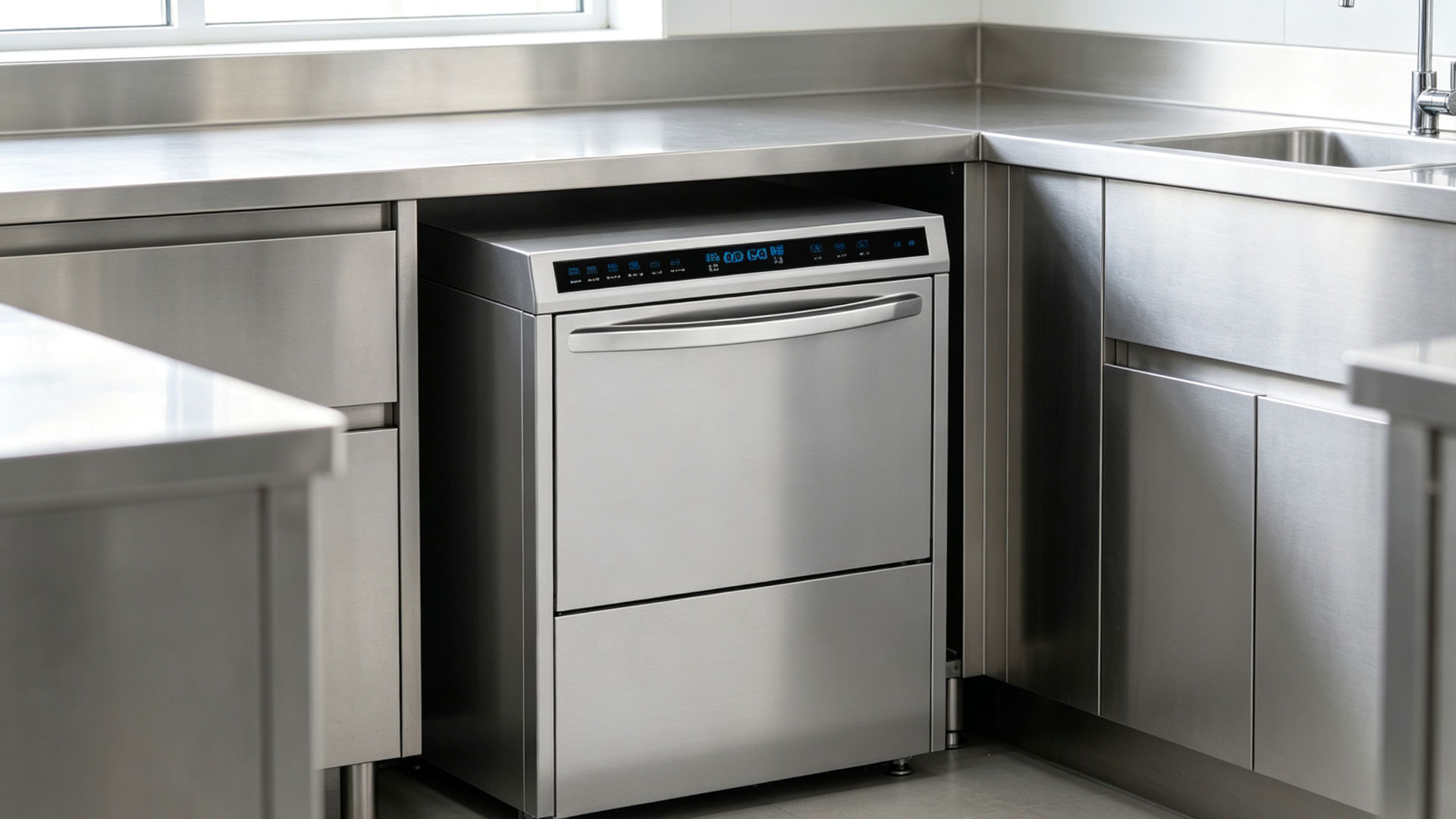
A gas range burns natural gas or LPG under open burners and a griddle; an electric range uses metal heating elements. Gas heats faster and usually costs less to run, while electric is simpler to install where no gas line exists. This comparison looks at heat control, running cost, installation, and maintenance so you can pick the right one for your menu and your building.
Table of Contents
- How Gas and Electric Ranges Work
- Heat Control and Cooking Speed
- Running Costs
- Installation and Utility Needs
- Which Fits Your Menu
- Durability and Maintenance
- Safety Considerations
- Certifications and Export Rules
- How to Decide for Your Kitchen
1. How Gas and Electric Ranges Work
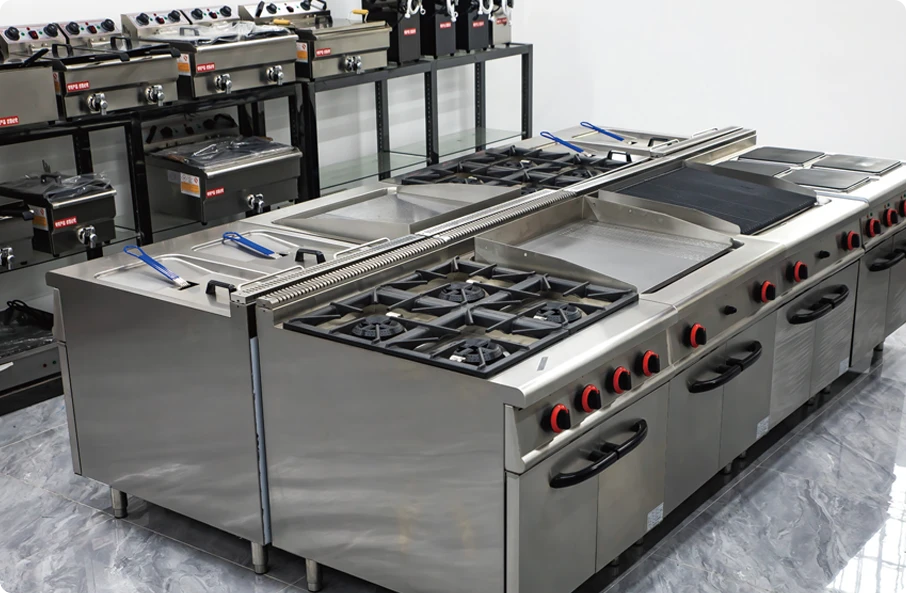
A gas range burns natural gas or LPG under open burners, a griddle, or a broiler, lit by a standing pilot or electronic ignition. An electric range uses metal heating elements or a ceramic glass surface. Dalin makes gas combi-ranges, so most of what follows compares a gas unit against an electric one for the same kitchen role. Both reach cooking temperature, but they get there differently and suit different sites.
The single change that drives every other difference is where the heat comes from. Gas puts the flame right under the pan. Electric puts a heated metal surface under it. That one detail affects speed, control, cost, and the utility work your building needs before the unit can even turn on.
| Factor | Gas Range | Electric Range |
|---|---|---|
| Heat source | Open flame (natural gas or LPG) | Electric heating elements |
| Time to reach temperature | Near instant | 3 to 8 minutes |
| Response when you turn the knob | Immediate | Gradual, lags a beat |
| Utility needed | Gas line plus ventilation | High-amperage circuit plus ventilation |
| Typical running cost | Lower per unit of heat | Higher per kWh in many regions |
| Best for | High-volume, flame-forward menus | Sites without gas, steady holding |
2. Heat Control and Cooking Speed
Gas gives instant response. Turn the knob and the flame grows or shrinks right away, which matters when a saute pan needs a quick drop in heat. Electric elements warm and cool more slowly, so temperature changes lag a beat. For high-volume lines where timing is tight, gas usually feels more direct. For delicate work like holding a low simmer, a modern electric unit holds steady once set.
A useful rule of thumb: gas reacts in seconds, electric in roughly 30 to 90 seconds depending on the element. That gap is small per dish but adds up across a 200-cover service. If your cooks adjust heat constantly, gas reduces the wait between adjustments.
Electric wins on hold stability. Once an element sits at a set temperature, it stays there with little drift, which suits soups, sauces, and warming. Many kitchens actually run both: gas on the line for speed, electric in prep for steady heat.
3. Running Costs
Gas is cheaper per unit of heat in most markets, and it recovers temperature faster between batches, so you spend less energy per cover. Electricity costs more per kWh in many regions, but electric ranges lose less heat to the room, which can matter in a hot kitchen during summer. The honest answer depends on your local utility rates, so get a quote for both before you commit. Our complete buyer’s guide covers total cost of ownership in more detail.
| Cost factor | Gas | Electric |
|---|---|---|
| Energy price per unit of heat | Usually lower | Usually higher |
| Heat lost to the room | More (adds cooling load) | Less |
| Temperature recovery between batches | Fast (less idle energy) | Slower (more idle energy) |
| Install cost (no existing utility) | Gas line can be costly | Panel upgrade can be costly |
| What decides the real number | Local gas tariff | Local electricity tariff |
Note the install line: the cheaper-to-run option can be the pricier-to-install option if your building lacks the right utility. Always price the full project, not just the sticker.
4. Installation and Utility Needs
Gas needs a certified gas line, a shutoff valve within reach, and proper ventilation. Electric needs a high-amperage circuit sized to the unit, which some older buildings cannot supply without a panel upgrade. If your site has no gas service, electric may be the only practical choice. Plan this with an engineer before you order, because the utility setup drives everything else.
| Requirement | Gas Range | Electric Range |
|---|---|---|
| Supply line | Certified gas pipe to a near shutoff | Dedicated high-amperage circuit |
| Ventilation | Hood sized to BTU load | Hood sized to heat and steam |
| Common blocker | No gas service in building | Panel too small for the load |
| Who signs off | Gas fitter plus inspector | Electrician plus inspector |
5. Which Fits Your Menu
A grill-heavy or wok-heavy menu benefits from gas flame control. A bakery or a kitchen that mostly holds temperatures may do fine on electric. Think about peak service: if you fire hundreds of covers, gas keeps up better. The modular configuration guide shows how burner, griddle, and oven modules map to different menus.
| If your menu is heavy on | Recommended fuel | Why |
|---|---|---|
| Wok, grill, searing, saute | Gas | Instant, adjustable flame |
| Breakfast griddle, burgers | Either | Griddle plate works on both |
| Soups, sauces, holding | Electric | Steady low heat, less watching |
| Baking and roasting only | Electric oven base | Even, dry heat |
| Site has no gas line | Electric | No gas work needed |
6. Durability and Maintenance
Gas burners are simple and easy to clean, but pilots and valves need periodic service. Electric elements fail less often but cost more to replace. In a 12-hour-a-day operation, both will need care; the difference is which parts your local technician can source. Ask the manufacturer about spare-part lead times before you buy.
For a range running 12 hours a day, six days a week, plan a simple service rhythm: daily wipe-down of the cooktop, weekly check of burners and igniters, and a quarterly inspection of gas connections or elements. A manufacturer who can name spare-part lead times in writing is lower risk than one who cannot.
7. Safety Considerations
Gas carries a combustion and leak risk, so it demands ventilation and regular inspection. Electric removes the flame risk but brings higher amperage and shock risk if wiring is poor. Neither is unsafe when installed to code; the question is which hazards your team is trained to manage. Either way, train staff on shutoff and keep clearances to combustibles.
A practical safety checklist before first use: confirm the gas shutoff is reachable, test the leak detector if fitted, verify the hood and interlock work, and make sure staff know the emergency steps. For electric, confirm the circuit is correctly rated and the outlet is not shared with other heavy loads.
8. Certifications and Export Rules
For export, electric ranges still need CE, REACH, and RoHS marks, and gas units add combustion and gas-safety certification on top. Dalin ranges carry CE, REACH, RoHS, and ISO 9001 across the line. If you resell across borders, ask for the actual certificate files, not just a logo, because customs and buyers will check. The installation guide lists the safety checks engineers confirm before delivery.
9. How to Decide for Your Kitchen
Start with your building: does it have gas service and the electrical capacity for electric? Then weigh menu and volume, then running cost at your local rates. If you run high volume with a flame-forward menu, gas is the common pick. If your site lacks gas or you want a simpler install, electric works. Either way, choose a manufacturer with the right certificates and spare parts. The manufacturer guide walks through what to check before you sign.
A simple decision order: (1) what utilities does the site have, (2) what does the menu demand, (3) what is the running cost at local rates, (4) what can your team service. Answer those four and the choice usually becomes clear. When the site has both options, gas tends to win on speed and cost for busy lines.
Frequently Asked Questions
Can I run a gas range where only electricity is available?
No, not without adding a gas line and ventilation. If your building has no gas service, an electric range is the practical choice.
Which is cheaper to run, gas or electric?
Gas is usually cheaper per unit of heat and recovers faster between batches, but local utility rates decide the real number. Get quotes for both.
Do electric ranges need a hood?
They still need ventilation to remove heat and steam, though the hood design differs from a gas unit’s combustion hood. Check local code.
Are Dalin ranges available in electric?
Dalin’s modular line is gas-based (combi-ranges). For electric-only sites, discuss your needs with the team when you request a quote.
Which gives better heat control for delicate sauces?
Electric holds a set low temperature with less drift, which helps with sauces and holding. Gas reacts faster for searing and wok work. Many kitchens use both.
Will switching fuel change my hood size?
Often yes. Gas hoods are sized to BTU combustion load; electric hoods are sized to heat and steam. Size the hood to the actual unit with your engineer.
Request a Quote
Still deciding between gas and electric? Tell Dalin your building’s utilities, menu, and covers per day. We will recommend a configuration, share the certificate files, and provide a free 3D kitchen layout. Explore the gas combi-range series or contact our team for a quote and OEM inquiry.