Fast food depends on speed, consistency and cost. Choosing the right fast food equipment for a European QSR kitchen means keeping up at peak, producing the same result every time, cutting the workload on your crew, and meeting HACCP and CE standards — without running up your energy bill.

Key takeaways
- Size fryers, griddles and holding units to your busiest hour, not the average day.
- Fast temperature recovery is what prevents rush-hour bottlenecks.
- Holding equipment protects both food safety and consistency.
- Prioritise energy efficiency — cooking and holding are the biggest energy loads in a QSR.
- For the EU market, check CE marking, 220–240 V / 50 Hz power and HACCP-safe holding.
Why fast food equipment choices decide your margins
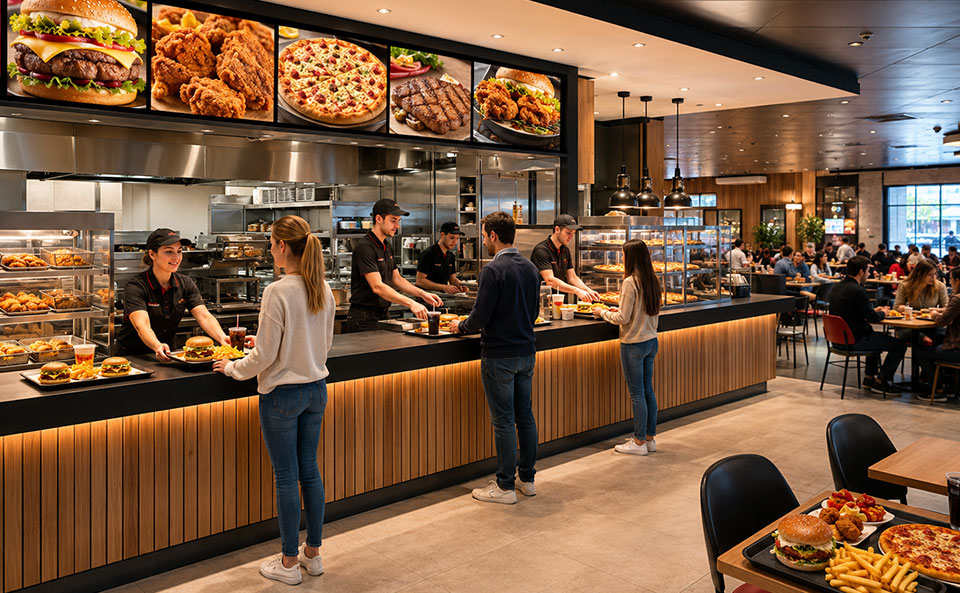
In a quick-service restaurant (QSR), every second counts. Customers expect food in minutes, and your crew is expected to handle high volume with as few hands as possible. Poor fast food equipment shows up instantly: fryers that slow down at peak, uneven griddles, holding cabinets that dry out food, and energy bills that swallow the profit.
The pain points European fast food operators describe most:
- Crews are hard to find and costly. High turnover means equipment must be simple and fast to operate.
- Speed breaks down at peak. Undersized fryers or griddles create queues during rush hours.
- Consistency slips. Without the right holding and cooking equipment, every batch tastes different.
- Energy bills climb fast. Cooking and keeping food hot are the biggest energy loads in a QSR.
- Compliance is strict. HACCP food safety and CE market rules shape what equipment you can use.
What equipment does a fast food restaurant need?
A QSR kitchen usually needs five equipment groups. The exact mix depends on your menu — burger, chicken, bakery or mixed.
1. Deep fryers
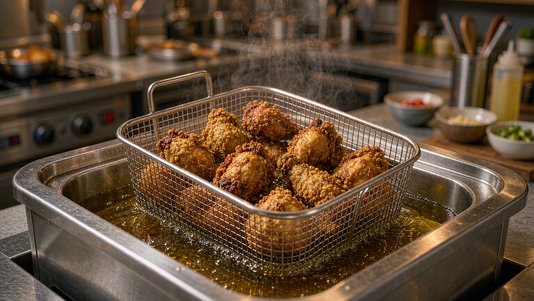
Fryers cook chips, chicken and many QSR staples. Pressure fryers cook faster and retain moisture; open fryers suit high-volume, quick batches. Choose on recovery time, oil capacity, filtration and energy efficiency — a fryer that takes too long to recover temperature is the classic peak-hour bottleneck.
Choose by: items fried, peak volume, temperature recovery speed and oil management.
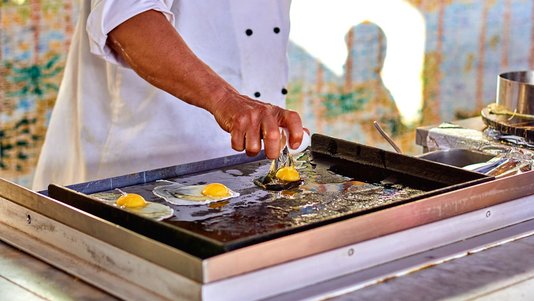
2. Griddles and grills
Burgers, breakfast items and grilled sandwiches depend on even, consistent heat. Flat-top griddles and clamshell grills differ in recovery time and throughput. Even heating and fast recovery mean a consistent sear — and less rework.
Choose by: menu items, batch volume per hour and heat recovery.
3. Holding and warming equipment
In fast food, food is often cooked ahead and held. Holding cabinets, warming drawers and hot food displays keep items at safe temperature without drying them out. This protects both food safety and consistency — a poorly chosen holding unit ruins hours of labour.
Choose by: hold time, moisture control and HACCP-safe temperature range.
4. Refrigeration and prep
Reach-ins, prep tables and cold storage protect ingredients and support assembly lines. Right-sized refrigeration keeps ingredients at hand without wasting energy — critical in a high-energy-cost market like Europe.
Choose by: storage volume, door traffic and energy efficiency.
5. Wash and dish station
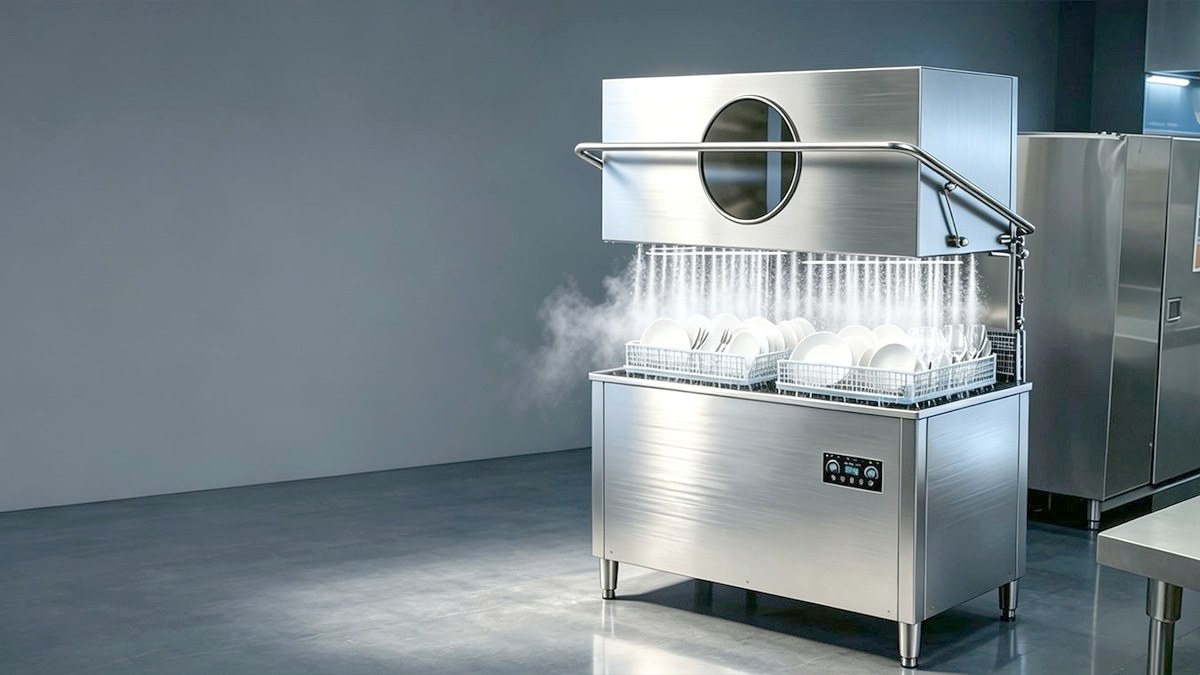
Fast food generates a steady stream of trays, utensils and containers. A fast-cycle commercial dishwasher plus a proper wash-rinse-sanitize sink station keeps service moving and satisfies hygiene rules.
Choose by: racks per hour, available space and sanitizing requirements.
How to choose fast food equipment for speed, consistency and lower labour
- + Size for the rush hour. Match fryer, griddle and holding capacity to your busiest peak, not the average day.
- + Automate repeatable tasks. Fryer filtration, timed cooking and automatic holding reduce skill dependence — ideal when staff turnover is high.
- + Protect consistency. Timed cycles and reliable holding keep every batch the same, cutting waste and rework.
- + Prioritise energy efficiency. Efficient fryers, griddles and holding units cut running bills in a high-energy-price market.
- + Keep it simple to operate. Clear controls and easy cleaning reduce training time and errors.
Fast food equipment checklist for European buyers
| Requirement | Why it matters in the EU |
|---|---|
| Throughput vs peak volume | Undersized fryers and griddles cause rush-hour queues and lost sales. |
| Temperature recovery | Fast recovery keeps speed and consistency; slow recovery stalls the line. |
| Energy efficiency | Lower running costs in a high-energy-price market; supports sustainability goals. |
| CE marking | Equipment placed on the EU market must meet applicable CE requirements. |
| HACCP-safe holding | Holding and warming must stay within safe temperature ranges. |
| Voltage & power supply | Match local 220–240 V / 50 Hz and single- or three-phase connections. |
| Easy cleaning & service | Fast cleaning and local spare parts keep uptime high in a fast operation. |
Fast food kitchen layout: a simple selection sequence
- Map your menu and peak volume item by item (chips, chicken, burgers, etc.).
- Lay out the assembly line — cook, hold, assemble, serve — for one-directional speed.
- Size fryers, griddles and holding to the busiest hour.
- Compare temperature recovery and energy efficiency, not just price.
- Confirm CE marking, power supply, HACCP-safe holding and local service before ordering.
Rule of thumb: in fast food, equip for the rush hour, automate the repeatable, and choose equipment fast enough to recover temperature — speed and consistency are what customers pay for.
Frequently asked questions
What equipment does a fast food restaurant need?
The core setup usually includes deep fryers, griddles or grills, holding and warming units, refrigeration and prep tables, and a fast dishwashing and wash-sink station. The exact mix depends on your menu.
How do I choose a commercial fryer for fast food?
Match fryer capacity and oil volume to your peak volume, and prioritise fast temperature recovery, efficient oil filtration and energy efficiency. A fryer that recovers slowly becomes the bottleneck during rush hours.
Why does holding equipment matter in fast food?
Fast food is often partly cooked ahead and held. Proper holding cabinets and warming units keep food at safe HACCP temperatures without drying it out — protecting both food safety and the consistency customers expect.
How do European fast food operators cut energy costs?
Choose energy-efficient fryers, griddles, holding and refrigeration, right-size every unit to real volume, and avoid oversized equipment running inefficiently during quiet hours. In a high-energy-price market, this pays back quickly.
Does fast food equipment need CE marking in Europe?
Equipment placed on the EU market must meet applicable CE requirements, along with the correct 220–240 V / 50 Hz power compatibility. Confirm certification, warranty and local spare-part availability before buying.
Build a fast food kitchen that runs on rails
An efficient European fast food kitchen is equipped to hit speed, hold consistency and run with a lean crew. Size fryers, griddles and holding units to your busiest hour, automate the repeatable tasks, prioritise energy efficiency, and design for HACCP and CE — and your kitchen will serve faster, waste less and take far less strain on your team.