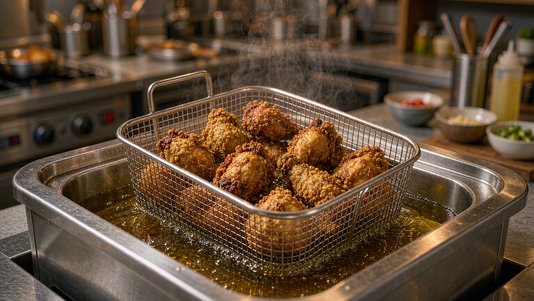
Traditional open fryers bring obvious drawbacks to fried chicken businesses. They cook slowly with uneven heating, causing long customer waits and order backlogs during peak hours. Their open structure speeds up oil oxidation and residue buildup. This requires frequent oil changes and raises daily operating costs greatly. Traditional frying also produces dry, tough and inconsistent-tasting chicken, making product standardization hard. Heavy oil fumes and potential hygiene risks further hurt your store operation. Commercial pressure fryers solve these core pain points perfectly. The sealed high-pressure design enables faster cooking, lower oil consumption and stable fried chicken quality. It is a must-have device for restaurants, fried chicken shops and commercial catering kitchens. This article covers its main types and practical business advantages.
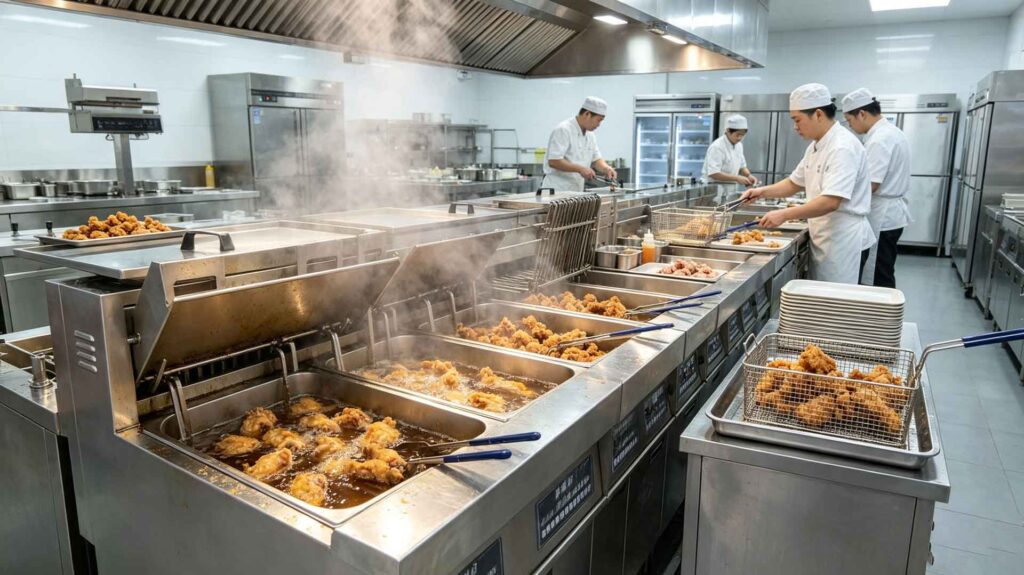
Table of Contents
- Classification of Commercial Pressure Fryer
- Core Advantages of Pressure Fryer for Fried Chicken Production
- Conclusion
Classification of Commercial Pressure Fryer
Commercial pressure fryers are upgraded catering-grade frying devices built for high-frequency commercial use. They are divided into three mainstream models for different business scenarios: Restaurant Pressure Fryer, Chicken Pressure Fryer and High Volume Pressure Fryer. Each model features exclusive capacity, pressure settings and functions. This targeted design fully meets the differentiated needs of small shops, specialty stores and large-scale catering factories. For the full fried chicken kitchen line-up — marinators, breading stations, holding cabinets and more — see our fried chicken restaurant equipment guide.
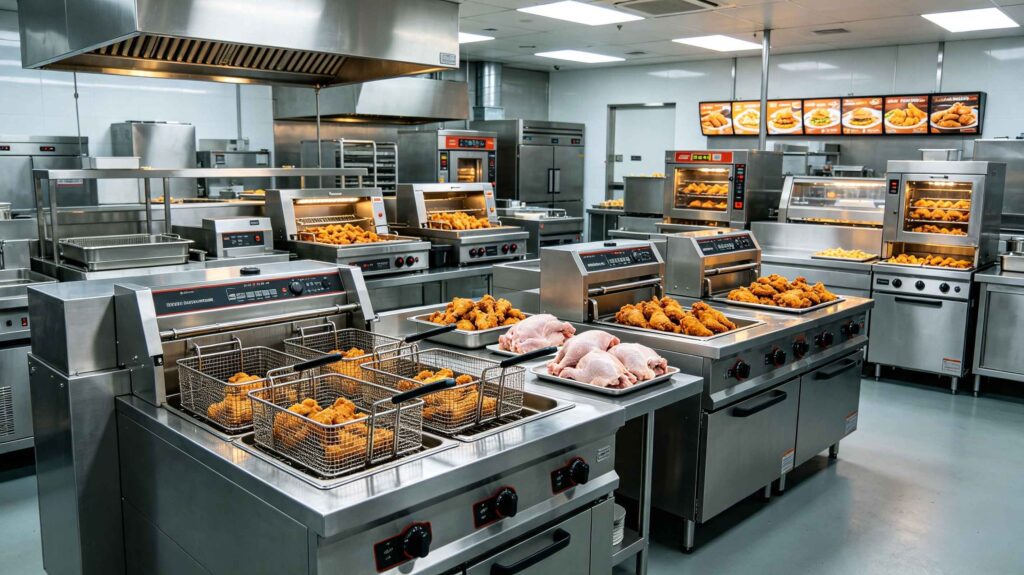
1. Restaurant Pressure Fryer
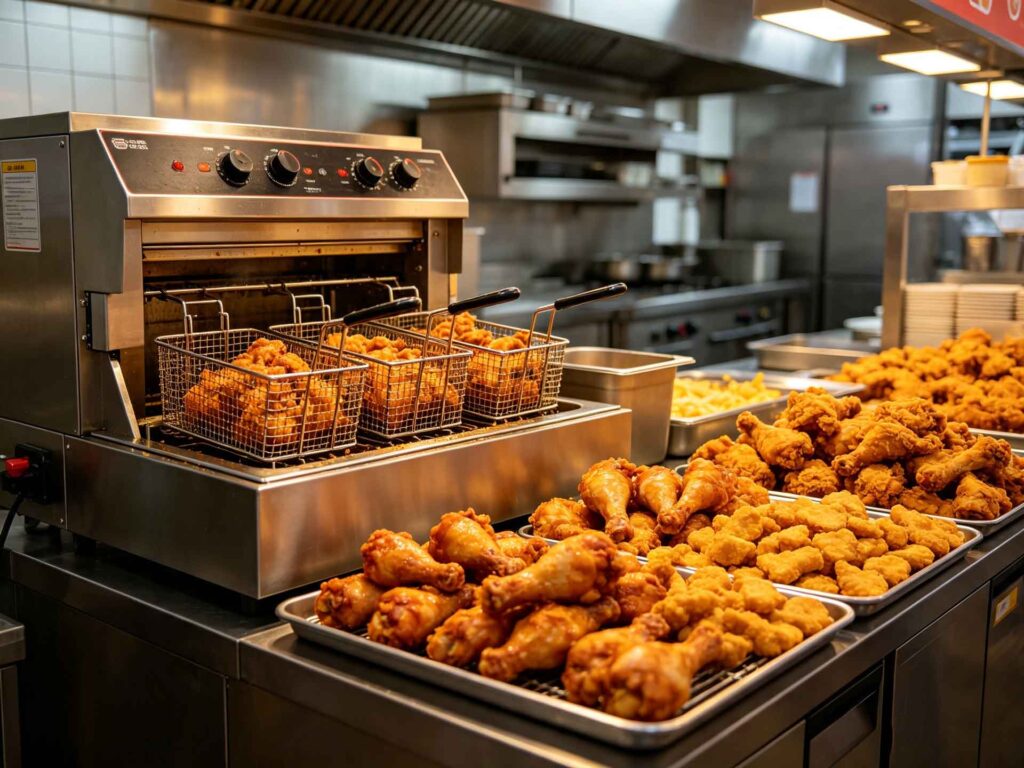
Restaurant pressure fryers fit small and medium catering kitchens, including casual restaurants, snack bars and ordinary fried chicken stores. They support diversified frying needs for chicken, chicken wings, nuggets and French fries. These fryers feature a compact body and flexible operation to adapt to limited kitchen space.
They adopt precise medium and low pressure control and constant temperature heating for stable performance and low failure rates. The simple operation panel allows quick staff mastery. It avoids energy waste and equipment redundancy, making it the most popular basic commercial frying equipment for daily catering business.
2. Chicken Pressure Fryer
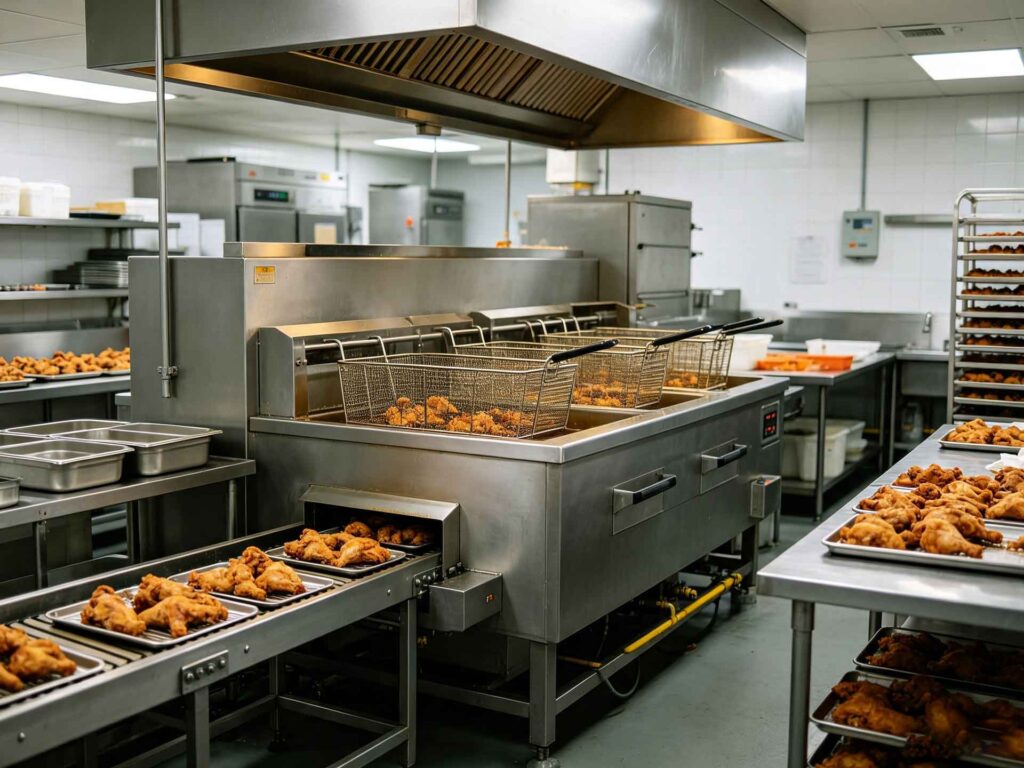
Chicken pressure fryers are professional devices specially designed for fried chicken processing. They optimize pressure and heating modes for whole chicken, chicken legs and chicken breasts. Different from general restaurant fryers, this model focuses entirely on standardized and high-quality chicken product production for specialty fried chicken stores.
The sealed high-pressure structure locks chicken moisture effectively. It delivers crispy skin and tender, juicy meat while avoiding dryness, burning and uneven cooking. Built-in preset fried chicken programs support one-key operation. It standardizes every batch of products and keeps consistent taste for brand chain stores.
3. High Volume Pressure Fryer
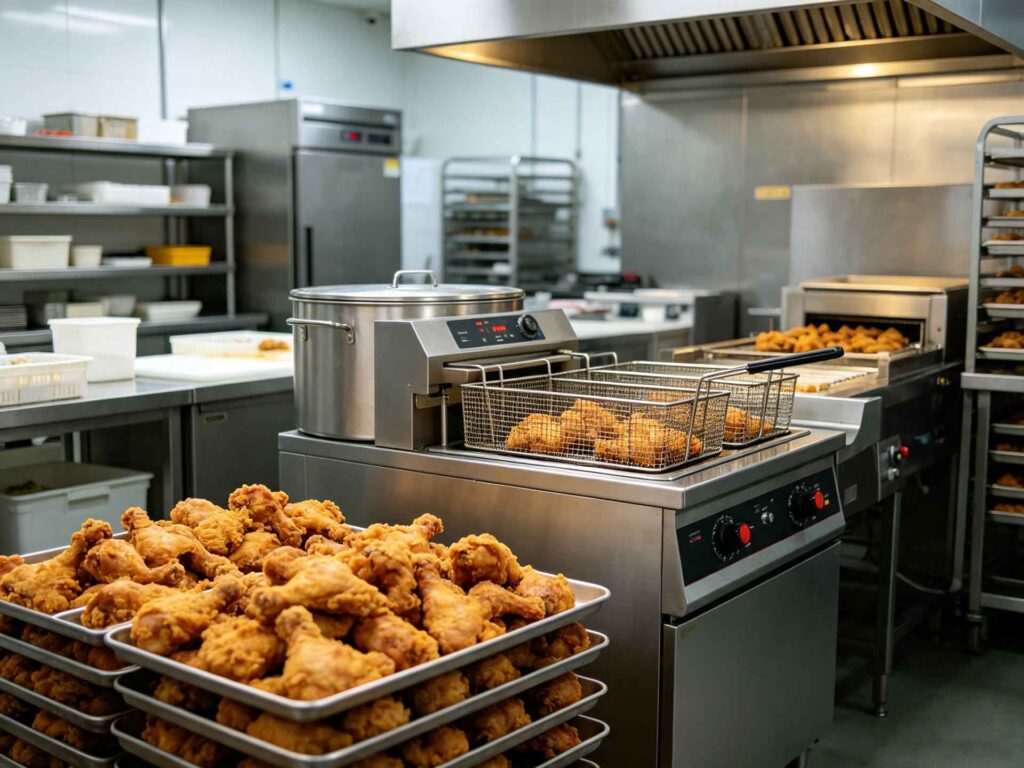
High volume pressure fryers are high-power, large-capacity equipment for mass production. They suit large chain stores, central kitchens and catering processing factories. This model solves the low-output problem of ordinary fryers during peak hours via upgraded power and expanded tank capacity.
It supports multi-basket simultaneous frying with higher pressure and faster heating. It greatly boosts order efficiency and eliminates customer queuing and order backlogs. The reinforced sealing and durable structure adapt to long-term uninterrupted high-load operation with stable performance and longer service life.
Core Advantages of Pressure Fryer for Fried Chicken Production
All commercial pressure fryers bring outstanding operational advantages for fried chicken production. They mainly help catering businesses cut running costs and improve cooking efficiency. These core strengths steadily boost store profits and operational competitiveness.
1. Oil Filtration & Low Oil Cost
Every commercial pressure fryer is equipped with a professional oil filtration system. The sealed frying environment reduces oil contact with air and slows down oxidation and deterioration. The built-in filter removes food residues and impurities in real time. It keeps frying oil clean and effectively extends oil service life.
Pressure fryers reduce oil replacement frequency by over 50% compared with open fryers. It greatly cuts daily oil costs for catering stores. Meanwhile, pressure-fried chicken absorbs less grease. It reduces waste and provides healthier, low-grease finished products.
2. Fast Cooking & High Efficiency
The sealed high-pressure environment raises oil boiling points and speeds up heat transfer. Its cooking speed is 30% to 50% faster than traditional fryers. Whole chicken and chicken parts can be fully fried in just a few minutes. It greatly shortens each production cycle.
Fast cooking improves kitchen productivity and daily order output. It shortens customer waiting time and optimizes dining experience. For competitive fried chicken catering businesses, this advantage helps attract more traffic and improve customer retention.
Conclusion
Three main types of commercial pressure fryers cover all catering scenarios from small shops to large central kitchens. They deliver standardized quality, higher efficiency and lower operating costs. Choosing a matched pressure fryer greatly stabilizes product taste and improves store profitability. It is essential equipment for modern fried chicken business development.
Frequently Asked Questions (FAQs)
1. What is a commercial pressure fryer and how is it different from an open fryer?
A commercial pressure fryer cooks food in a sealed, pressurized vat. The pressure raises the oil’s effective cooking temperature and traps steam released by the food, so chicken cooks faster at lower oil temperatures and stays juicier inside with a crisper crust. An open fryer has no pressure and is better suited to lighter items such as french fries, tenders, or fish fillets that need a very crispy exterior.
2. Which pressure fryer model fits a small fried chicken shop?
The Restaurant Pressure Fryer is designed for small to medium kitchens (casual restaurants, snack bars, independent fried chicken stores). It uses medium-to-low pressure control with a compact body and a simple operation panel, making it suitable for shops serving roughly 100–300 orders per day.
3. How much oil can a pressure fryer save compared with an open fryer?
Because the sealed environment limits oil contact with air and built-in filtration removes food residue in real time, pressure fryers can cut oil-replacement frequency by over 50% versus open fryers, while pressure-fried chicken also absorbs less grease.
4. Can pressure fryers handle bone-in chicken?
Yes. The Chicken Pressure Fryer model is built specifically for bone-in products — whole chicken, legs, and breasts — with preset programs that standardize every batch for chain-store consistency.
5. Do you supply pressure fryers for distributors or OEM/ODM branding?
Yes. As an OEM/ODM manufacturer we supply both standard pressure fryers and customized / private-label units for distributors, importers, and chain brands. Share your volume and branding requirements via the form below.
What to Send Us for a Pressure Fryer Quotation
To receive a practical recommendation and a detailed quotation, share as much of the following as you can. The more specific your information, the more precise our engineering proposal will be:
- Shop type (independent shop, franchise, or central kitchen) and projected daily order volume.
- Menu (bone-in / boneless, nuggets, fries) and typical batch sizes.
- Available footprint for the fry station and surrounding workflow.
- Utility specs: voltage, phase, and gas supply if applicable.
- Standard units or OEM/ODM branding for your franchise.
- Target opening date and delivery region.
Request a Pressure Fryer Quotation
Guangdong Dalin Kitchen Equipment Co., Ltd. is an OEM/ODM manufacturer of commercial kitchen equipment. Contact our team with your requirements, or send your floor plan for a tailored quotation and production timeline.