From cooking ranges to refrigeration and dishwashing, here is how to plan and choose commercial kitchen equipment that fits your menu, your volume, your space and your budget — so you build a kitchen that runs efficiently from day one.
Why equipment selection makes or breaks a kitchen
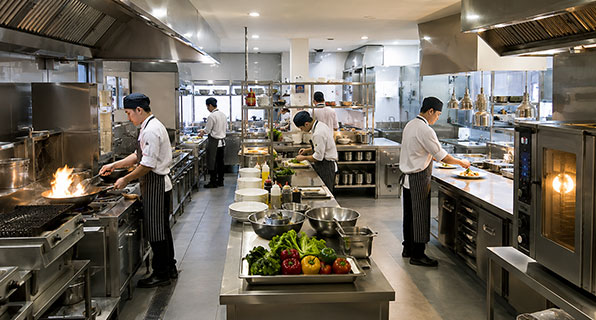
Commercial kitchen equipment is the backbone of your operation. Choose it well and your kitchen runs smoothly at peak hours, uses less energy, and lasts for years. Choose it poorly and you face bottlenecks, breakdowns and wasted money you cannot easily recover.
The most common pain points operators describe:
- Equipment is the wrong size. Too small to keep up at peak, or too big to run efficiently at quiet times.
- The layout fights the workflow. Cooks cross the kitchen repeatedly; dishes and prep collide.
- Running costs spiral. Inefficient cooking, refrigeration and dishwashing quietly drain profits.
- Breakdowns stop service. Cheap or unreliable units fail when you need them most.
- Upfront cost blinds long-term value. A lower price often hides higher energy, maintenance and replacement costs.
Start with your kitchen’s real requirements
Before comparing equipment, define what the kitchen must do. Four factors drive every equipment decision:
- Menu: What do you cook? A grill-heavy steakhouse, a soup-and-noodle shop and a bakery need very different equipment.
- Volume: How many dishes per hour at peak? Size equipment for your busiest hour, not your average day.
- Space: Measure work and storage zones, and plan workflow before buying a single unit.
- Budget: Plan the purchase price and running costs — energy, water, chemicals and maintenance over the machine’s life.
The core categories of commercial kitchen equipment
Cooking equipment
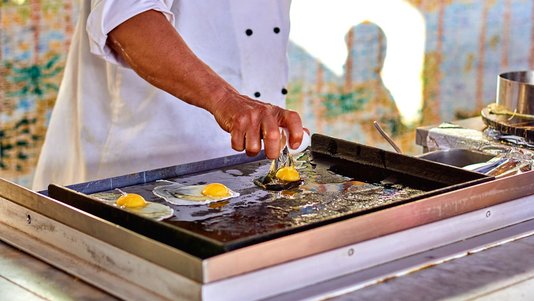
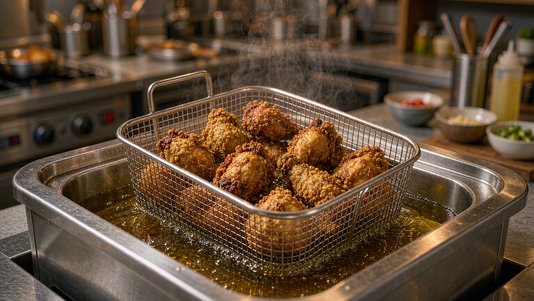
Ranges, fryers, griddles, ovens, steamers and grills form the cooking line. Match burner and oven capacity to your peak menu mix, and choose energy type — gas vs electric — based on local supply, cost and ventilation.
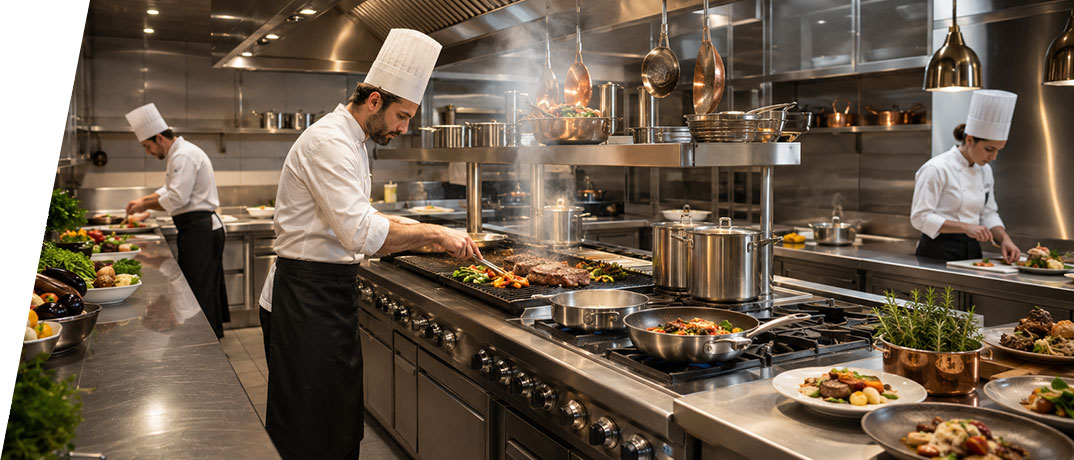
Choose by: menu type, peak volume, energy availability and heat recovery speed.
Refrigeration and cold storage
Reach-in refrigerators, prep tables, walk-in coolers and freezers protect food safety and reduce waste. Reliable temperature control and efficient insulation matter more than a lower sticker price.
Choose by: required storage volume, temperature zones (fridge vs freezer), door traffic and energy efficiency rating.
Dishwashing and warewashing

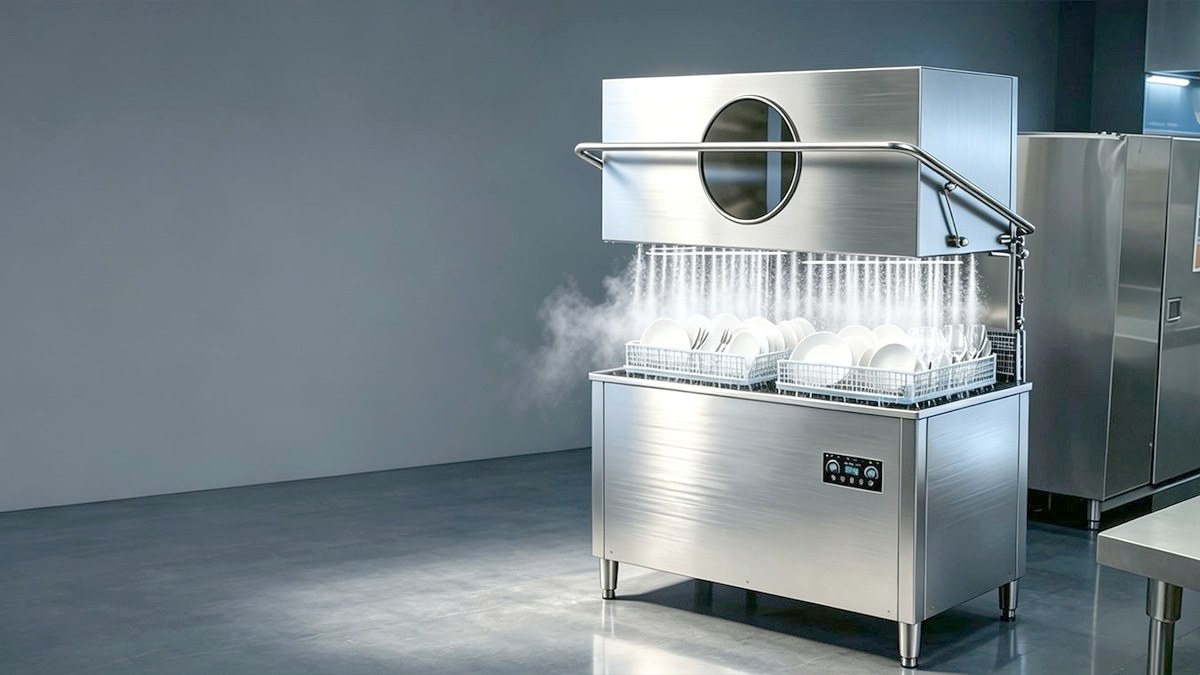
Undercounter, hood-type, door-type and conveyor dishwashers — plus commercial sinks — keep dishes moving. Match the machine to your racks per hour and pair it with a proper wash-rinse-sanitize sink station.
Choose by: racks per hour, available floor or counter space, and sanitizing requirements.
Food preparation equipment
Worktables, prep sinks, mixers, slicers, processors and food storage containers support the line. Prep equipment should match your recipe volumes and keep ingredients within easy reach of the cooking line.
Choose by: recipe workflow, prep volume and hygiene regulations.
Ventilation and exhaust
Hoods, exhaust fans and make-up air systems remove heat, grease and smoke, and keep the kitchen safe and comfortable. Under-sized ventilation undermines even the best cooking equipment.
Choose by: cooking line length, grease load, local code and airflow requirements.
Storage and utility
Shelving, racks, waste bins and utility carts keep the kitchen organized and compliant. Plan storage before the kitchen fills up, not after.
Choose by: dry storage volume, access frequency and health-code requirements.
What to look for in any piece of equipment
| Criterion | Why it matters |
|---|---|
| Capacity vs peak volume | Undersized equipment is the most expensive mistake; size for the busiest hour. |
| Energy and water efficiency | Running costs dominate lifetime cost — efficiency pays back every day. |
| Build quality and materials | Food-grade stainless steel and solid construction resist daily commercial wear. |
| Serviceability and parts | Easy maintenance and available spare parts reduce costly downtime. |
| Compliance and certification | Meets local hygiene, safety and electrical/gas standards. |
| After-sales support | Reliable warranty and technical support protect your investment. |
A simple selection process
- Map the menu and peak volume for every production area.
- Plan the workflow — receiving, storage, prep, cooking, plating, washing — before choosing units.
- List equipment per zone and match capacity to the busiest hour.
- Compare running costs, not just purchase price.
- Confirm compliance, warranty and spare-parts availability before ordering.
Rule of thumb: buy to your busiest hour, plan your workflow first, and treat energy efficiency as part of the price — because it is.
Frequently asked questions
How do I choose commercial kitchen equipment for a new restaurant?
Start with your menu, expected peak volume and floor plan. List the equipment needed for each production zone, size each unit to the busiest hour, then compare total lifetime cost — purchase price plus energy, water and maintenance — across options.
Is it better to buy new or used commercial kitchen equipment?
New equipment typically offers reliability, warranty and efficiency that used units may lack. Used equipment can save on upfront cost, but check condition, age, service history and spare-part availability carefully, and factor in higher running costs and downtime risk.
What is the most important equipment in a commercial kitchen?
There is no single most important item — cooking, refrigeration and dishwashing all determine throughput. The real priority is matching every unit to your peak volume, so no single piece becomes a bottleneck.
How much commercial kitchen equipment does a restaurant need?
That depends on your menu, seating and volume. A small cafe needs far less than a full-service restaurant. Plan by production zone and peak capacity rather than buying a fixed package, and consult a supplier who can map equipment to your specific operation.
What should I check before buying commercial kitchen equipment?
Confirm capacity, energy and water efficiency, build quality, compliance certification, warranty terms and spare-parts availability. Also confirm delivery, installation and after-sales support.
Build a kitchen that works from day one

The right commercial kitchen equipment is the one that matches your menu, fits your space, keeps up at peak and stays economical to run. Plan around your workflow, size for your busiest hour, and weigh long-term efficiency alongside the purchase price — and your kitchen will pay you back every day.