
Gas Fryer vs Electric Fryer: Which Is Better for Commercial Kitchens?

This technical guide evaluates commercial fryers based on thermal recovery, utility infrastructure, and peak-hour production capacity. It helps procurement managers and restaurant owners decide between the high-BTU output of gas fryers and the thermal efficiency of electric models. By aligning equipment selection with actual operational workflows, QSRs can eliminate kitchen bottlenecks, lower total operating costs, and maintain standardized food quality.
How to Build a Commercial Kitchen for a Burger Restaurant?

This engineering guide outlines the critical steps to designing a high-efficiency commercial burger kitchen. It helps QSR operators and procurement managers evaluate core machinery—such as contact toasters, heavy-duty griddles, and holding cabinets—based on peak-hour production volume and linear workflow integration. By sourcing a complete equipment solution, restaurant investors can eliminate cross-traffic bottlenecks, standardize product quality, and significantly reduce long-term operational risks.
What Should Restaurant Owners Consider Before Buying Commercial Fryers?
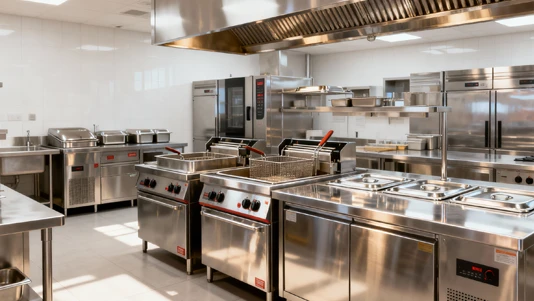
This technical guide helps restaurant owners and B2B procurement teams evaluate commercial fryers based on production volume, thermodynamic requirements (pressure vs. open), and utility limits. By prioritizing rapid recovery times and integrated oil filtration, operators can eliminate kitchen bottlenecks, standardize food quality, and drastically reduce long-term consumable costs.
Broasted Chicken:How Commercial Pressure Fryers Improve Fried Chicken Quality
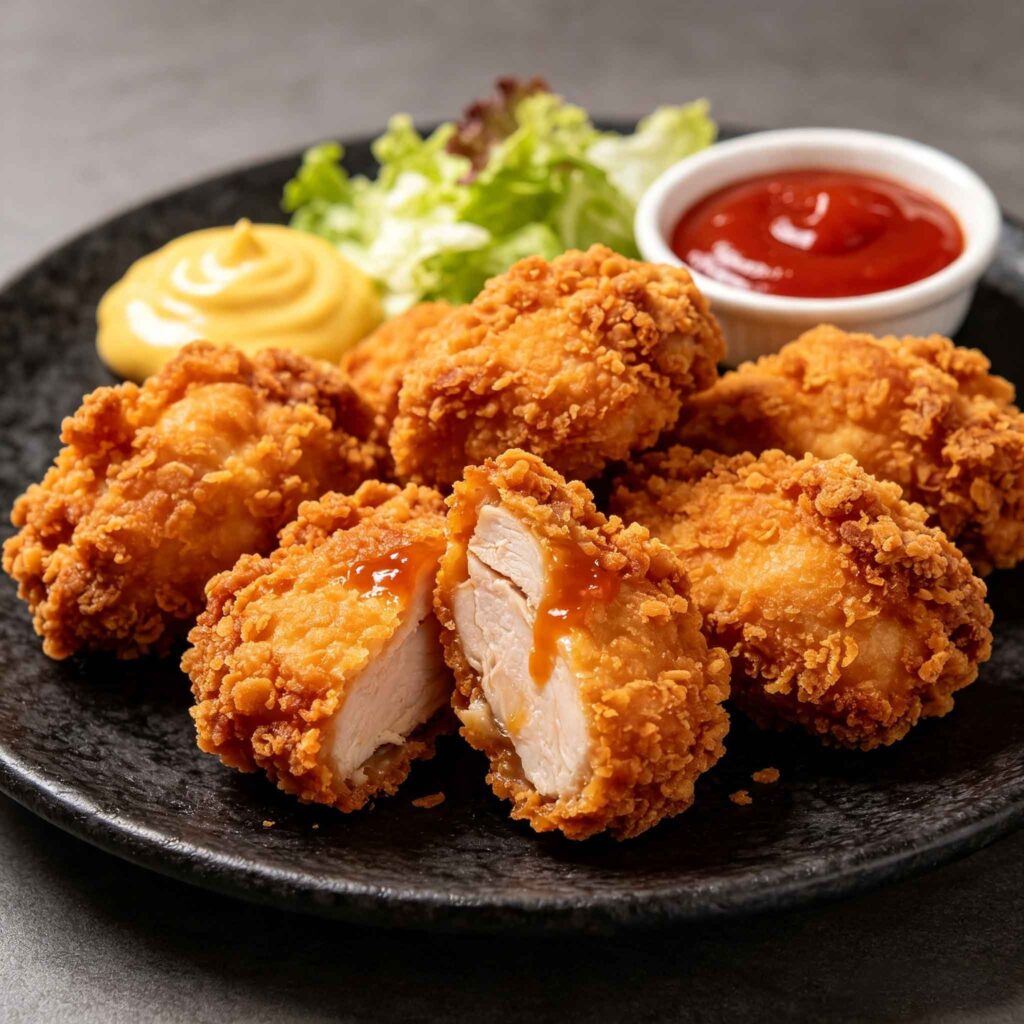
Introduction Broasted chicken is a premium fried chicken variant crafted through professional marination, specialty coating, and industrial pressure frying techniques. It is widely recognized as crispy juicy broasted chicken that stands out from regular deep-fried chicken, featuring a crunchy outer crust and tender, moist interior that satisfies global consumer taste preferences. Commercial pressure fryers are […]
How Can a Fast Food Equipment Manufacturer Help Design Your Kitchen Layout?
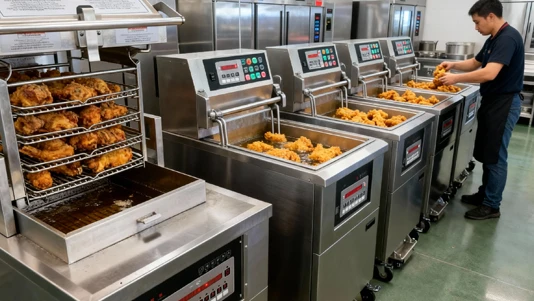
This technical guide explains why QSR investors must integrate equipment procurement with spatial design rather than buying standalone machines. It provides a strategic framework for matching equipment capacity to peak-hour demand and establishing linear workflows. Procurement managers and franchise owners should use this reference to avoid structural modification costs, eliminate operational bottlenecks, and evaluate manufacturers capable of delivering complete, scalable kitchen solutions.
What Fast Food Equipment Do You Need to Open a Fried Chicken Restaurant?
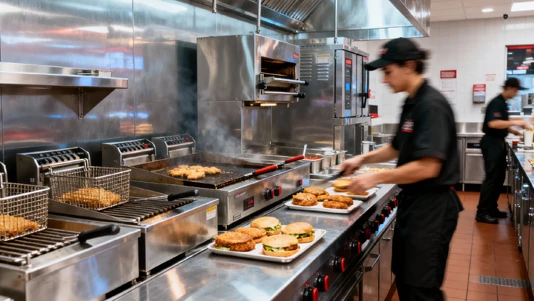
This technical guide provides a strategic breakdown of the essential workflow required to build a high-efficiency fried chicken kitchen. It helps QSR operators, franchise owners, and procurement teams evaluate pressure fryers, breading stations, and holding cabinets based on daily production capacity rather than just initial price. Read this before finalizing your equipment list to prevent costly operational bottlenecks, standardize food quality, and select a scalable manufacturing partner.
Commercial Pressure Fryer Boost Crispy Fried Chicken Quality
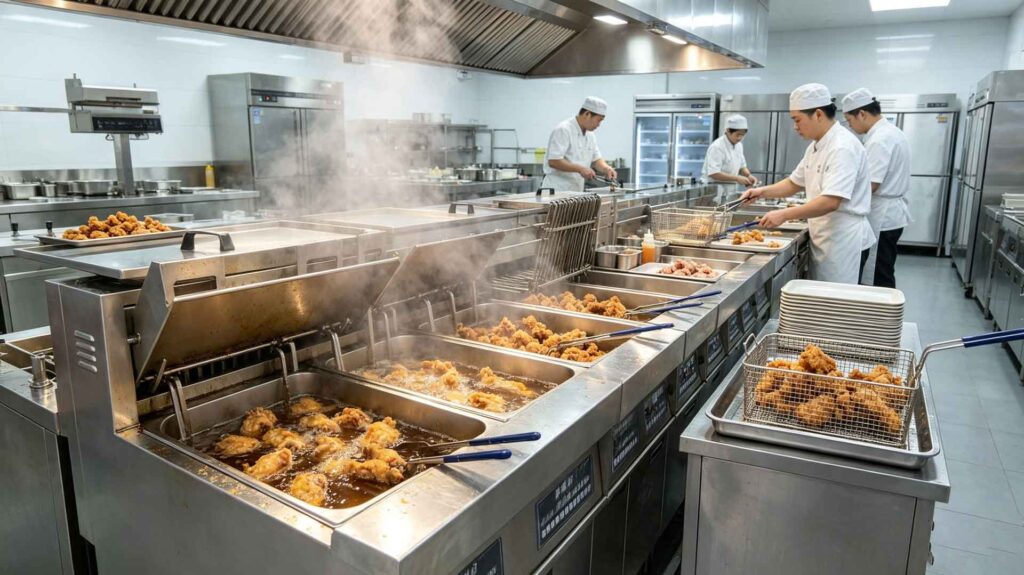
Traditional open fryers bring obvious drawbacks to fried chicken businesses. They cook slowly with uneven heating, causing long customer waits and order backlogs during peak hours. Their open structure speeds up oil oxidation and residue buildup. This requires frequent oil changes and raises daily operating costs greatly. Traditional frying also produces dry, tough and inconsistent-tasting […]
Top 20 Mistakes to Avoid When Buying Commercial Kitchen Equipment
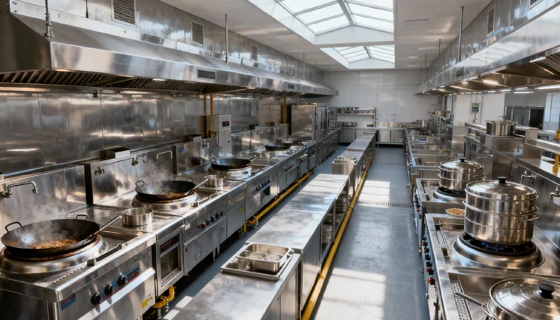
Purchasing commercial cooking equipment based solely on the lowest price often leads to catastrophic layout mismatches, capacity bottlenecks, and compliance failures. This technical guide empowers B2B buyers to evaluate total cost of ownership (TCO), thermal recovery rates, and the necessity of 3D spatial planning before making capital investments. By understanding these 20 critical procurement mistakes, operators can confidently bypass unreliable middlemen and partner directly with an OEM manufacturer to guarantee heavy-duty performance and maximize workflow efficiency.Purchasing commercial cooking equipment based solely on the lowest price often leads to catastrophic layout mismatches, capacity bottlenecks, and compliance failures. This technical guide empowers B2B buyers to evaluate total cost of ownership (TCO), thermal recovery rates, and the necessity of 3D spatial planning before making capital investments. By understanding these 20 critical procurement mistakes, operators can confidently bypass unreliable middlemen and partner directly with an OEM manufacturer to guarantee heavy-duty performance and maximize workflow efficiency.
Custom vs Standard Commercial Kitchen Equipment: Which Fits Your Business Better?
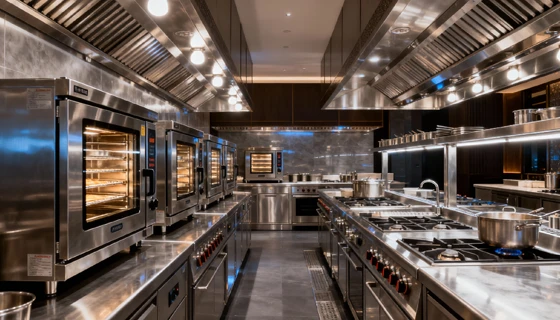
Choosing between custom and standard equipment is a critical financial balancing act for B2B foodservice operators. This technical guide provides a clear decision framework for evaluating architectural constraints, manufacturing lead times, and capital costs. It empowers procurement teams to adopt a “hybrid procurement strategy”—blending cost-effective standard units with precision-engineered custom cooking stations—to eliminate spatial dead zones and maximize long-term operational ROI.