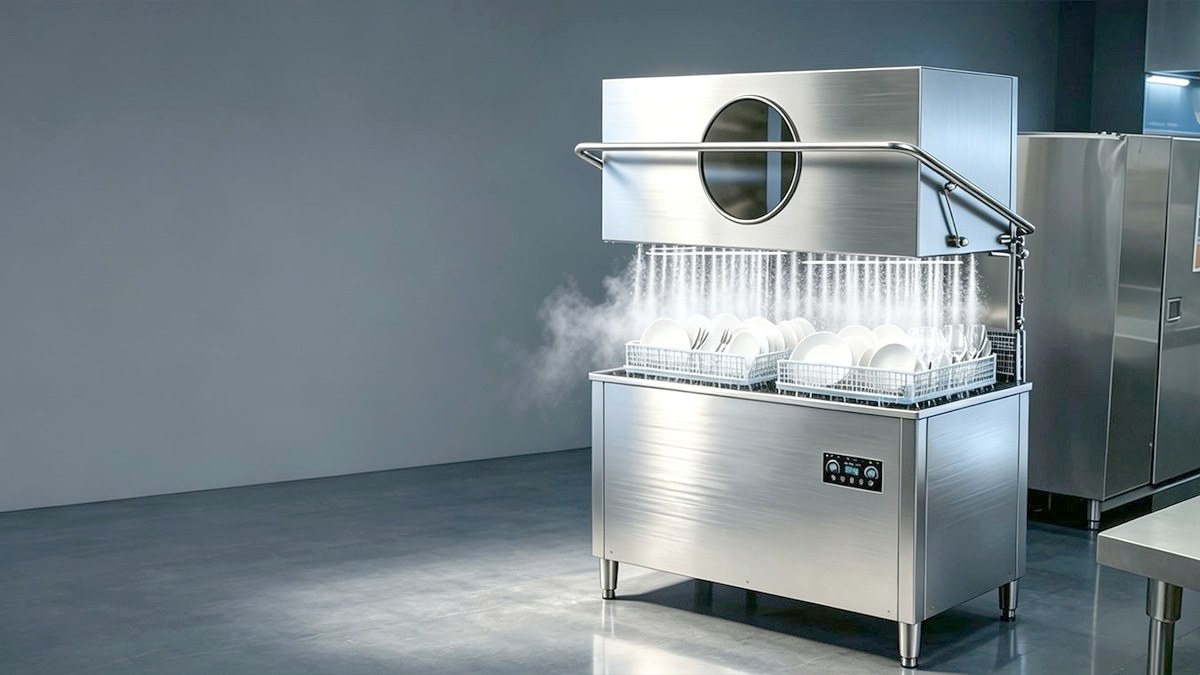
When dishwashing volume climbs, a conveyor belt dishwasher can mean the difference between a calm wash line and a permanent bottleneck. This guide first compares conveyor dishwashers with other types, then shows you how to pick one that keeps up with peak service.
By Dalin Kitchen Equipment · Commercial kitchen equipment supplier
Why high-volume kitchens hit a washing bottleneck
In hotels, canteens, large restaurants and central kitchens, dishes arrive in waves, and every rack that waits slows the whole operation. Undercounter and hood-type machines work well at moderate volume; however, once you pass a certain throughput, they simply cannot keep up.

Meanwhile, high-volume operators keep describing the same pain points:
- Dish piles never clear. Machines that cycle one rack at a time cannot absorb peak volumes, so queues build up.
- Staff spend the whole shift loading and unloading, which ties up labor that should be serving guests.
- Slow turnaround leaves the kitchen short of clean plates during rush, and guests feel the delay.
- Rushed washing leads to rewashing, and as a result it wastes water and energy.
- You need throughput; however, you also need a footprint that fits the dish room.
What is a conveyor belt dishwasher?
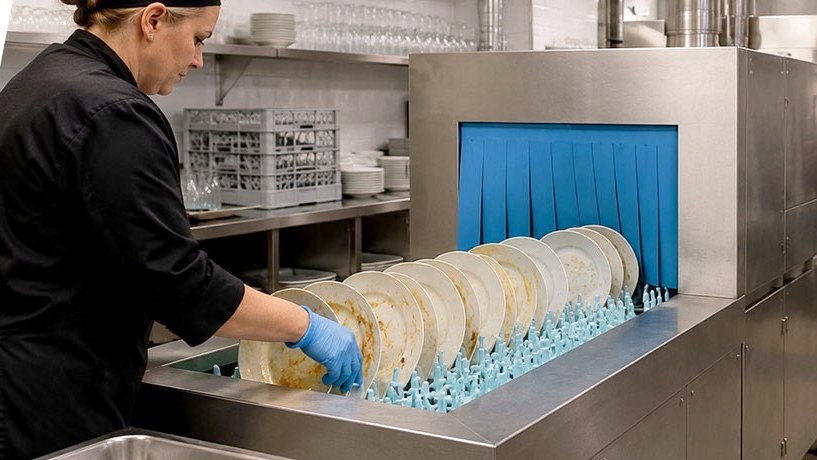
A conveyor belt dishwasher moves racks or dishes continuously through wash and rinse zones on a belt. Instead of washing one rack at a time, it sends dishes in at one end and brings them out clean at the other while staff keep loading. As a result, it delivers the highest throughput of any commercial dishwasher type, and therefore suits high and steady volume.
Two types of conveyor dishwashers
Rack conveyor dishwasher
Operators load racks at the entry and unload them at the exit. Because the machine sends loaded racks through on a belt, it suits operations that already use rack systems and want high throughput with organized batch handling.
Flight conveyor dishwasher
Operators place dishes directly on a conveyor, often on pegs, so no racks are needed. Consequently, flight conveyors handle the highest volume per hour; however, they are also larger and cost more, so they suit very high-volume operations where every second of throughput counts.
Equipment comparison: conveyor vs. other commercial dishwasher types
For example, the table below compares the main commercial dishwasher types.

| Type | Throughput | Space | Cost | Best for |
|---|---|---|---|---|
| Undercounter | Lowest; a few minutes per rack | Under a counter | Lowest entry cost | Small kitchens, cafes, bars |
| Hood-type (open-top) | Fast; ~1 minute per rack | Compact countertop / stand | Mid | Small to mid kitchens needing speed |
| Door-type (rack) | Mid; larger batches | Needs floor space | Mid to higher | Mid-volume restaurants and canteens |
| Rack conveyor | High; continuous rack flow | Longer floor footprint | Higher | High-volume restaurants, hotels, canteens |
| Flight conveyor | Highest; continuous dish flow | Largest footprint | Highest | Very high-volume hotels and central kitchens |
In short, the bigger and steadier your volume, the more a conveyor dishwasher pays off; in contrast, undercounter, hood-type or door-type machines usually serve lower-volume kitchens better.
How to choose the right conveyor belt dishwasher
- + Size for peak throughput. Match racks or dishes per hour to your busiest service, not the average day.
- + Check the footprint. Because a conveyor needs a longer belt run, confirm floor space for entry, exit and operator positions.
- + Compare energy and water use. In continuous operation, efficiency drives running costs, so it matters more than a low sticker price.
- + Look at build quality. Stainless steel construction and reliable wash arms resist constant commercial use.
- + Plan the workflow. Pair the conveyor with a pre-rinse station and a clean-dish landing area so loading and unloading stay smooth.
- + Prioritize serviceability. Easy maintenance and available spare parts keep a critical machine running; otherwise, downtime stops the whole dish room.
What to check before you buy
| Criterion | Why it matters |
|---|---|
| Throughput vs peak volume | Undersized conveyors still bottleneck at rush — size for the busiest hour. |
| Footprint & belt length | Conveyors need a longer run, so confirm space for loading and unloading. |
| Energy & water efficiency | Continuous operation makes running costs the decisive factor. |
| Build quality & materials | Food-grade stainless steel stands up to non-stop commercial use. |
| Compliance | Meets local hygiene and safety standards for commercial warewashing. |
| Service & spare parts | Downtime on a high-volume machine stops the whole dish room. |
Frequently asked questions
What is a conveyor belt dishwasher?
A conveyor belt dishwasher moves racks or dishes continuously through wash and rinse zones on a belt, so it delivers the highest throughput of any commercial dishwasher type. Therefore, it suits high-volume kitchens such as hotels, canteens and large restaurants.
What is the difference between a rack conveyor and a flight conveyor dishwasher?
A rack conveyor dishwasher sends loaded racks through the machine on a belt. In contrast, a flight conveyor dishwasher carries dishes directly on a conveyor, often with pegs, so no racks are needed. Because flight conveyors handle more volume per hour, they are also larger and cost more.
Who should buy a conveyor belt dishwasher?
Conveyor dishwashers suit operations with high and steady volume, such as hotels, canteens, large restaurants and central kitchens, because they must process dishes continuously. For lower-volume kitchens, undercounter, hood-type or door-type machines usually serve you better.
How do I choose the right conveyor dishwasher?
Match throughput (racks or dishes per hour) to your peak volume, confirm available floor space for the belt length, and compare energy and water use, build quality and after-sales service. Above all, size for your busiest hour, not the average day.
Is a conveyor dishwasher worth the cost for a large restaurant?
For high, steady volume, yes. A conveyor reduces labor per dish and keeps clean plates flowing during peak service, so it pays back through efficiency. However, for lower volume, an undercounter or hood-type machine is more cost-effective.
Why Dalin for conveyor belt dishwashers
High-throughput warewashing, tailored to your dish room
Dalin Kitchen Equipment supplies rack and flight conveyor dishwashers for hotels, canteens and large restaurants. We help you size throughput to your peak service, plan the footprint and workflow around your dish room, and choose energy-efficient, reliable machines. In addition, we support you with delivery, installation guidance and after-sales service. If a conveyor is not the right fit, we will tell you which undercounter, hood-type or door-type model suits you better.
Compare all dishwasher types first
Not sure a conveyor is right for you? Then read our full commercial dishwasher buying guide to compare undercounter, hood-type, door-type and conveyor machines side by side. You can also see how dishwashing fits into an efficient kitchen in our kitchen design and workflow guide.
Keep your wash line moving, even at peak

A conveyor belt dishwasher is built for volume, yet only the right one keeps your dish room calm during rush. First, size throughput to your busiest hour; then plan the footprint and workflow; finally, choose a reliable, efficient machine. Once you do this, clean dishes flow continuously, labor per dish drops, and your kitchen no longer lets the wash line hold it back.