Europe’s restaurants face rising labor costs, tight urban sites, high energy bills and strict hygiene rules. Here is how to design and equip a kitchen that cuts the workload on your team, saves energy and stays HACCP- and CE-compliant.
The European kitchen pressure: doing more with fewer hands
Across Europe, restaurant kitchens are being squeezed from every direction. Staff are harder to recruit and retain, energy prices are high and volatile, urban sites are increasingly compact, and hygiene expectations are strict. A kitchen that was “good enough” years ago often struggles today.
The pain points European operators describe most:
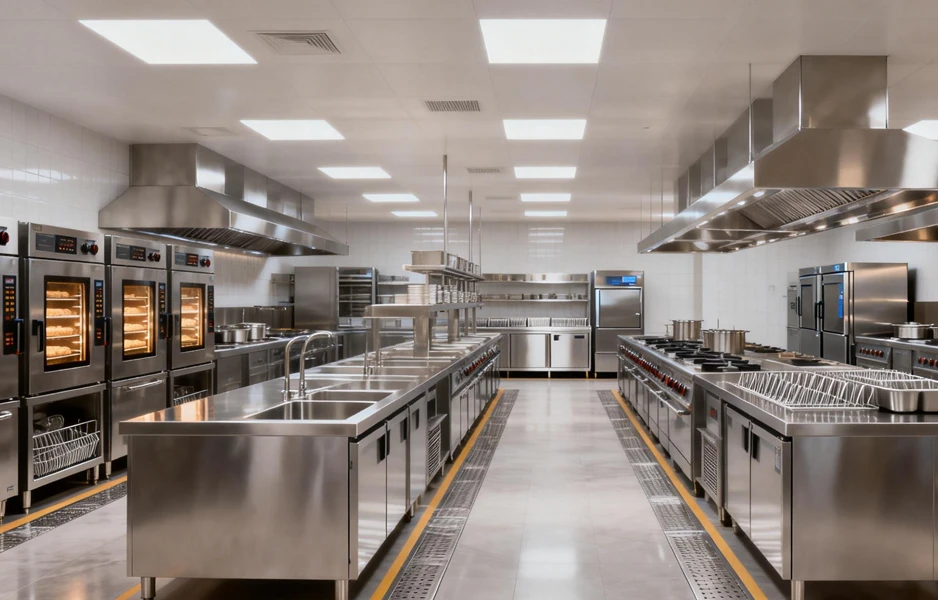
- Labor is scarce and expensive. Hiring and keeping skilled staff is a constant challenge, and every extra pair of hands costs more.
- Energy bills keep climbing. With high electricity and gas prices, inefficient cooking and refrigeration eat straight into margins.
- Space is at a premium. City-centre sites are small, so equipment must be compact and cleverly placed.
- Hygiene compliance is non-negotiable. HACCP-based food safety rules demand clear separation, traceable workflow and reliable sanitizing.
- Sustainability is now expected. Customers and regulators both push for greener, more energy-efficient operations.
Design principle: workflow first, EU rules built in
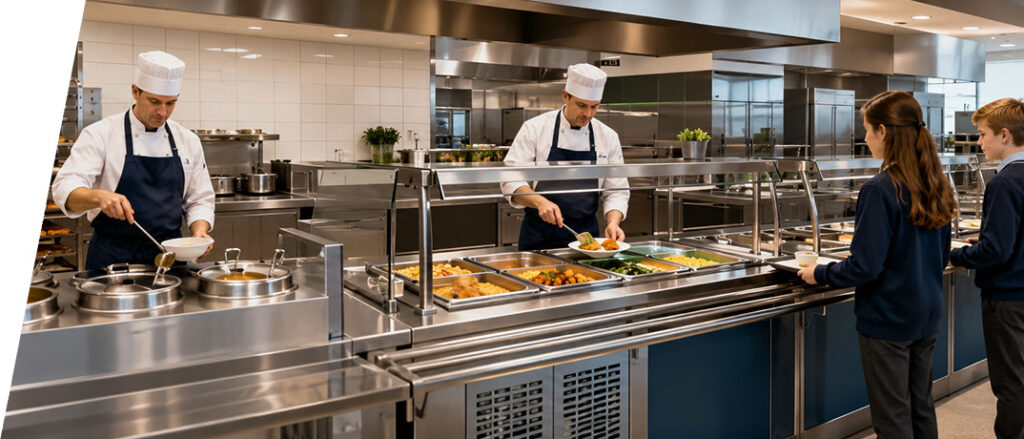
A European commercial kitchen should follow one continuous flow — delivery → storage → preparation → cooking → plating → washing — with minimal back-and-forth, and with food-safety separation baked into the layout from the start.
Design around these rules:
- One-directional flow with HACCP separation. Raw and ready-to-eat zones must not cross; keep a clear path from intake to service.
- Zone by function. Prep, cooking, plating and washing each get a distinct zone, linked by short, direct routes.
- Compact, high-density design. In tight European sites, every square metre must earn its place — choose space-efficient equipment.
- Energy-aware layout. Group heat-producing equipment and plan ventilation together to cut energy waste.
- Design for peak, not average. Size layout and equipment for the busiest service to prevent bottlenecks.
Choosing equipment that reduces workload — and energy costs
Good equipment selection is half of an efficient European kitchen. The right machine does the repetitive work, uses less energy, and helps you pass hygiene audits.
Match capacity to real volume
Undersized equipment creates queues at peak; oversized equipment wastes energy during quiet hours. With high European energy costs, right-sizing every unit is both a speed and a cost decision.
Prioritize energy efficiency
Look at energy consumption and efficiency labelling, not just the purchase price. In a market where electricity and gas are expensive, an efficient cooking line, refrigeration and dishwasher pay back quickly through lower running bills.
Automate the repetitive tasks
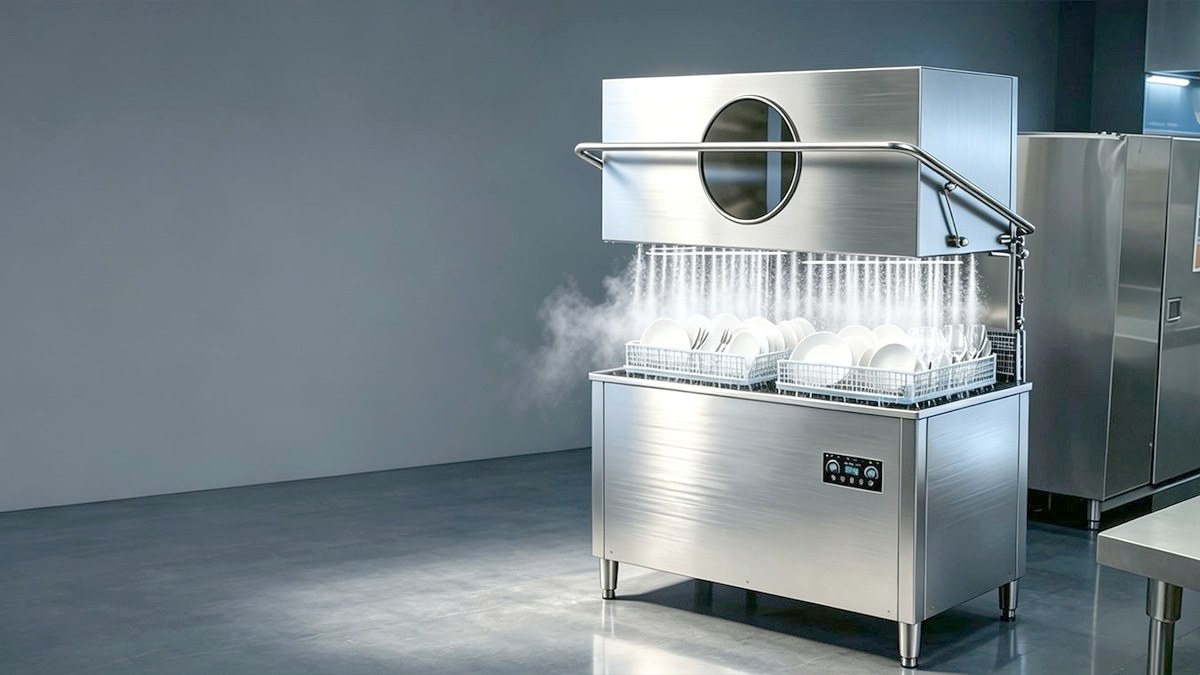
Commercial dishwashers, food processors, slicers and mixers remove slow, repetitive labor — exactly what helps when staff are hard to find. A dishwasher that cleans a rack in minutes frees a team member to plate food instead of standing at a sink.
Place equipment where the work happens
The best machine in the wrong spot still slows you down. Put the dishwasher next to the busing area, prep tables next to the cooking line, and refrigerated storage next to prep — so staff do not walk to reach what they need.
Build in ergonomics
Working-height counters, well-placed shelving and easy-load equipment reduce bending and reaching — cutting fatigue, keeping the team faster and helping with staff retention.
What European buyers should check
| Requirement | Why it matters in the EU |
|---|---|
| CE marking | Equipment placed on the EU market must meet applicable CE requirements. |
| HACCP-friendly design | Supports food-safety compliance: cleanable surfaces, separation, reliable sanitizing. |
| Energy efficiency | Lower running costs and sustainability in a high-energy-price market. |
| Voltage & power supply | Match local 220–240 V / 50 Hz supply and single- or three-phase connections. |
| Food-grade materials | Stainless steel and easy-to-clean surfaces meet hygiene expectations. |
| Service & spare parts | Local technical support and parts availability minimize downtime. |
Common kitchen layout types for European sites
| Layout | Best for | Efficiency note |
|---|---|---|
| Assembly / zone line | Higher-volume restaurants with clear menu flow | Shortest travel between stations; ideal for peak speed |
| Island | Mid-size kitchens with a central cooking core | Compact and flexible; keep aisles wide |
| Galley / two-wall | Narrow city-centre sites | Staff stay in one corridor; watch width and ventilation |
| Open / exhibition | Showcase kitchens and modern dining | Strong customer experience; plan for noise and heat |
Labor- and energy-saving details
- + Pre-rinse station beside the dishwasher — cuts loading time and protects the machine.
- + Refrigerated prep tables — ingredients at hand, fewer trips to the cold room.
- + Consistent work heights — less bending, faster prep and plating.
- + Clear labelling and bin placement — turn searching into grabbing.
- + Efficient ventilation with the cooking line grouped — less heat waste, lower bills.
A simple planning sequence
- Map the menu and peak volume per station.
- Lay out one-directional, HACCP-separated workflow before buying anything.
- List equipment per zone and size each unit to the busiest hour.
- Compare energy efficiency and running costs, not just purchase price.
- Confirm CE marking, power supply and local service support before ordering.
Rule of thumb: design the flow first, buy the equipment second, weigh energy efficiency as part of the price, and place every machine where the task actually happens.
Frequently asked questions
What makes commercial kitchen equipment suitable for the European market?
Look for CE marking, correct 220–240 V / 50 Hz power compatibility, food-grade stainless steel, energy-efficient operation and HACCP-friendly design. Confirm local warranty and spare-parts availability before ordering.
How do European restaurants reduce labor costs in the kitchen?
Combine an efficient one-directional layout, correctly sized equipment and labor-saving machines, then place each item where it is used most. Cut walking, re-work and fatigue so the team handles more with less effort — critical where staff are scarce and expensive.
Why does energy efficiency matter so much for EU kitchens?
With high and volatile electricity and gas prices, inefficient cooking and refrigeration directly reduce margins. Right-sized, energy-efficient equipment lowers running bills and supports sustainability goals customers and regulators expect.
Does kitchen design have to support HACCP?
Yes. European food businesses operate under HACCP-based food-safety systems. Layout should separate raw and ready-to-eat zones, keep surfaces cleanable and ensure reliable sanitizing of utensils and dishes.
Should I design the kitchen before choosing equipment?
Yes. Plan the workflow and zones first, then select equipment to fit each zone and its peak volume — a flow built around tasks, not machines, produces a far more efficient kitchen.
Build a European kitchen that works with your team, not against it
An efficient European restaurant kitchen is designed around flow, equipped to do the heavy lifting, and built to meet hygiene and energy expectations. Plan the workflow first, right-size and place every machine to your busiest hour, prioritize energy efficiency, and design for HACCP — and your kitchen will run faster, leaner and with far less strain on your chefs and staff.