Why your dish station is silently draining your profit
For most restaurants, cafes and catering kitchens, dishwashing is treated as an unavoidable cost. But look closer and it is one of the largest hidden profit leaks in the business. Every minute a dish sits on the line, every rack that has to be rewashed, every gallon of hot water that runs while a machine slowly cycles — it all comes out of your margin.
The biggest pain points we hear from owners are almost always the same:
- Dishes are never ready when you need them. Long wash cycles mean clean plates arrive late, right when the kitchen is busiest.
- Labor is tied up at the sink. Staff spend hours hand-washing, which is expensive, inconsistent, and hard on hands.
- Water and energy bills keep climbing. Older or poorly sized machines waste hot water and power on every cycle.
- Space is tight. Conveyor systems and big tunnel washers eat up floor area you cannot afford.
- Downtime stops your service. When the dish machine breaks, the whole operation slows to a crawl.
The 60-second difference: how a hood-type dishwasher fixes all of it
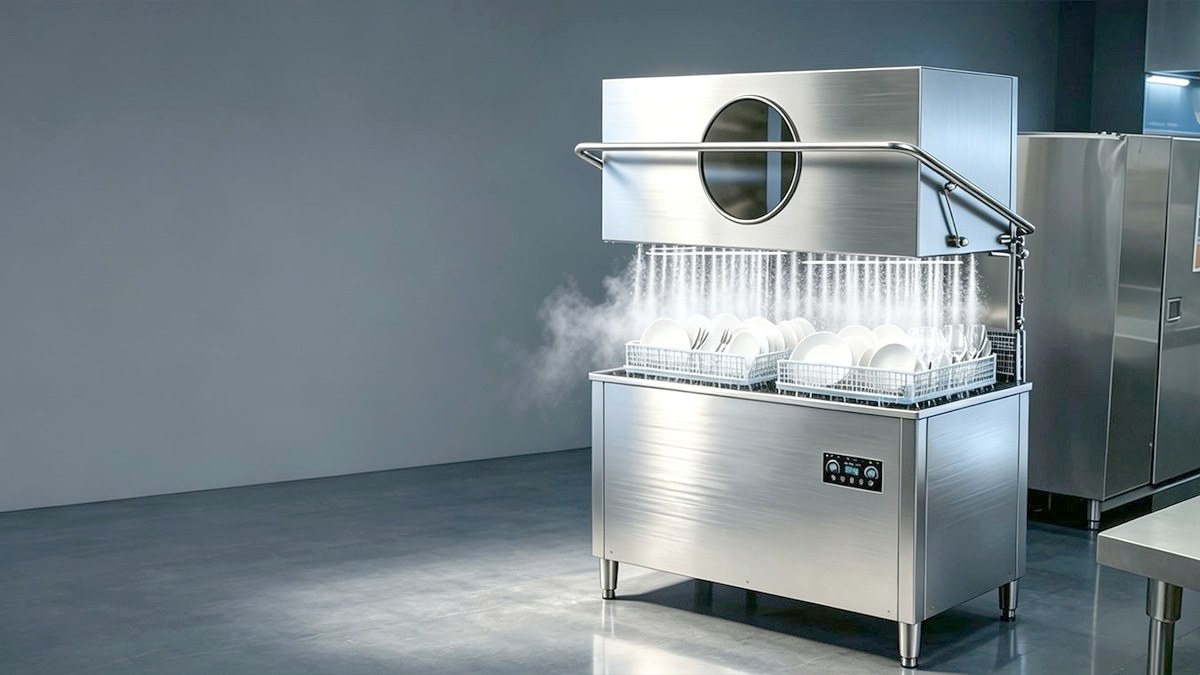
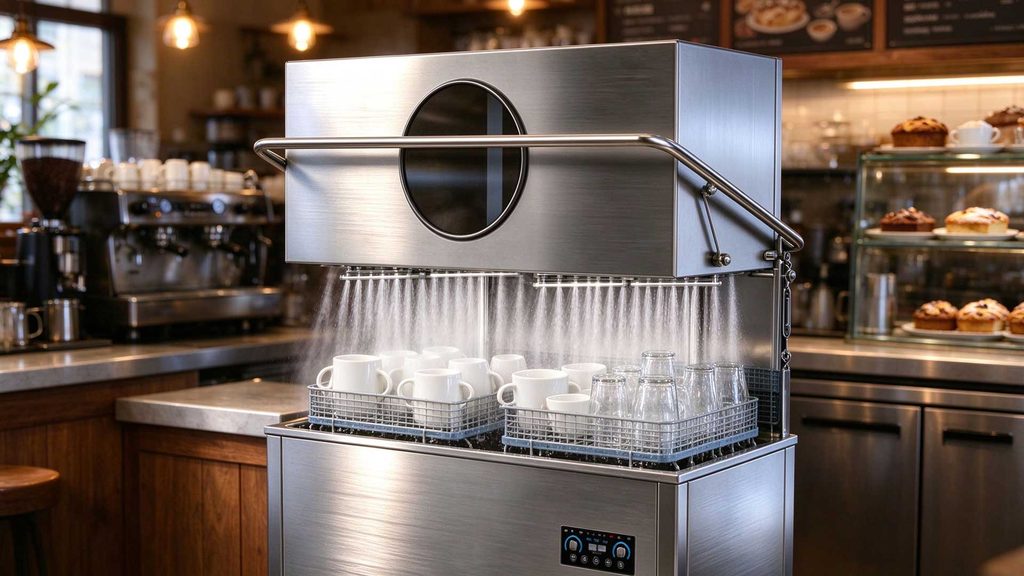
A commercial hood-type dishwasher — also called an open-top or lid-lift dishwasher — is engineered to solve exactly these problems. Load the rack, lower the hood, and the machine runs a full wash-and-rinse cycle in about one minute. By the time your next rack is loaded, the first one is already sanitized and ready for use.
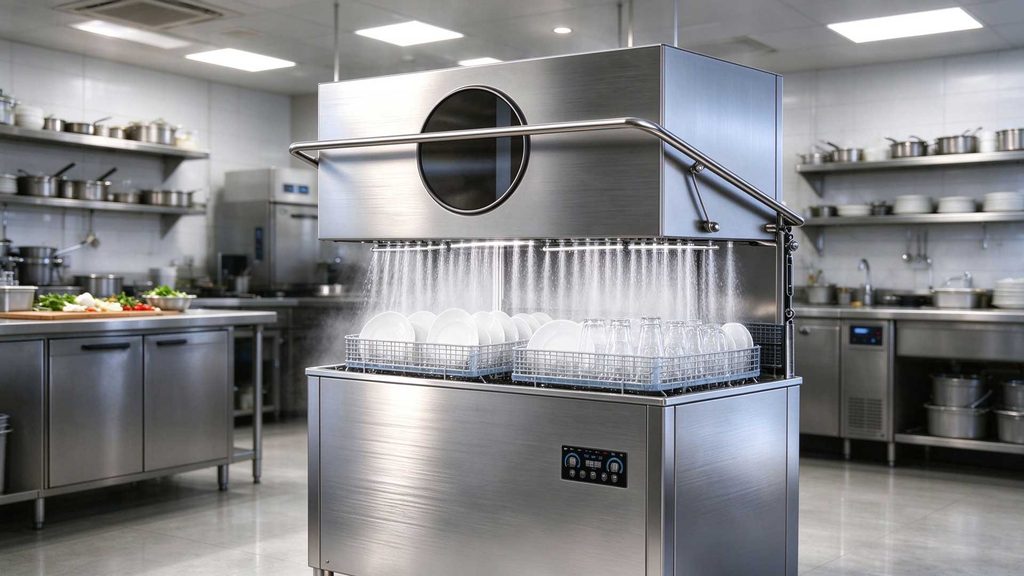
This one-minute cycle is not just about speed. It changes how your whole dish station runs:
- Dishes are always available. Fast cycling means clean racks are on hand during peak service instead of queued behind a slow machine.
- One person can run the station. Load, close, unload. The automatic cycle frees staff to plate food or clear tables instead of babysitting a sink.
- Consistent, repeatable results. Every cycle delivers the same wash pressure, temperature and rinse, so dishes come out clean every time — no more re-washing.
- Less water, less energy. Short cycles and efficient spray arms use dramatically less hot water per rack than hand washing or older machines.
At a glance: what to expect from a commercial hood-type dishwasher
| Feature | Typical benefit |
|---|---|
| Wash cycle | As fast as ~60 seconds per rack |
| Sanitizing rinse | High-temperature rinse for a hygienic, ready-to-use result |
| Construction | Food-grade stainless steel, built for daily commercial use |
| Operation | One-button cycle, minimal training needed |
| Footprint | Compact countertop-compatible design for tight kitchens |
Note: exact cycle time, tank size and rinse temperature vary by model. Confirm the specification sheet for the specific machine you are considering.
Hood-type vs. door-type vs. conveyor: which one is right for you
If you are comparing dishwashers, the three most common commercial categories are hood-type, door-type (rack/undercounter) and conveyor. Each suits a different operation:
| Type | Best for | Key trade-off |
|---|---|---|
| Hood-type (open-top) | Small to mid-size kitchens, cafes, fast food, bars | Fast cycles and compact footprint; best when one station handles steady volume |
| Door-type (rack) | Slightly higher volume with multiple racks | Larger capacity, but takes more floor space and a longer cycle per load |
| Conveyor | High-volume canteens and large restaurants | Continuous throughput, but biggest investment and footprint |
For most independent restaurants, cafes and catering operations, a hood-type dishwasher delivers the best balance of speed, space and cost — which is exactly why it is one of the most popular choices in commercial kitchens.
Where a 60-second open-top dishwasher earns its keep
- Restaurants & bistros — keep plates cycling through the busiest service windows.
- Cafes & coffee shops — clean cups, glasses and plates fast without extra staff.
- Fast food & food trucks — compact footprint and quick turnaround in tight spaces.
- Bars & pubs — steady glass washing with minimal downtime.
- Catering & bakeries — trays, racks and utensils cleaned and ready for the next batch.
Frequently asked questions
How fast can a hood-type dishwasher really wash dishes?
Many commercial hood-type dishwashers complete a full wash-and-rinse cycle in about 60 seconds per rack. The exact time depends on the model and settings, so always check the specification sheet for the machine you plan to buy.
Is a 60-second cycle enough to sanitize dishes?
Yes, when the machine is correctly configured. Commercial dishwashers use a high-temperature final rinse to reach sanitizing temperature, so dishes come out hygienically clean and ready to use — no need to air-dry or re-wash.
Does a hood-type dishwasher save water compared with hand washing?
Generally, yes. A short, efficient cycle uses less hot water per rack than manual washing, and consistent results mean fewer re-washes. Over a busy service day, these savings add up on both your water bill and your energy bill.
How much space does an open-top dishwasher need?
Hood-type dishwashers are among the most compact commercial machines. They fit on a countertop or a stand and suit kitchens where every square foot counts.
Do I need a trained operator?
No. Loading the rack, closing the hood and pressing start is all it takes. Minimal training means any staff member can run the station.
Make dishwashing a profit center, not a cost
The dish station is not just a chore — it is a lever you can pull. Switch to a commercial hood-type dishwasher and you get clean dishes in about a minute, a smaller labor footprint, lower water and energy use, and a kitchen that keeps moving during peak service.
If you are planning a new build, an upgrade, or simply tired of slow, costly dishwashing, a 60-second hood-type machine is one of the fastest ways to improve your margins.