Selecting the right commercial fryer requires a strict evaluation of peak-hour production volume, menu specifications, oil management requirements, and available utility infrastructure to prevent severe operational bottlenecks. A mismatched fryer leads to excessive oil degradation, poor food consistency, and inflated long-term operating costs. This technical guide outlines the critical engineering and operational factors restaurant owners must analyze to choose a commercial fryer that maximizes kitchen throughput and accelerates investment returns.
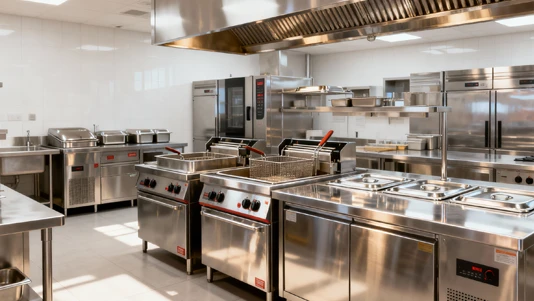
Table of Contents
- Matching Frying Capacity With Production Requirements
- Fryer Type Selection: Commercial Pressure Fryer vs. Open Fryer
- Evaluating Power Sources: Gas vs. Electric Fryers
- Managing Operating Costs with Active Oil Filtration Systems
- Integrating the Fryer into the Kitchen Workflow
- Application Configurations for Different Business Models
- Conclusion
1. Matching Frying Capacity With Production Requirements
To determine the correct commercial fryer capacity, restaurant owners must calculate their peak-hour order quantity and batch cooking volume rather than relying solely on estimated daily averages.
The most common mistake in fryer procurement is undersizing the equipment. When a large batch of frozen or cold food is dropped into an undersized fryer vat, the oil temperature drops drastically. If the fryer lacks the heating capacity to quickly return to the target cooking temperature (known as “recovery time”), the food absorbs excess oil, resulting in a soggy, greasy product.
Conversely, oversizing a fryer for a low-volume operation leads to rapid oil oxidation, as a large surface area of oil is constantly heated but underutilized. Buyers must evaluate the number of chicken portions or pounds of fries needed per cycle, ensuring the fryer’s heat output (measured in BTUs or kW) can handle the specific thermal load of their menu.
2. Fryer Type Selection: Commercial Pressure Fryer vs. Open Fryer
A commercial pressure fryer is specifically required for cooking bone-in chicken because the pressurized environment seals in natural juices, whereas a commercial open fryer is strictly suited for lighter, diverse items that require a crispy exterior.
Different menu items require fundamentally different thermodynamic cooking processes. The choice between these two frying systems dictates the texture, moisture content, and cooking speed of your final product.
Technical Comparison: Pressure Fryer vs. Open Fryer
| Evaluation Factor | Commercial Pressure Fryer | Commercial Open Fryer | Recommendation / Best Application |
| Cooking Mechanism | Cooks in a sealed, pressurized vat (approx. 12-15 PSI), raising the water’s boiling point. | Cooks at standard atmospheric pressure, evaporating surface moisture rapidly. | Pressure for dense, thick-cut meats; Open for quick-frying surface items. |
| Moisture Retention | Extremely high. Traps natural steam inside the product. | Low. Drives moisture out to create a hard, crispy shell. | Pressure is mandatory for high-quality bone-in fried chicken operations. |
| Cooking Speed | Fast. Cooks at lower temperatures (approx. 315°F/157°C) in shorter cycles. | Standard. Requires higher temperatures (approx. 350°F/177°C) for similar doneness. | Pressure maximizes peak-hour throughput for heavy proteins. |
| Menu Flexibility | Low. Best reserved for specialized proteins to prevent flavor transfer. | High. Can easily switch between fries, onion rings, tenders, and fish. | Open is preferred for diverse snack menus and side dishes. |
Decision Rule: If your core business is a fried chicken franchise, a commercial pressure fryer is non-negotiable for product quality. If you operate a general QSR serving fries and assorted snacks, a commercial open fryer provides the necessary flexibility.
3. Evaluating Power Sources: Gas vs. Electric Fryers
Gas fryers deliver higher initial heating power making them suitable for high-volume, continuous cooking, while electric fryers offer superior thermal efficiency and are ideal for locations lacking commercial gas line infrastructure.
The energy source directly impacts the fryer’s recovery time and installation requirements.
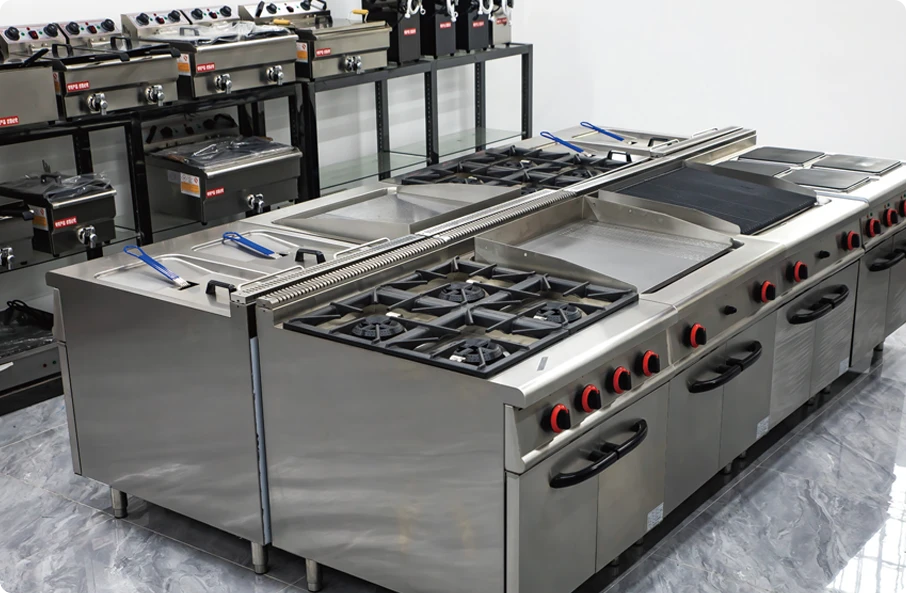
- Commercial Gas Deep Fryers: Typically utilize heat exchange tubes immersed directly in the oil or burners located outside the vat. They generate massive amounts of raw heat, making them highly responsive when operators drop heavy batches of frozen food. However, they require complex ventilation and fire suppression systems.
- Commercial Electric Fryers: Utilize internal heating elements placed directly inside the oil, transferring nearly 100% of their energy to the cooking medium. While they may have a slightly lower peak power output compared to heavy-duty gas models, they offer incredibly precise temperature control and are much easier to install in mall food courts or historic buildings.
4. Managing Operating Costs with Active Oil Filtration Systems
Integrating a commercial fryer with an active oil filtration system reduces long-term operating costs by removing carbonized food particles, thereby extending the usable lifespan of cooking oil by up to 50%.
Oil is a consumable that heavily impacts a restaurant’s bottom line. During the frying process, breading falls off and carbonizes at the bottom of the vat. If left unfiltered, these particles break down the oil, producing free fatty acids that cause smoking, foaming, and a bitter taste.
Modern high-performance fast food equipment often features built-in, semi-automatic oil filtration systems. This allows staff to drain, filter, and pump the oil back into the vat within minutes, even during active shifts. For high-volume businesses, the ROI on a fryer with an integrated filtration system is often realized within the first year purely through oil savings.
5. Integrating the Fryer into the Kitchen Workflow
A commercial fryer must be strategically positioned between the raw preparation zone and the heated holding area to minimize operator movement and ensure a continuous, linear food production process.
Before purchasing, restaurant owners must evaluate the physical dimensions and spatial dynamics of their kitchen. A fryer cannot operate as an isolated machine; it is the thermal processing center of your workflow.
When planning the layout, ensure there is adequate clearance for operator movement, safe oil disposal, and daily maintenance. The fryer should directly receive breaded products from the prep station and immediately offload cooked products to a dump station or holding cabinet. Selecting professional fast food equipment that is modular allows you to align these stations perfectly, preventing dangerous cross-traffic where staff carrying hot food intersect with staff handling raw poultry.
6. Application Configurations for Different Business Models
Equipment configuration must match the specific business model: high-volume QSRs require multi-vat systems with centralized filtration, while compact takeaway stores rely on space-saving, highly flexible fryers.
- Fried Chicken Restaurants: The standard configuration demands commercial pressure fryers for the main protein, a dedicated open fryer for side dishes, and adjacent holding cabinets to ensure consistent quality and fast cooking cycles.
- Quick Service Restaurants (QSR): Focus heavily on fast service speed and standardized output. Multi-vat battery fryers with automated basket lifts and centralized oil management are essential to reduce labor dependency during peak rushes.
- Food Courts and Small Stores: Limited floor space restricts equipment size. Operators should focus on high-efficiency, narrow-footprint electric fryers that maximize output per square inch while maintaining easy maintenance.
- Restaurant Expansion Projects: Franchise brands scaling across multiple locations require standardized fast food equipment. Selecting a reliable manufacturer ensures that the kitchen layout and equipment performance can be perfectly replicated in every new store, ensuring uniform food quality worldwide.
7. Conclusion
Choosing the right commercial fryer requires a strategic balance between your kitchen’s daily production volume, menu requirements, and long-term operating costs. Restaurant owners should not base their procurement solely on the initial machine price, as energy consumption, oil waste, and maintenance dictate the true cost of ownership.
Key Procurement Rules:
- Calculate your peak-hour demand to guarantee adequate capacity and recovery time.
- Select pressure fryers for juicy, bone-in products and open fryers for crispy side dishes.
- Always prioritize equipment with robust oil filtration capabilities to protect your profit margins.
- Partner with a manufacturer that provides total kitchen workflow solutions, not just standalone machines.
To optimize your commercial kitchen layout, match your fryer capacity to your growth plans, and request customized technical specifications, contact our engineering team today.
Frequently Asked Questions (FAQs)
1. What is “recovery time” and why is it important for a commercial fryer?
Recovery time is the speed at which a fryer’s oil returns to the optimal cooking temperature after cold food is submerged. A fast recovery time is critical because if the oil remains too cool for too long, the food will absorb excess oil and become soggy rather than crispy.
2. Can I use a commercial open fryer to cook bone-in fried chicken?
While possible, it is not recommended for high-volume operations. Open fryers dry out the meat faster and take longer to cook bone-in chicken to a safe internal temperature. Pressure fryers are the industry standard for maintaining moisture and accelerating cook times for dense proteins.
3. How often should commercial frying oil be filtered?
In high-volume fast food and fried chicken restaurants, oil should be filtered at least twice a day (e.g., after the lunch rush and at closing). Highly active kitchens may benefit from filtering even more frequently using built-in filtration systems.
4. What is the difference between a gas and an electric commercial fryer in terms of efficiency?
Electric fryers are highly efficient because the heating elements are submerged directly in the oil, transferring nearly 100% of the energy. Gas fryers lose some heat through the exhaust flue, but they often provide higher total heat output (BTUs), making them powerful for continuous, heavy-duty frying.
5. How much space do I need to allocate for a commercial fryer?
Beyond the physical footprint of the machine, operators must account for regulatory clearance zones (often 6 to 16 inches from combustible walls or other open-flame equipment), space for staff to safely maneuver hot baskets, and sufficient room under an appropriate commercial exhaust hood.