
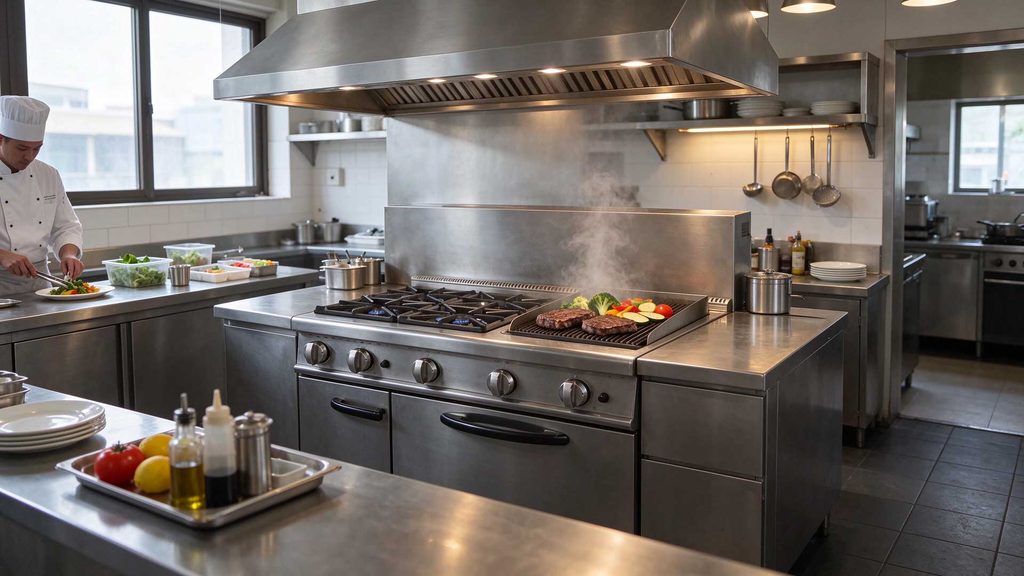
A lava rock grill gives you the smoky, charred finish customers expect from a steakhouse — with fewer flare-ups than an open-flame charbroiler. This guide explains how it works, compares it with charbroilers, contact grills and griddles, and shows you how to pick a model that keeps up at peak dinner service.
By Dalin Kitchen Equipment · Commercial kitchen equipment supplier
Quick answer: what to look for in a lava rock grill
- Buy a lava rock grill if your menu centers on steaks, ribs or grilled meat with a smoky finish.
- Match grilling area and heat zones to the portions you cook at your busiest hour.
- Prioritize steady heat recovery, good lava rock depth and strong ventilation.
- If you need flat-surface volume cooking instead, compare griddles or contact grills.
The grilling problems that hurt steakhouse kitchens
In steakhouses, grill restaurants and hotel kitchens, the grill is the center of the menu. When it cannot deliver consistent char and steady heat, customers notice immediately — and the kitchen falls behind during dinner service.
The pain points Dalin solves most often:
- Flare-ups ruin the cook. Grease hitting an open flame causes sudden flames that burn the outside and leave the inside uneven.
- Heat drops at peak. A grill that recovers slowly loses temperature when order after order arrives.
- Smoke and smell overwhelm the kitchen. Weak ventilation turns a good grill into a problem for staff and guests.
- Flavour falls flat. Without real char and smoke, grilled meat tastes ordinary.
- Cleaning becomes a chore. Poor rock and grease management makes end-of-shift cleaning slow and unpleasant.
What is a commercial lava rock grill?
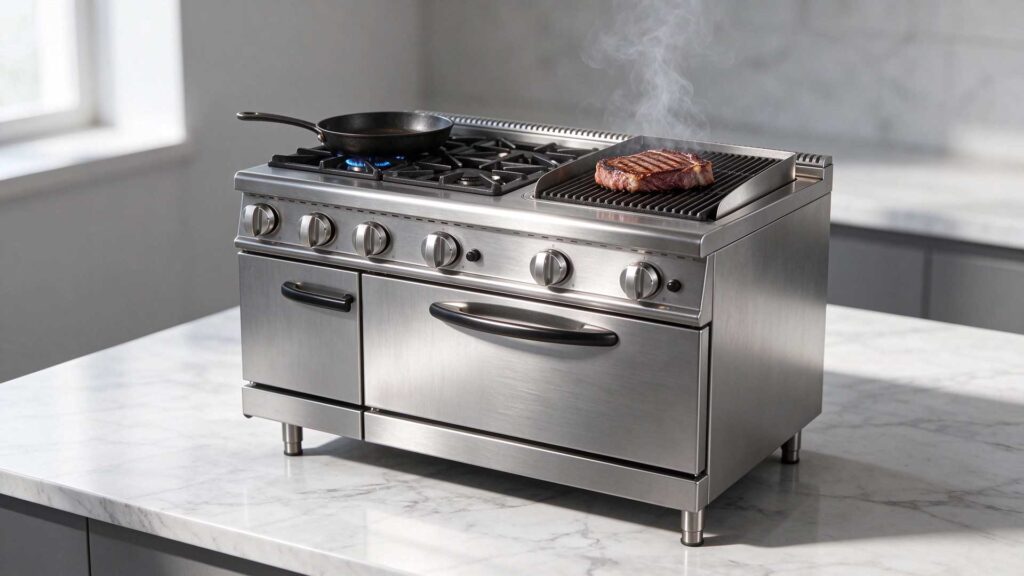
A commercial lava rock grill — also called a lava stone grill — cooks food over a bed of heated volcanic rocks beneath a grate. The rocks radiate infra-red heat, so drips sear on contact and the rising smoke flavours the meat. Consequently, you get a smoky, charred finish with fewer flare-ups, and it suits steaks, ribs and grilled meat where real grill flavour matters.
Equipment comparison: lava rock grill vs charbroiler vs contact grill vs griddle
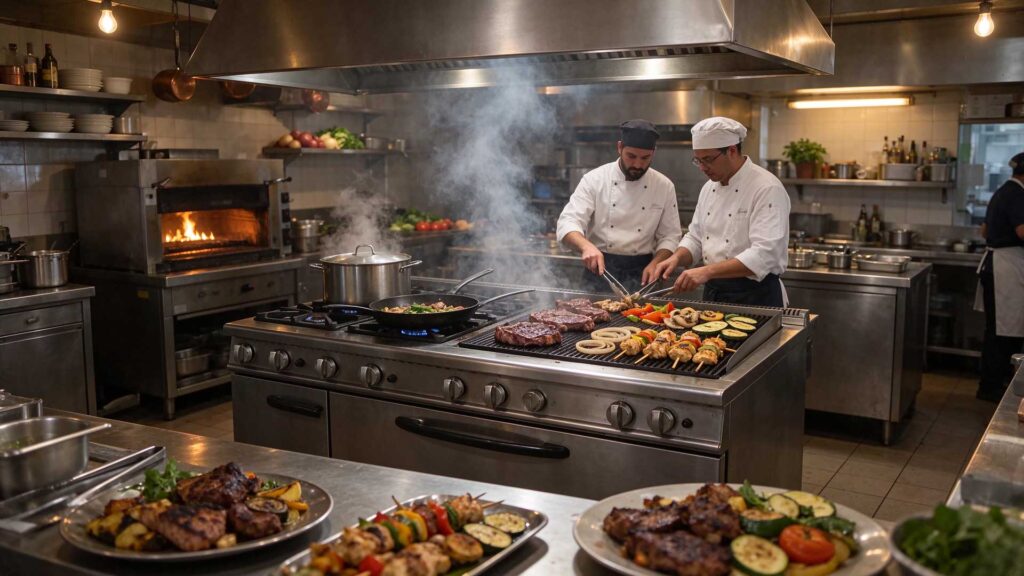
First, compare the main grilling and cooking options. The table below shows where each one fits best.
| Type | Heat source | Flavour & marks | Flare-up risk | Best for |
|---|---|---|---|---|
| Lava rock grill | Heated volcanic rocks radiating infra-red heat | Smoky flavour, strong grill marks | Low; rocks absorb drips | Steaks, ribs, grilled meat, steakhouses |
| Charbroiler | Gas flame under grates or ceramic briquettes | Intense direct char, smoky | Higher; grease on flame | Fast searing, high-heat grill items |
| Contact grill | Heated plates pressing the food | Even sear, light grill lines | Very low | Sandwiches, panini, quick searing |
| Griddle (flat top) | Heated flat plate | Even contact sear, no grill marks | Very low | Burgers, eggs, breakfast, high volume |
In short, choose a lava rock grill when smoky flavour and real grill marks drive your menu; choose a charbroiler for maximum direct heat, or a griddle for flat-surface volume.
Lava rock vs ceramic briquettes
| Medium | Pros | Note |
|---|---|---|
| Lava rock (volcanic) | Porous, absorbs drips, radiates steady infra-red heat, smoky flavour | Needs periodic replacement as rocks degrade |
| Ceramic briquettes | Even heat, longer service life, less crumbling | Less drip absorption; flavour slightly milder |
Gas vs charcoal lava rock grill
| Type | Pros | Best for |
|---|---|---|
| Gas lava rock grill | Fast start-up, steady control, easier cleaning, consistent heat | Restaurants needing reliable daily output |
| Charcoal lava rock grill | Deepest smoky flavour, authentic char | Premium steakhouses where flavour is the headline |
Match the fuel to your menu identity and running routine; then weigh start-up time and heat control before deciding.
How to choose the right lava rock grill
- + Size for peak service. Match grilling area and heat zones to the steaks or portions you cook at your busiest hour.
- + Check heat recovery. A grill that recovers fast keeps order after order moving; a slow one becomes the bottleneck.
- + Look at rock depth and grate. Deeper rock beds hold heat longer and give a steadier sear.
- + Plan ventilation. Grilling produces smoke and grease, so size the hood and exhaust with the grill, not after it.
- + Compare build quality. Stainless steel body and heavy-duty grate resist daily commercial heat.
- + Plan cleaning and service. Easy rock and grease access plus available spare parts keep uptime high.
Common mistakes buyers make
Moreover, avoiding these mistakes will save you rework and downtime:
- ✗ Buying for average days. A grill sized for an average dinner still bottlenecks on a full Saturday.
- ✗ Ignoring ventilation. A strong grill with weak exhaust fills the kitchen with smoke.
- ✗ Skimping on rock quality. Cheap rocks crumble fast and lose heat consistency.
- ✗ Forgetting grease management. Poor drip trays make cleaning slow and raise flare-up risk.
- ✗ Skipping service planning. Parts availability matters as much as the grill itself.
What to check before you buy
| Criterion | Why it matters |
|---|---|
| Grilling area vs peak volume | Undersized grills queue up during dinner service. |
| Heat recovery & zones | Fast recovery and zone control keep speed and consistency. |
| Rock depth & material quality | Steadier heat and longer service life. |
| Ventilation & exhaust planning | Smoke and grease must be handled with the grill, not after. |
| Fuel type & efficiency | Gas or charcoal changes flavour, start-up and running cost. |
| Build quality & service | Stainless steel and spare-part availability protect uptime. |
Frequently asked questions
What is a lava rock grill?
A lava rock grill, also called a lava stone grill, cooks food over a bed of heated volcanic rocks beneath a grate. The rocks radiate infra-red heat, so drips sear on contact and the smoke flavours the food. It suits steaks, ribs and grilled meat where a smoky, charred finish matters.
What is the difference between a lava rock grill and a charbroiler?
A lava rock grill heats a bed of porous volcanic rocks that radiate infra-red heat and absorb drips. A charbroiler uses gas flame directly under grates, or ceramic briquettes. Lava rock grills give a smoky flavour with fewer flare-ups, while charbroilers give fast, intense direct heat.
Why do lava rock grills flare up less?
The porous lava rocks absorb fat and juices that drip from the food, so less grease collects on a hot surface. Consequently, you get fewer sudden flare-ups than on an open-flame charbroiler, and the cooking stays steadier during busy service.
Who should buy a commercial lava rock grill?
Steakhouses, grill restaurants, hotel kitchens and catering operations that sell grilled meat benefit most. It suits menus where smoky flavour and grill marks matter, and where you need steady output during peak dining hours.
How do I choose the right lava rock grill size?
Match grilling area and heat zones to the number of steaks or portions you cook at your busiest hour. Check heat recovery, lava rock depth, ventilation requirements and energy efficiency before buying.
Why Dalin for commercial lava rock grills
Real grill flavour, built for steady output
Dalin Kitchen Equipment supplies commercial lava rock grills for steakhouses, grill restaurants and hotel kitchens. We help you match grilling area and heat zones to your peak dinner service, choose between gas and charcoal, and pick models with deep rock beds, solid grates and easy grease access. In addition, we support you with after-sales service and spare parts. If a lava rock grill does not fit your menu, we will recommend the charbroiler or griddle that suits you better.
Explore the rest of your kitchen
A grill works best as part of a planned cooking line. For the bigger picture, read our commercial equipment buying guide, or compare flat-surface cooking in our desktop grill selection guide.
Keep every steak consistent, even on a full night

The right lava rock grill gives you smoky flavour and steady heat without constant flare-up trouble. First, size the grilling area to your busiest hour; then check heat recovery, rock depth and ventilation; finally, choose a reliable, serviceable model. Do this, and your grill keeps pace through every dinner service instead of slowing the line down.